I was lucky with the Metro tour Tuesday afternoon – there were only four of us there – John from Columbia, Lynne and Winston from New York, and myself. Elena, the guide was quite happy to have just a few of us. With a holiday Wednesday, many people had a short work day today, and it is easy to lose someone in the busy subway system in rush hour. Elena was a great guide too, with good training and a LOT of enthusiasm for her native city.
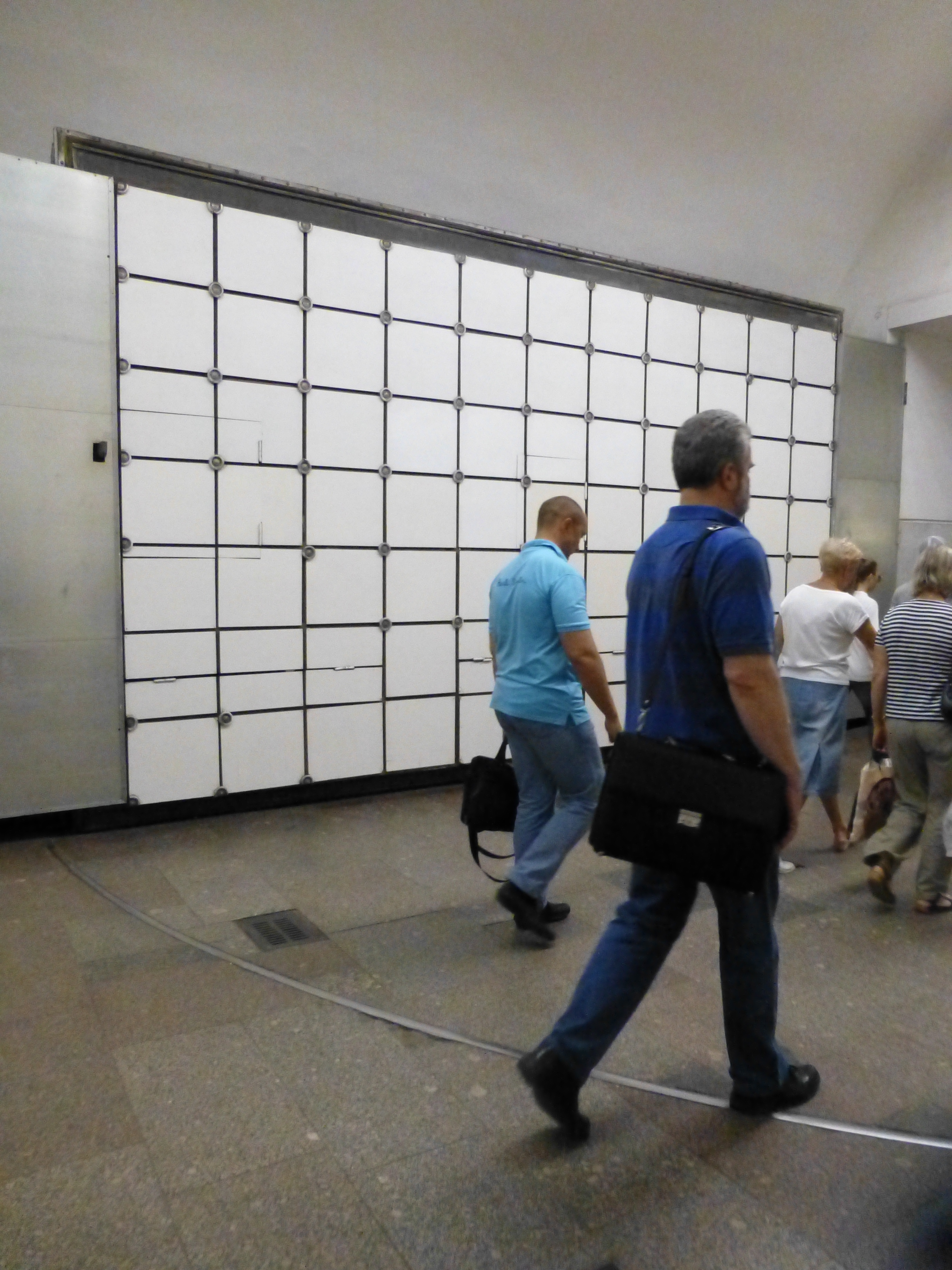
We descended into the metro right by the Kremlin entrance. As we were going down the corridor to our first train, we stopped beside two strange looking walls with a circular track running across the floor. 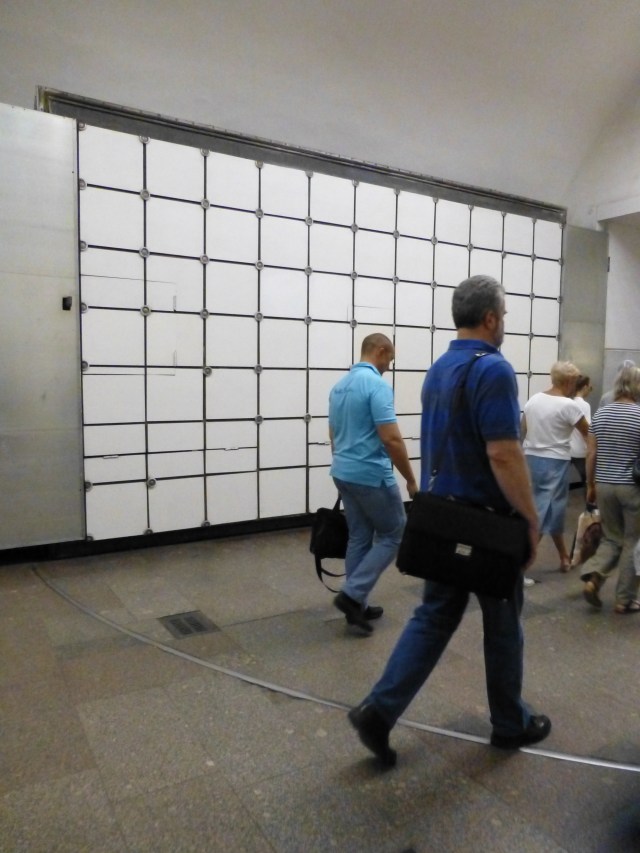 When the Metro was first build in 1935, it was to serve a double purpose. Number one was to move people around the city efficiently, but also, it was designed to be used as a bomb shelter in case of war. With this in mind, the stations were made with wide tunnels and very high ceilings. Good thinking, as it was indeed used during the second world war. Can you imagine being locked underground for hours and not knowing if you would have a house to return to when you were allowed back to the surface?
The planners also wanted to have their subway system be something that Moscovites could be proud of, instead of feeling like voles burrowing around underground. Marble, glass, bronze, porcelain and good lighting were used to this end.
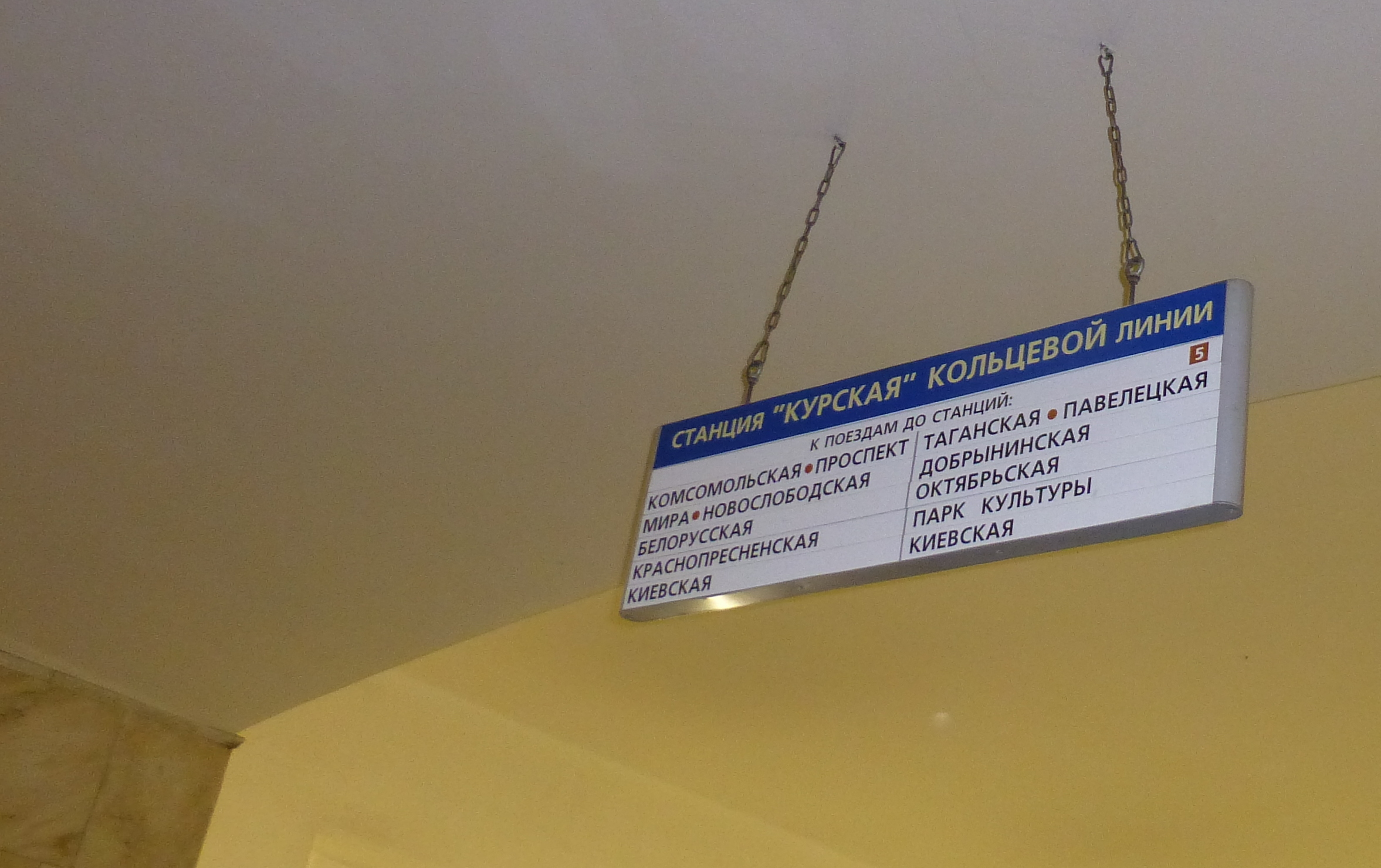
The signage is very good, once you understand the system. There are 11 different lines, each a different colour for easy navigation. the biggest problem is figuring out which way you need to go, after going around underground to find your platform. Here is what the signs look like – it’s probably a lot easier if you read Russian.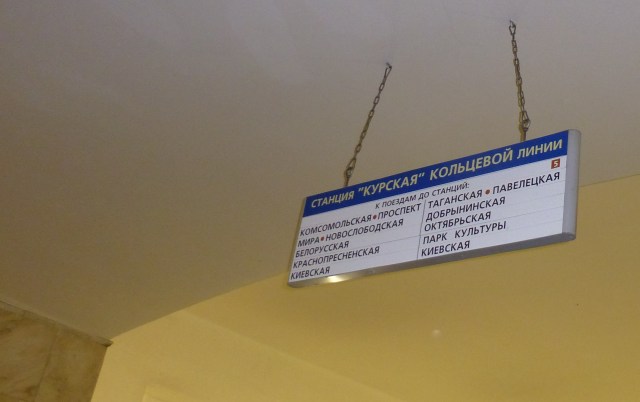
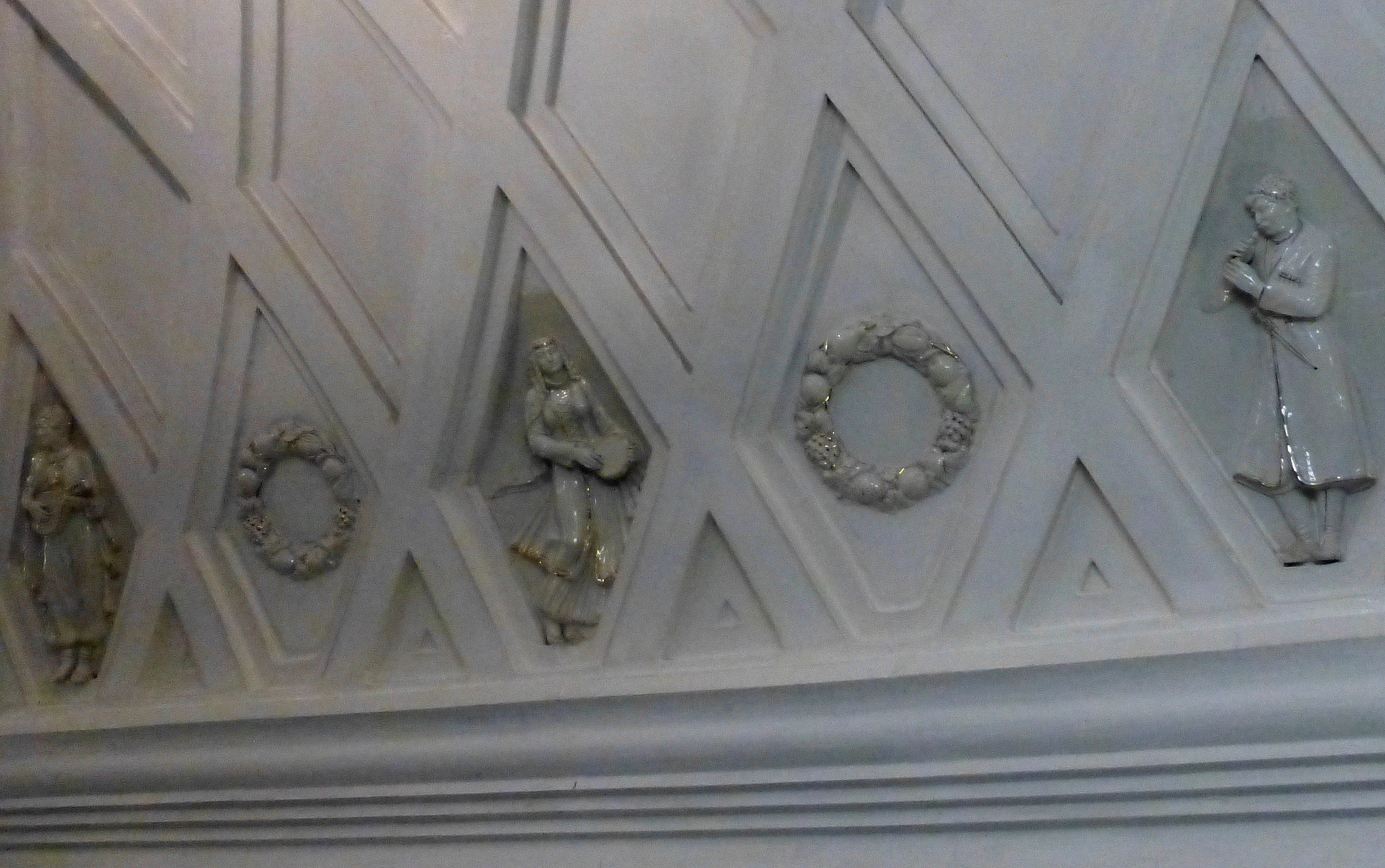
The first stop we made was to Teatralnaya or the Theatre Station, so named as many theatres, including the Bolshoi Ballet are situated close at hand. The decor was simple and elegant, with porcelain figures that look quite small, but are actually three feet tall.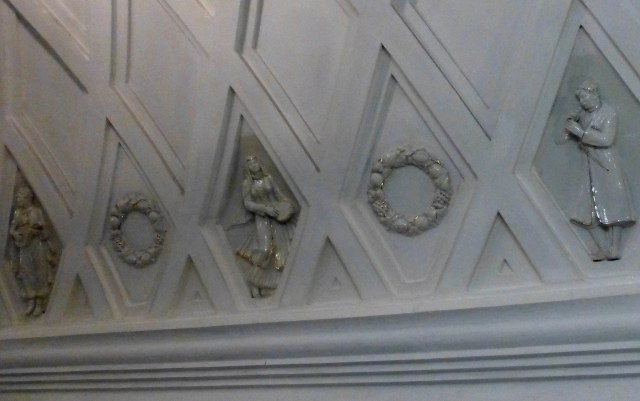
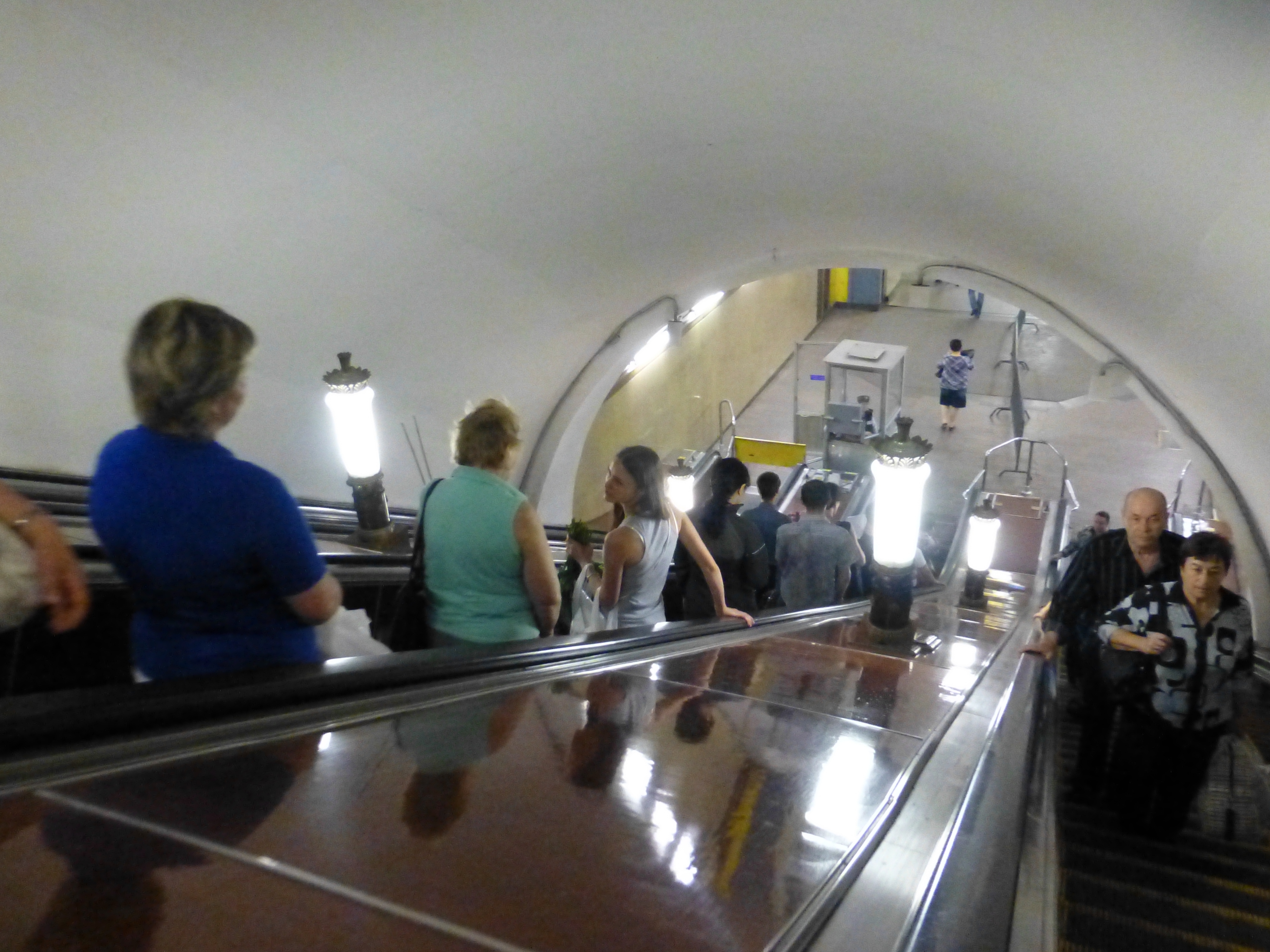
From here, down we went. We learned that some of the later lines were placed very deep underground during the Cold War, so that they could serve as shelters from nuclear attack. The longest escalator of all is on the 3rd (purple) line, and is the equivalent of 24 stories. It takes 4 minutes to descend.
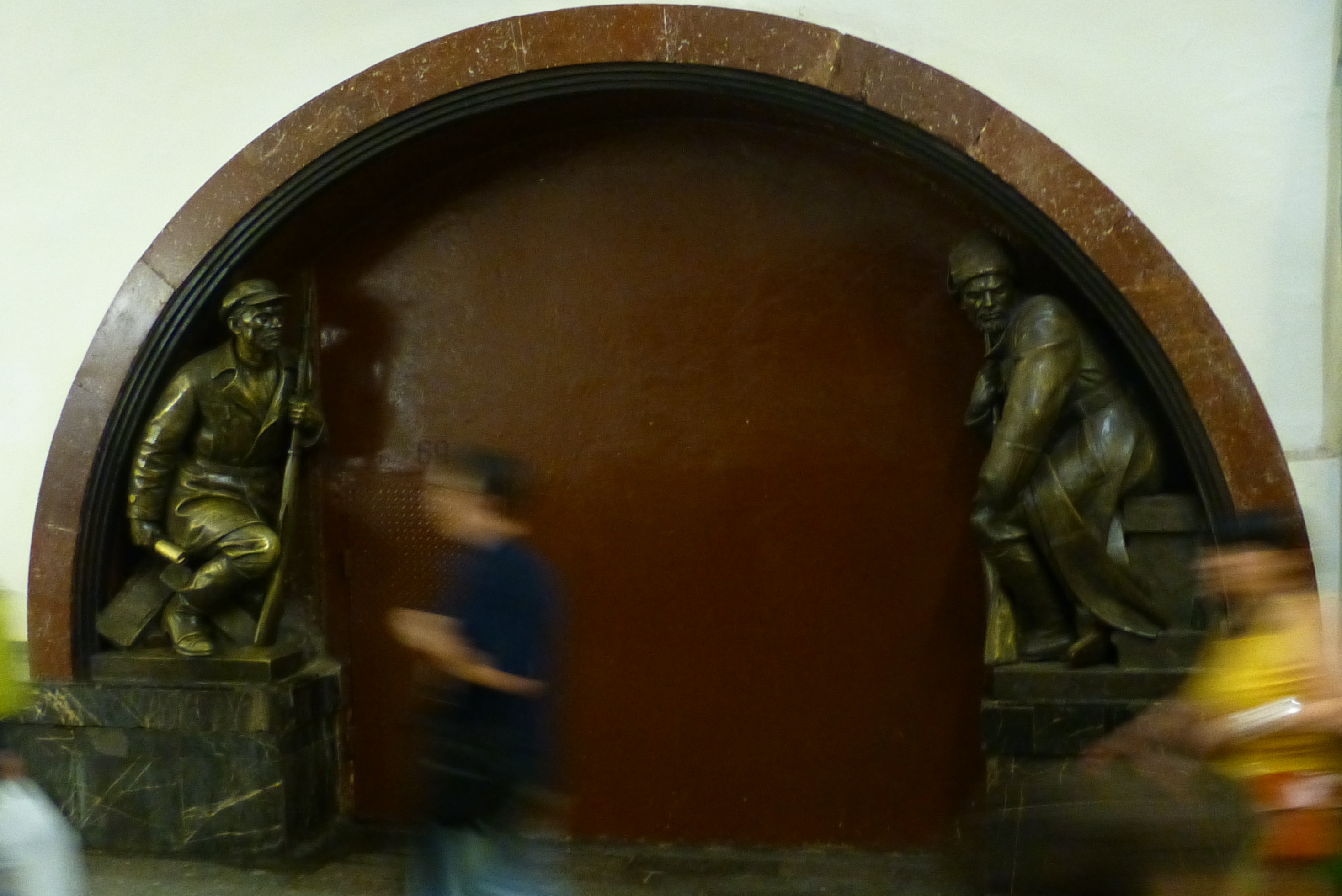
Joined to the Theatre Station is Revolution Plaza Station, which is part of a different line. Here, the arches were rimmed with brass, and pairs of statues guarded each side. You can tell by the blurry bits that there are a lot of people, and they are moving quickly.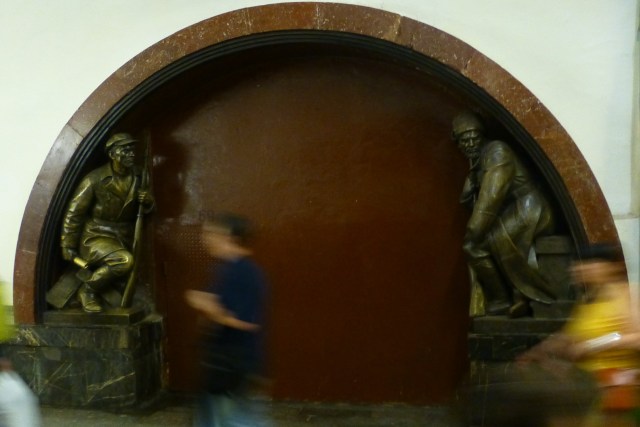
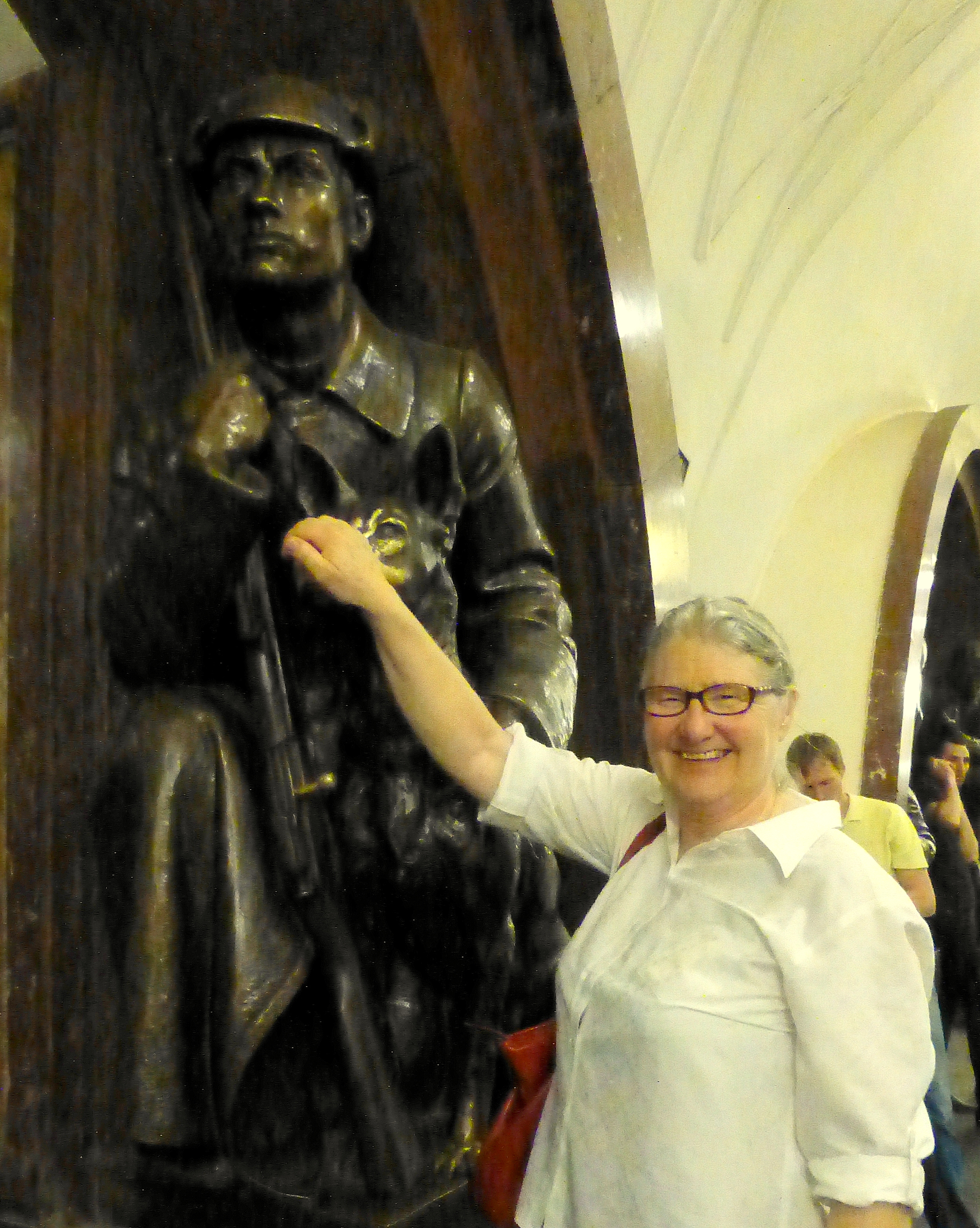
There are a few famous ones. It is considered lucky to touch the nose of the dogs, and their noses are shiny from it.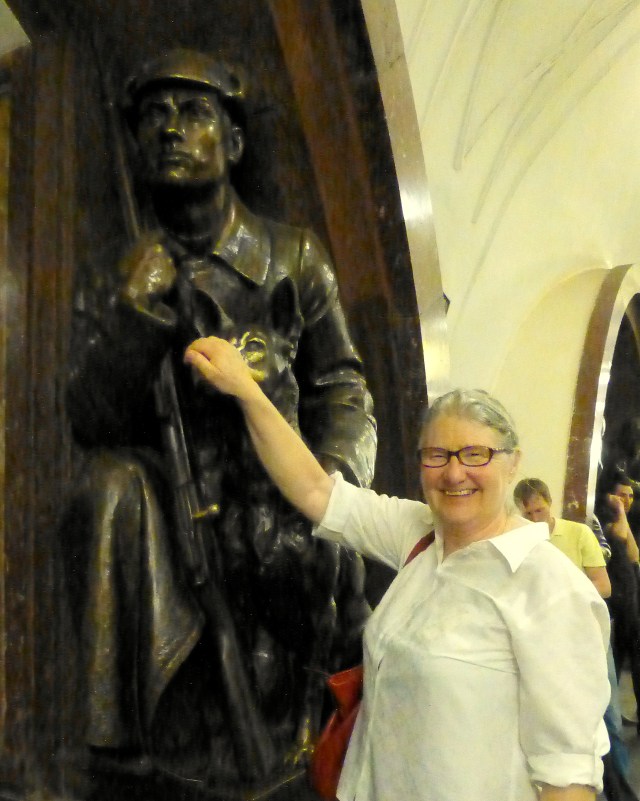
It is very unlucky to touch the rooster, however.
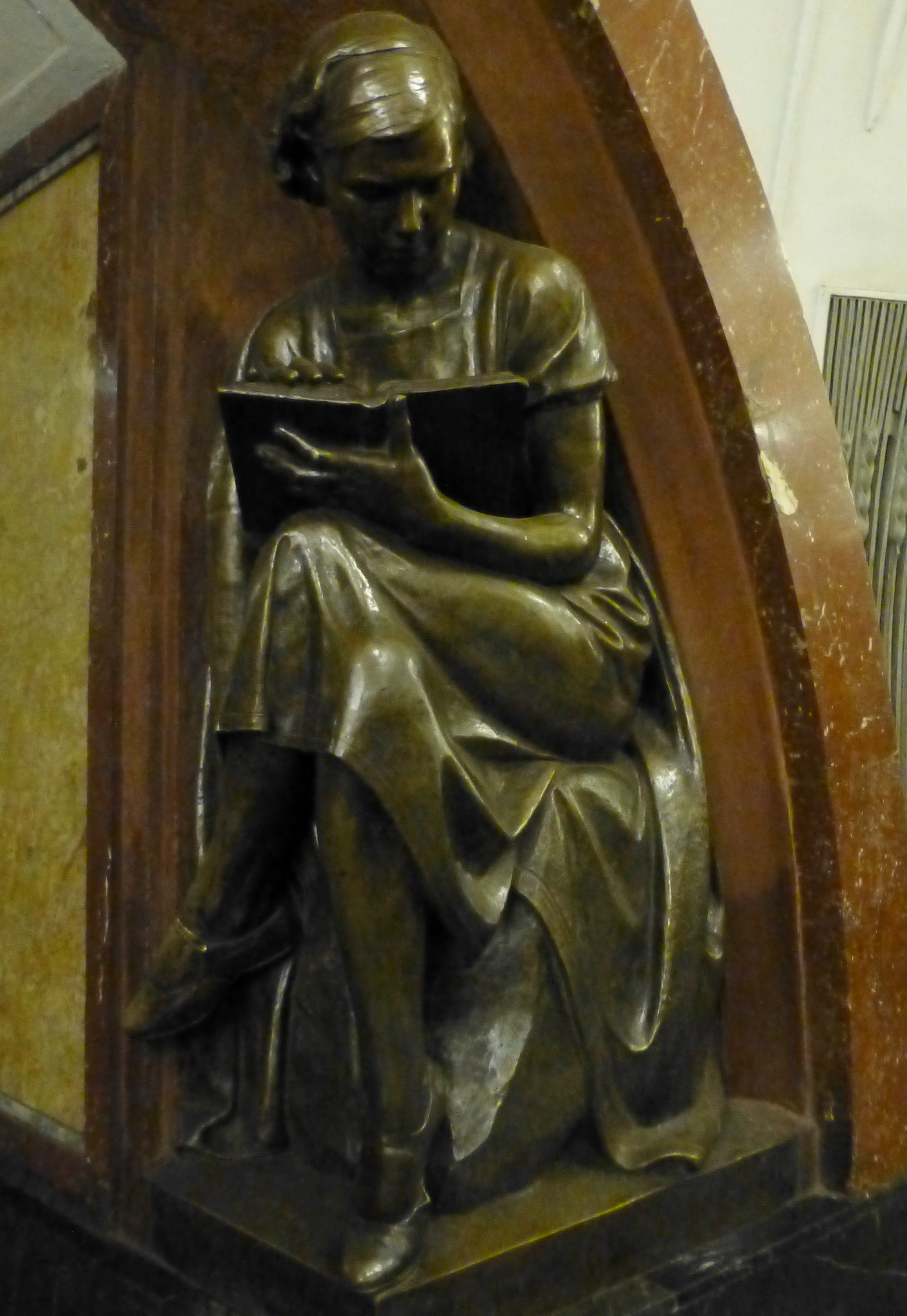
Those unlucky in love touch the shoe of this young girl –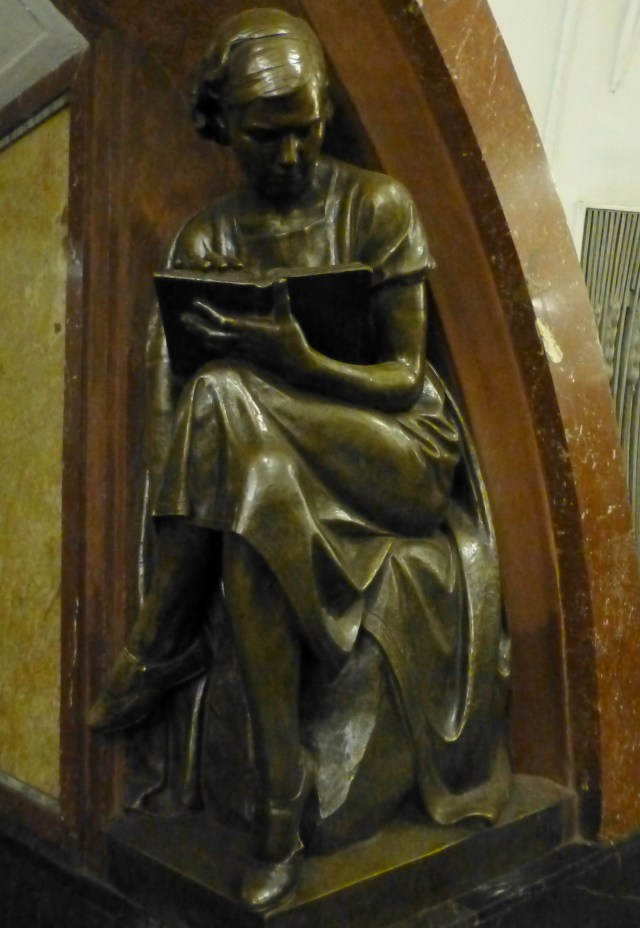
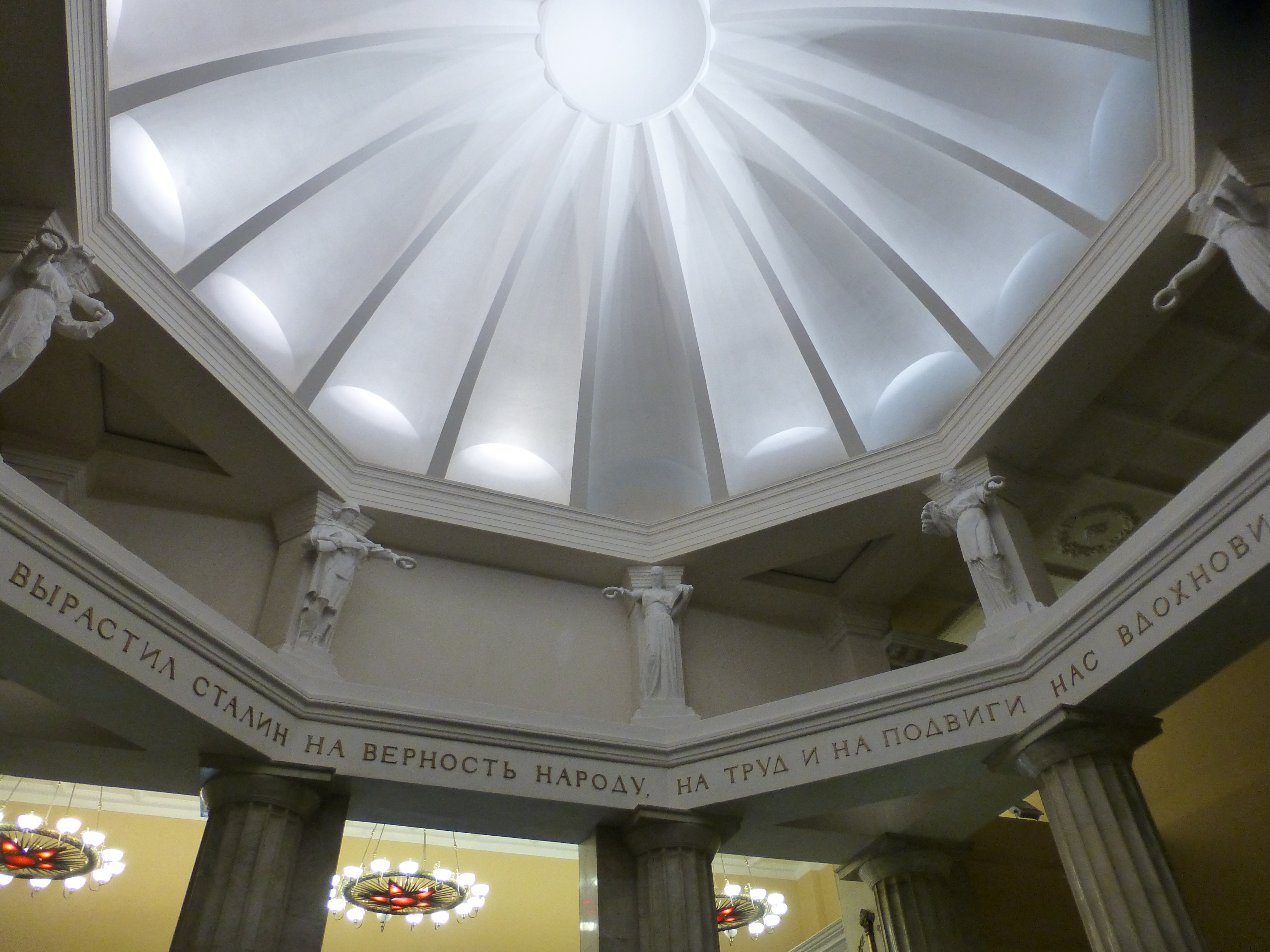
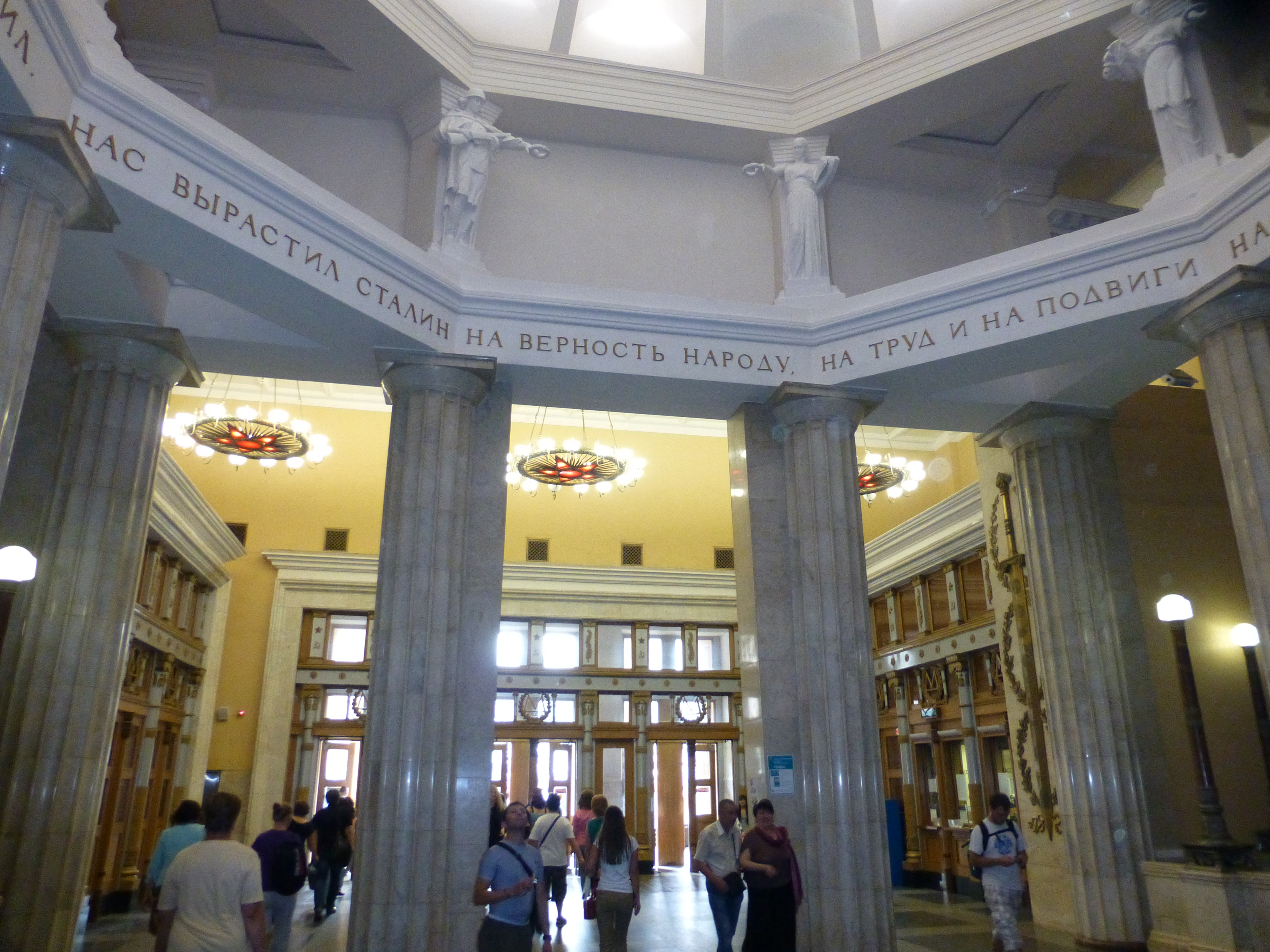
National pride and homage to Communism was very important to Stalin as he built the metro stations. At Kurskaya Station, the vestibule where you first enter the metro is designed like a cathedral……. just look at the splendour and scale!
The high dome….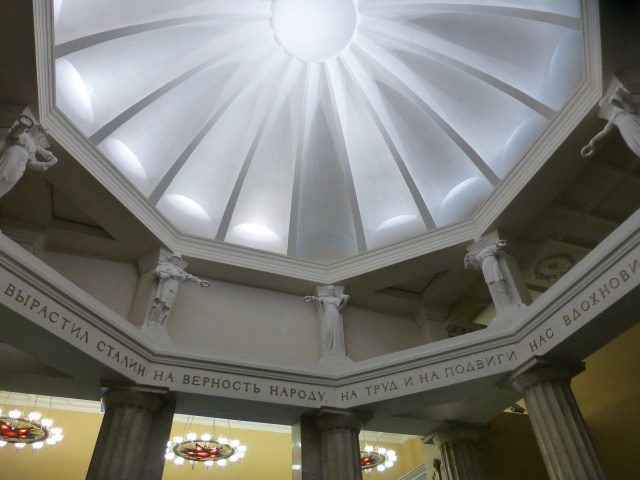
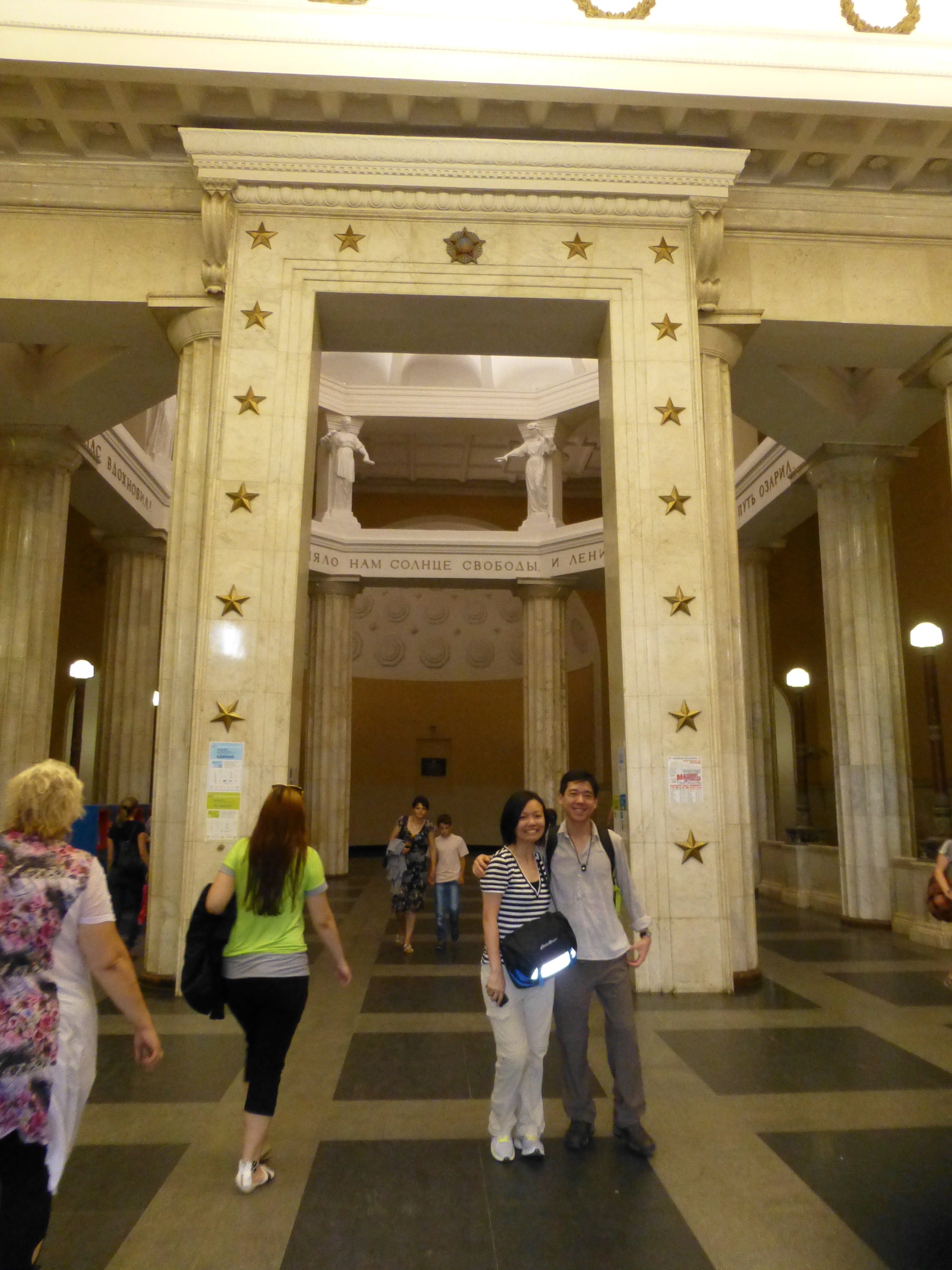
And the red stars of communism –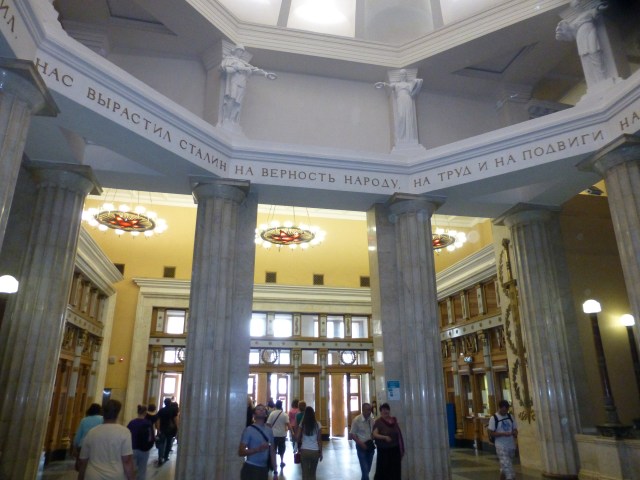
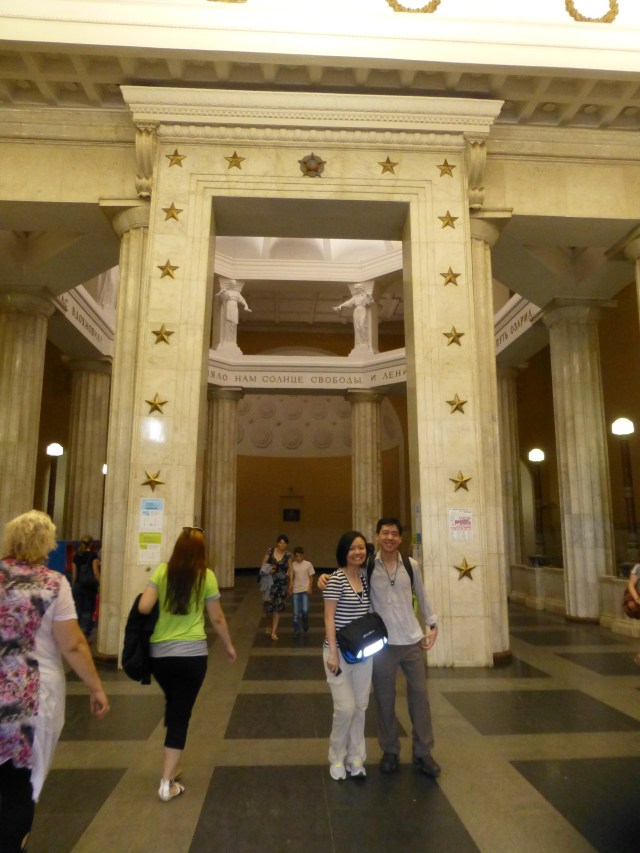
-propaganda at its finest and most subtle. Who could fail to be proud as they walked through this temple on the way to work?
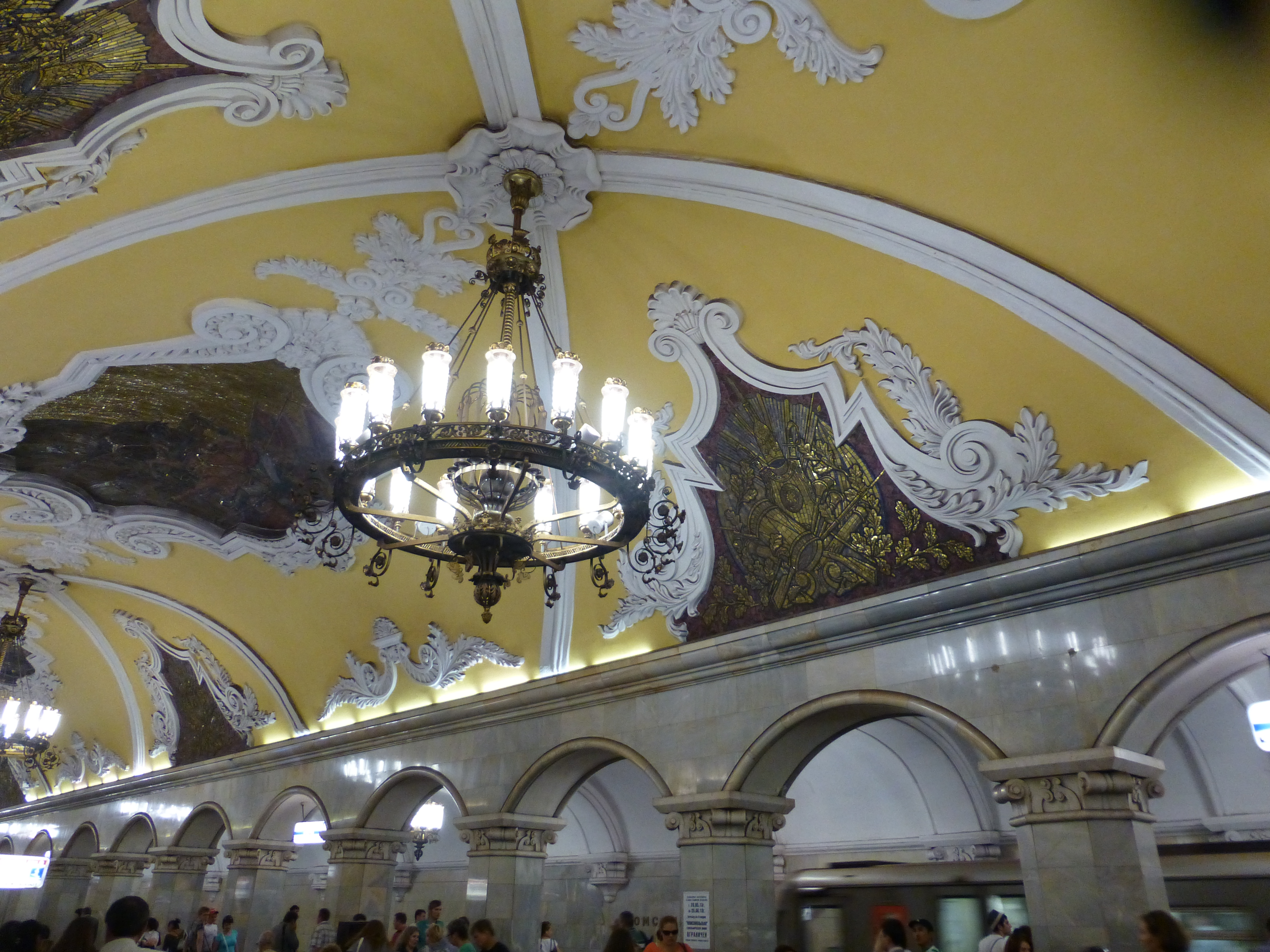
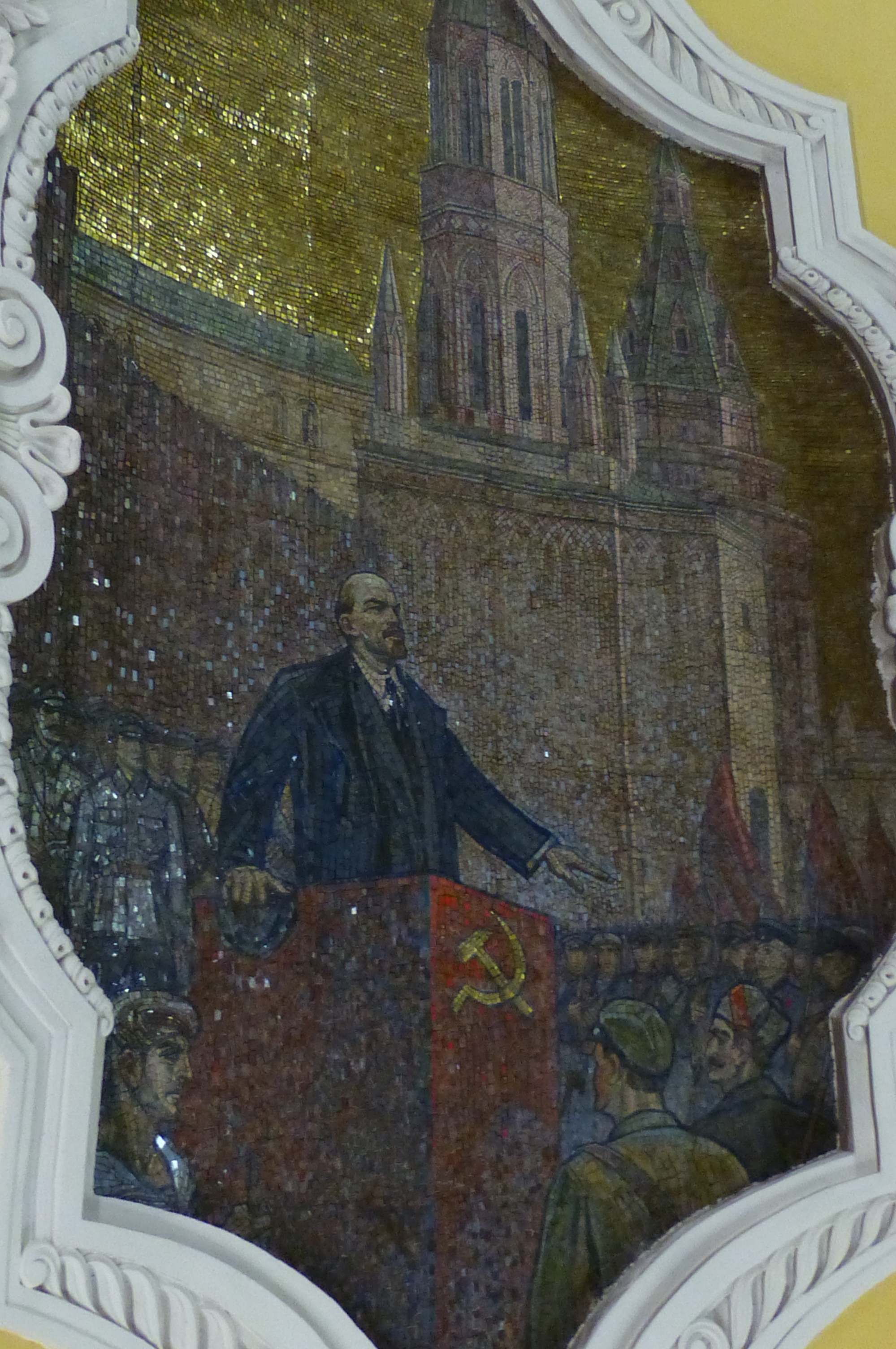
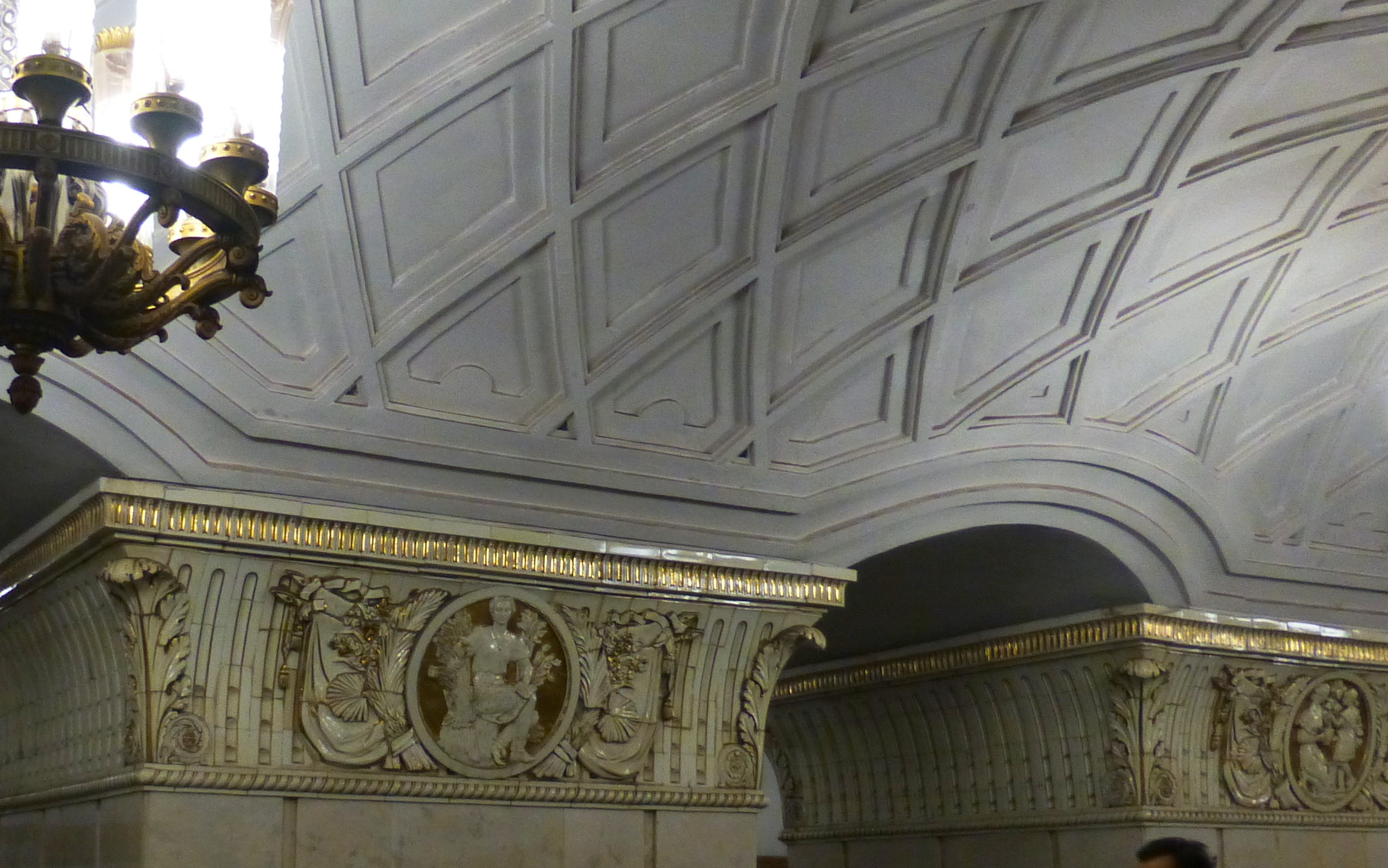
Back into the bowels of the earth, we sped away to KomsamolskayaStation. Here, the ceilings of the station are embellished with incredible mosaics made of semi precious stones and gold leaf.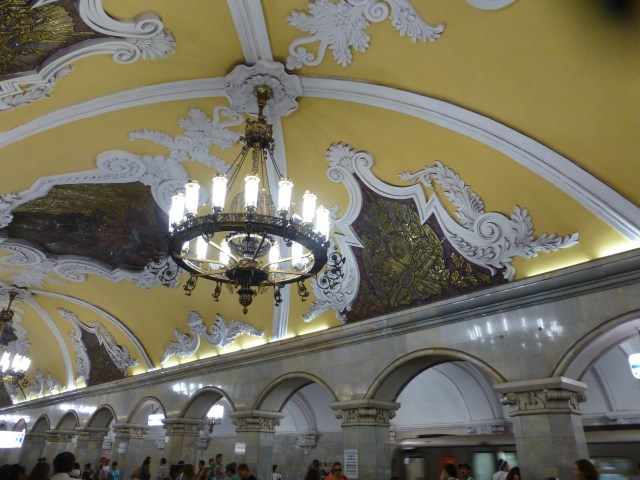
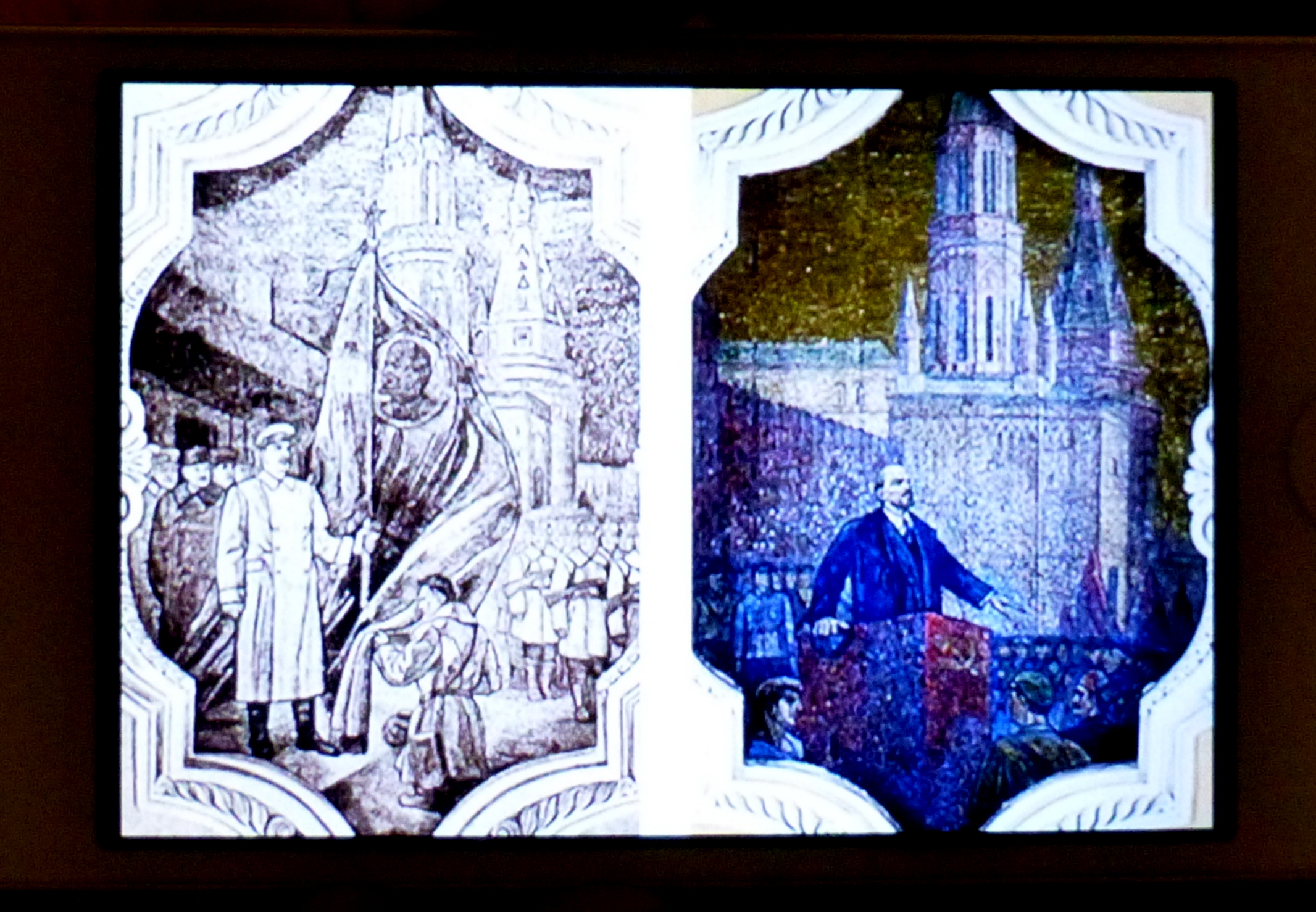
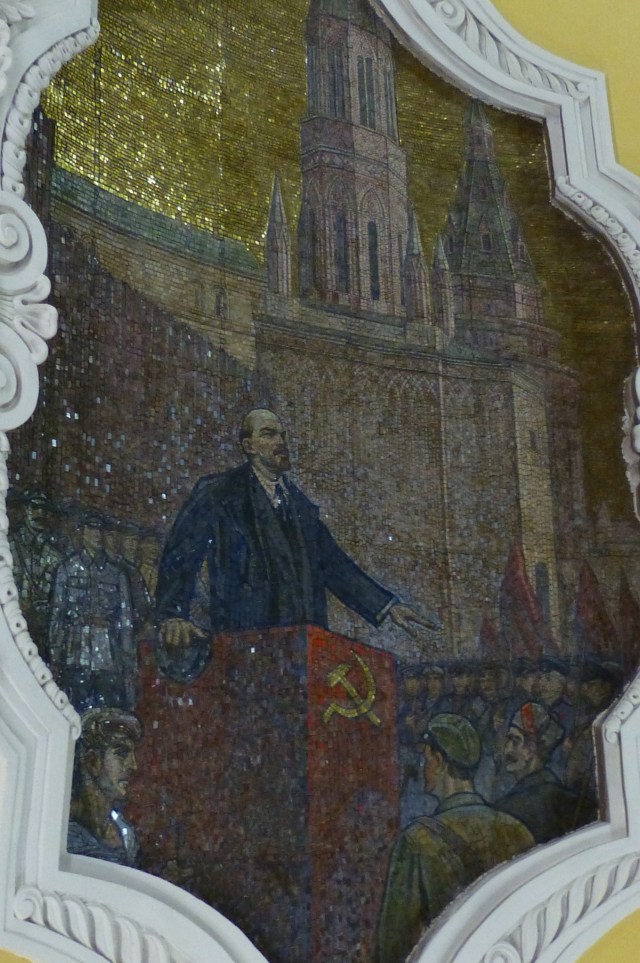 We learned some interesting history here. Stalin was the architect of the metro and its decoration, and he had his face and figure emblazoned all over it. When Nikita Khrushchev became the ruler, he removed every image of Stalin. Here you can see a photo of a photo – the old one in black and white with Josef Stalin, and the new version with Lenin replacing him.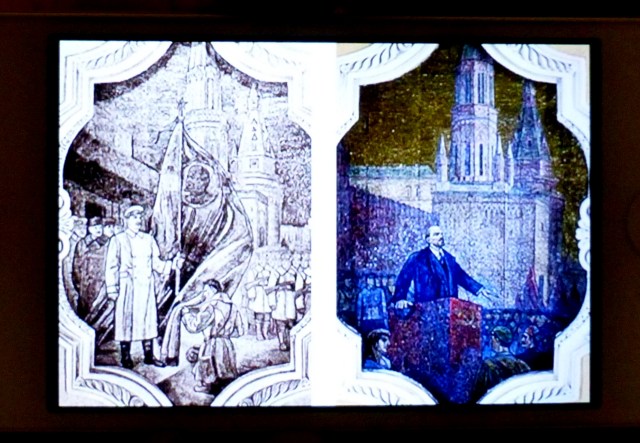
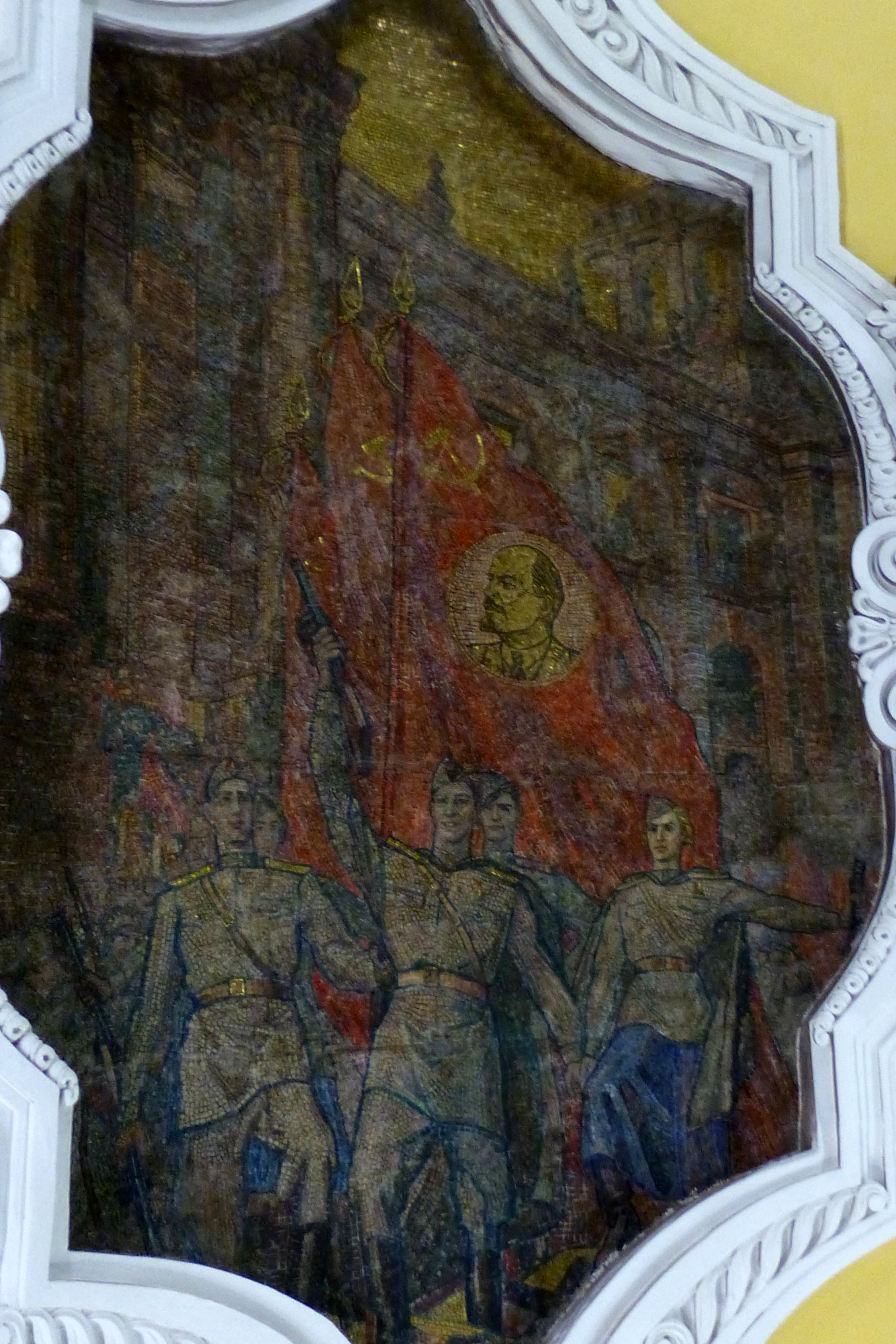
Here is another where Stalin’s face used to be on the flag.
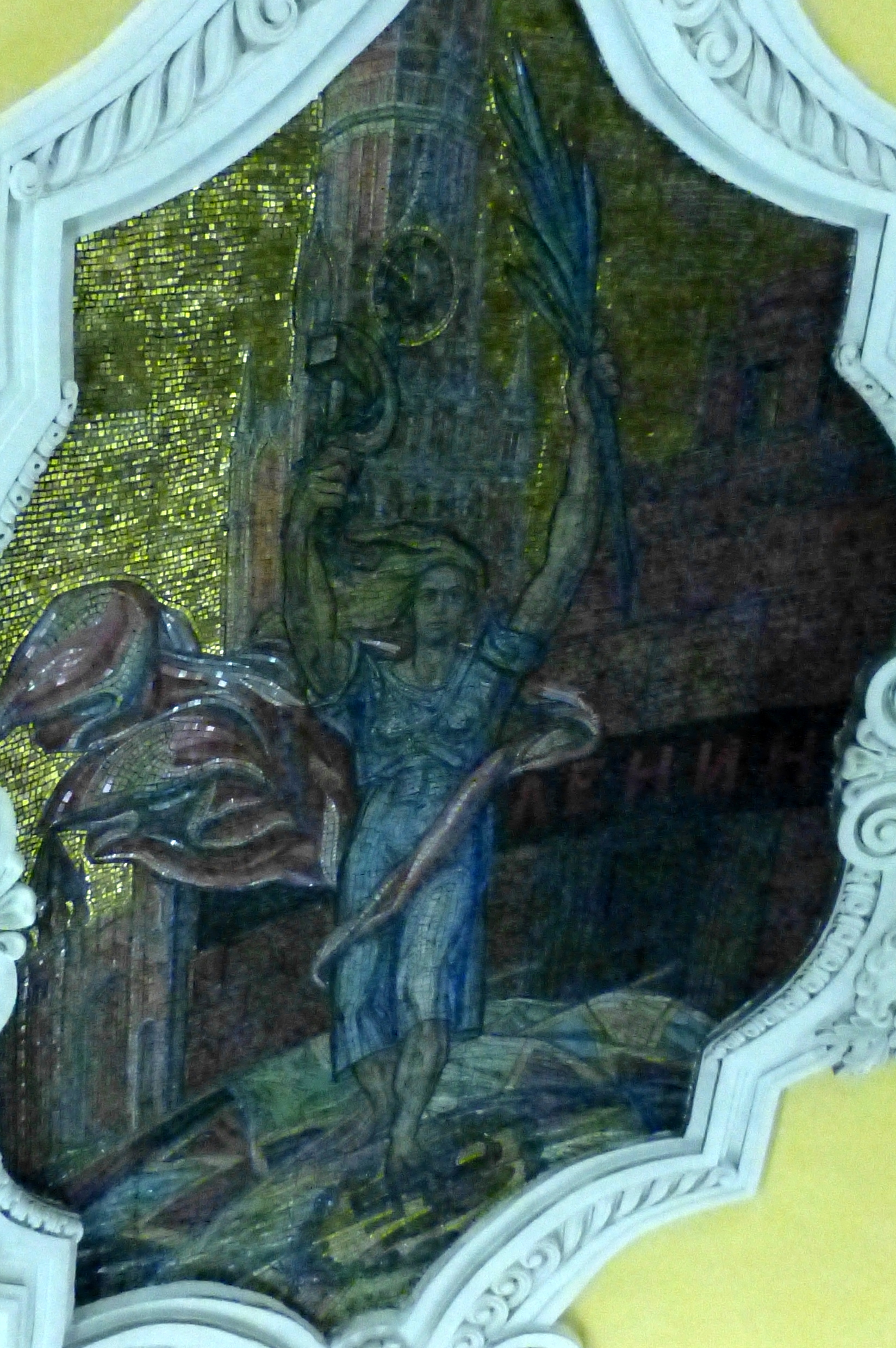
Here is a woman carrying the hammer and sickle, and stamping upon the a swastika. It is illegal in Russia to show a swastika anywhere, by the way.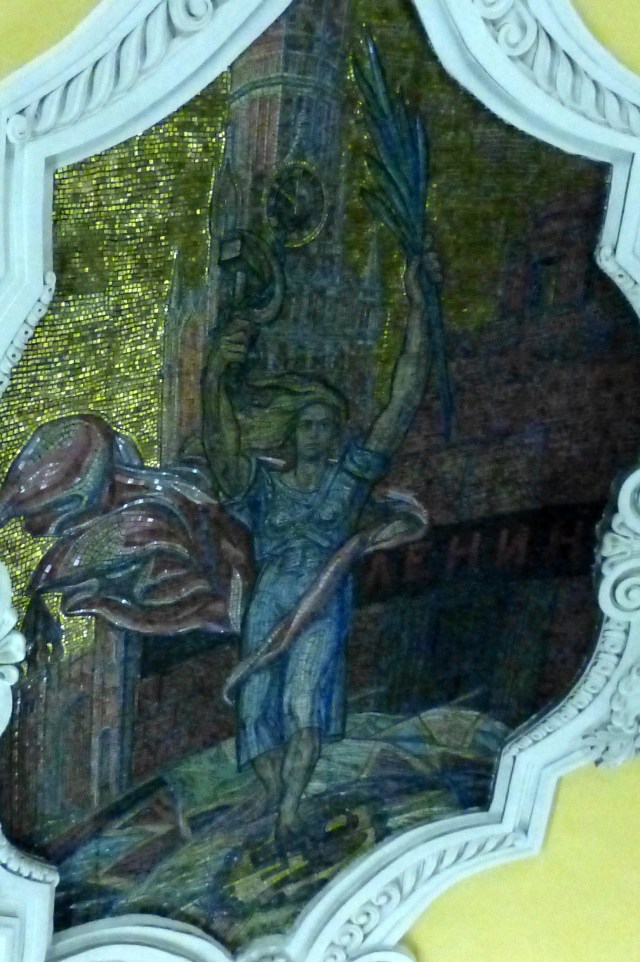
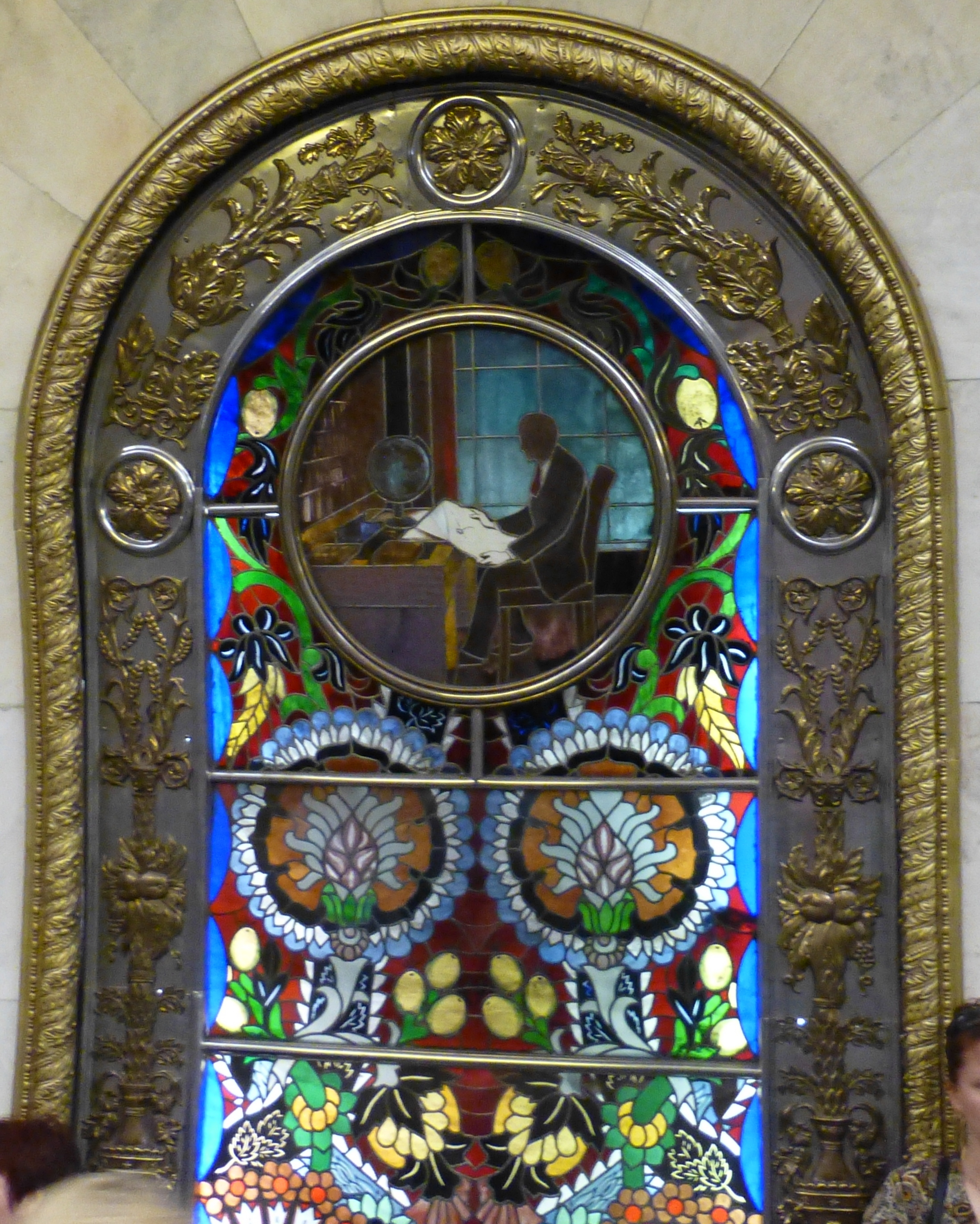
In the next station we visited, Novoslobodskaya, we discovered colourful stained glass decoration the pillars between the arches. They depict various professions.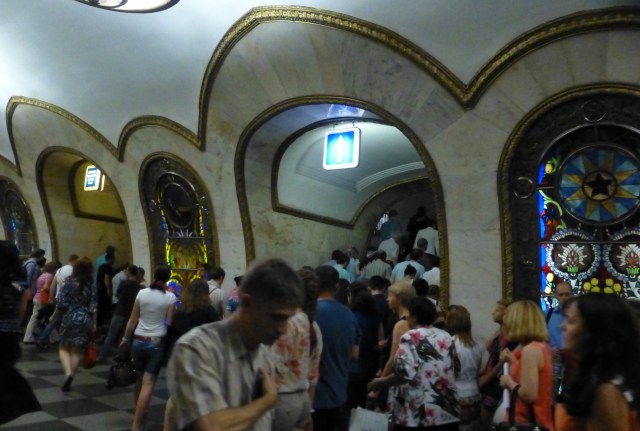
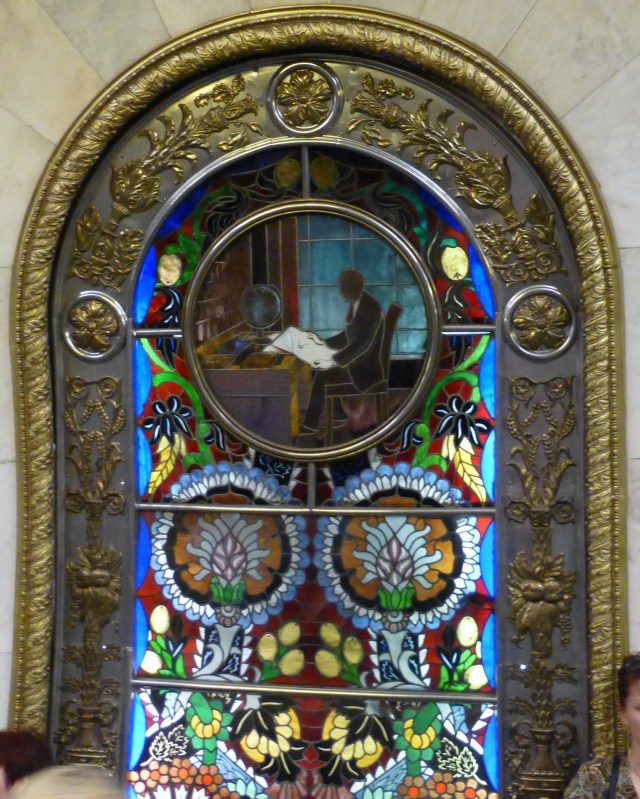
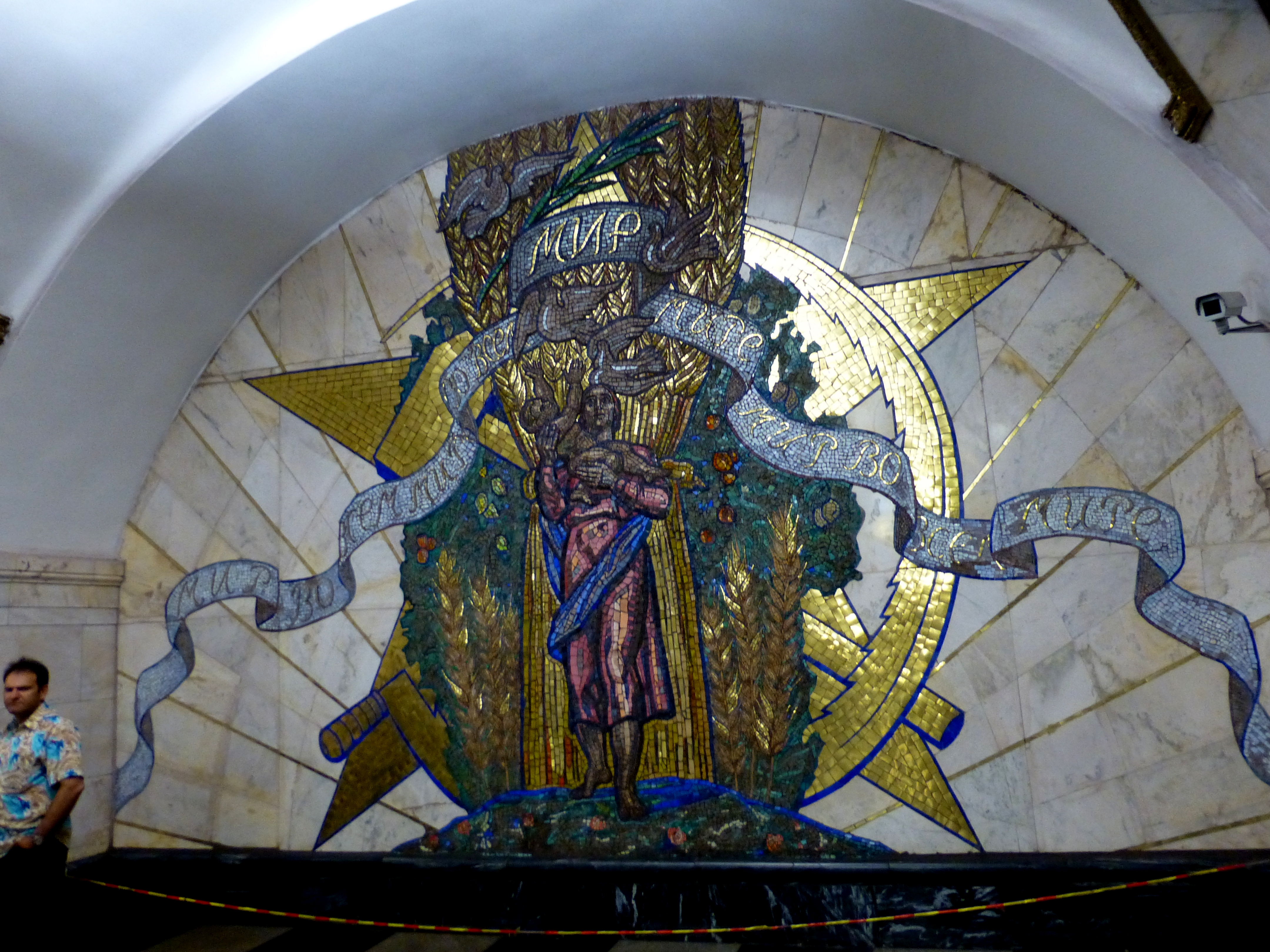
The last example of “de-Stalinization” we saw was here as well. Stalin’s face was where the Letter “MNP” are now. There were also three children where now there is only one. 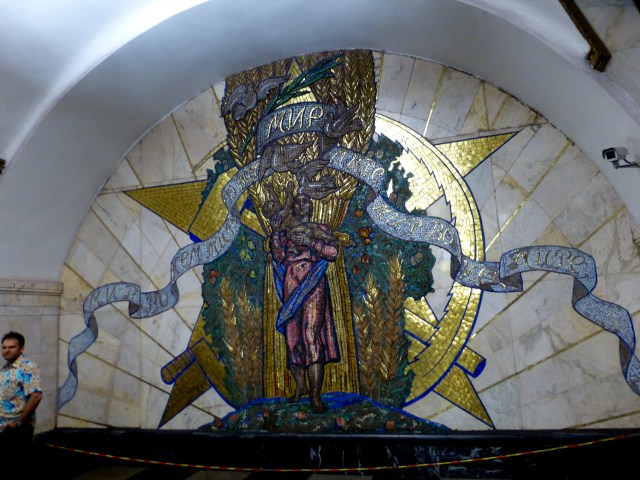
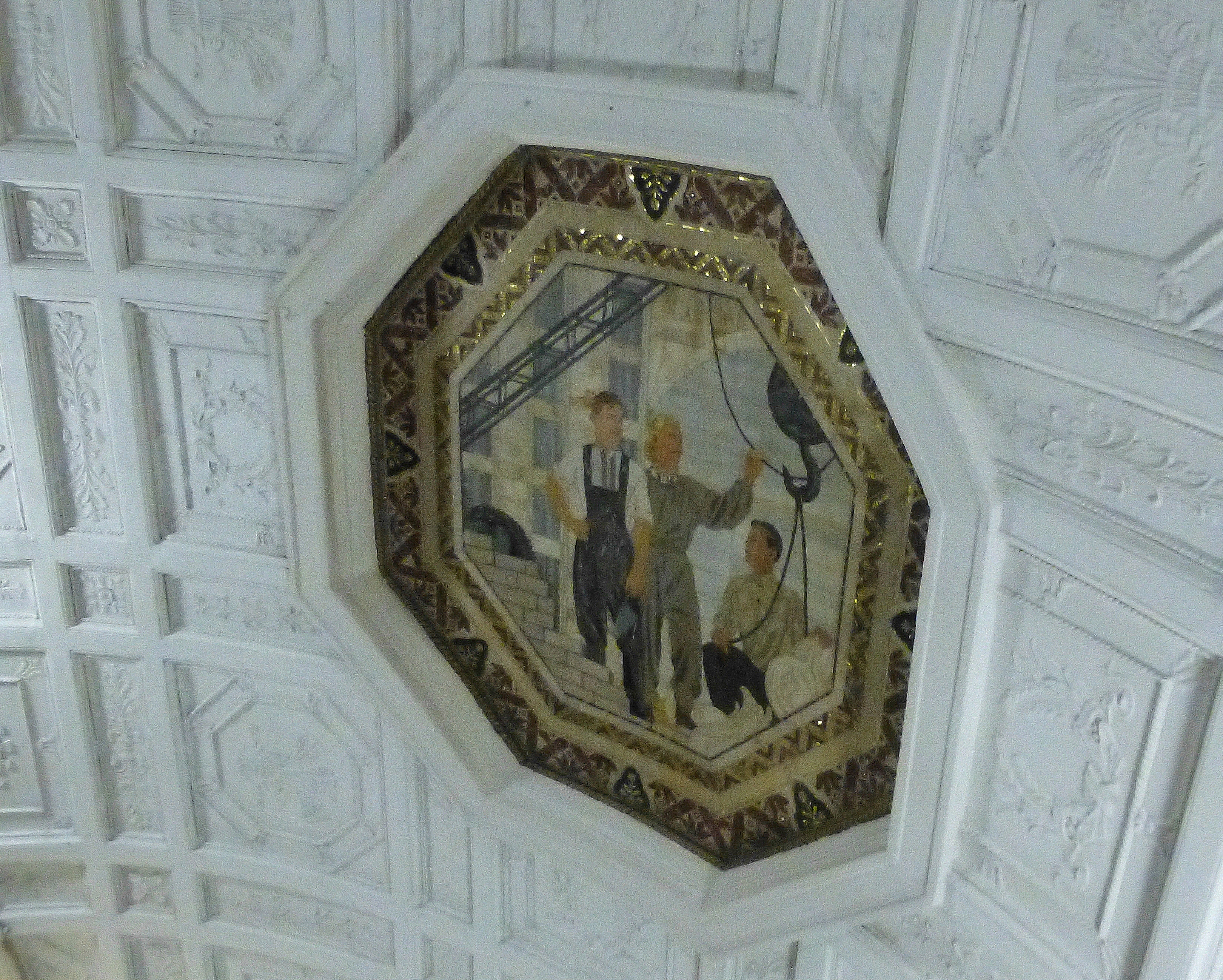
The Belorusskaya Station is a tribute to the people of Belarus. The incredible ceilings were accented with painted scenes from that area.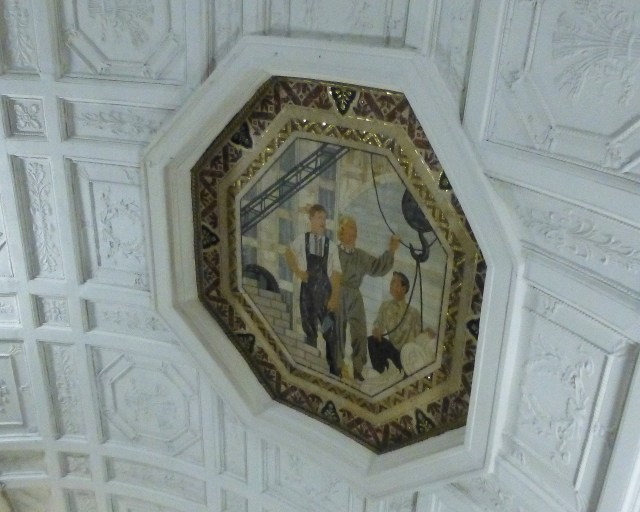
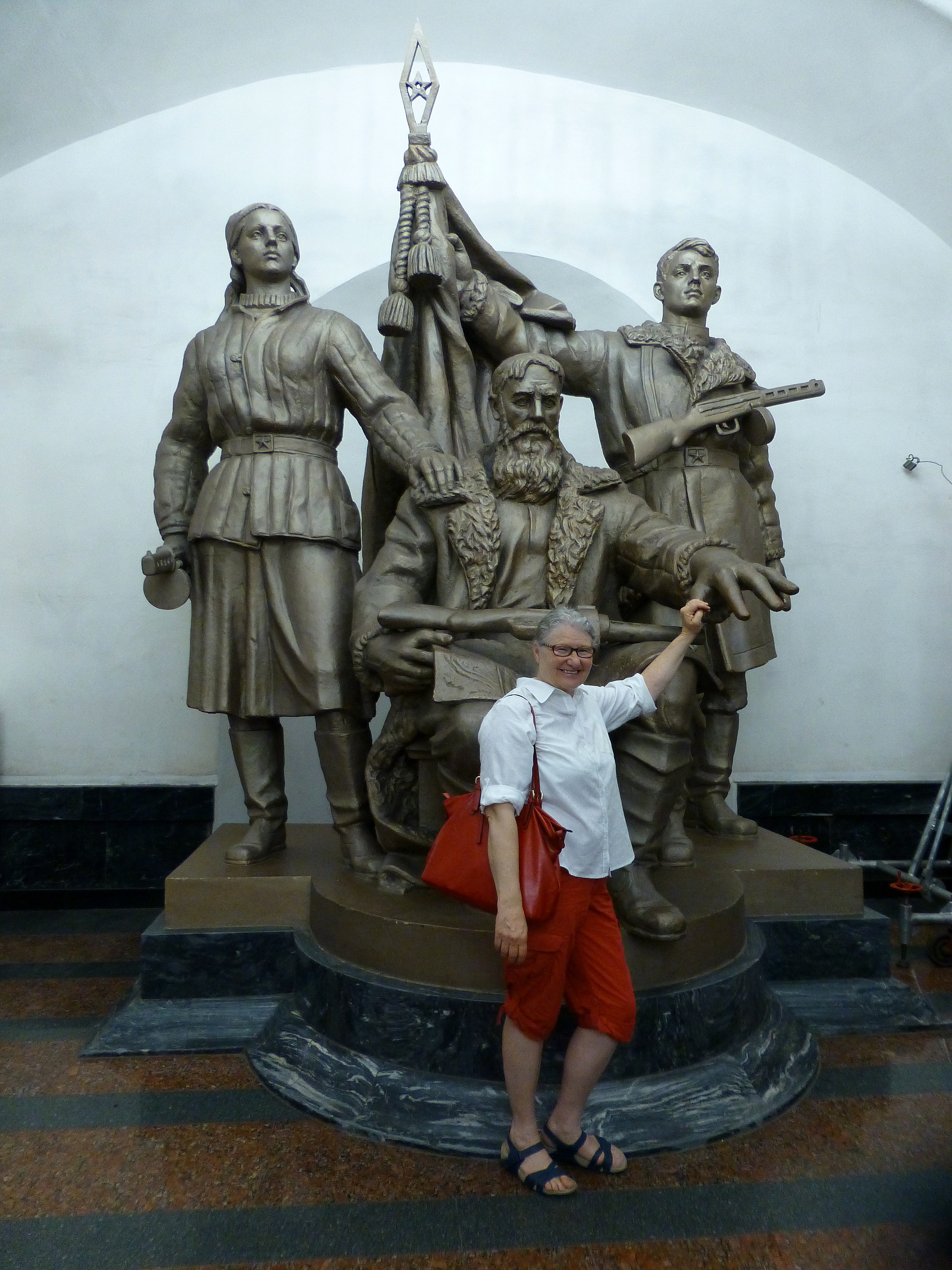
In this station is one statue that didn’t have to be altered, as Stalin was not included in it. It is huge….. here I am holding the man’s finger.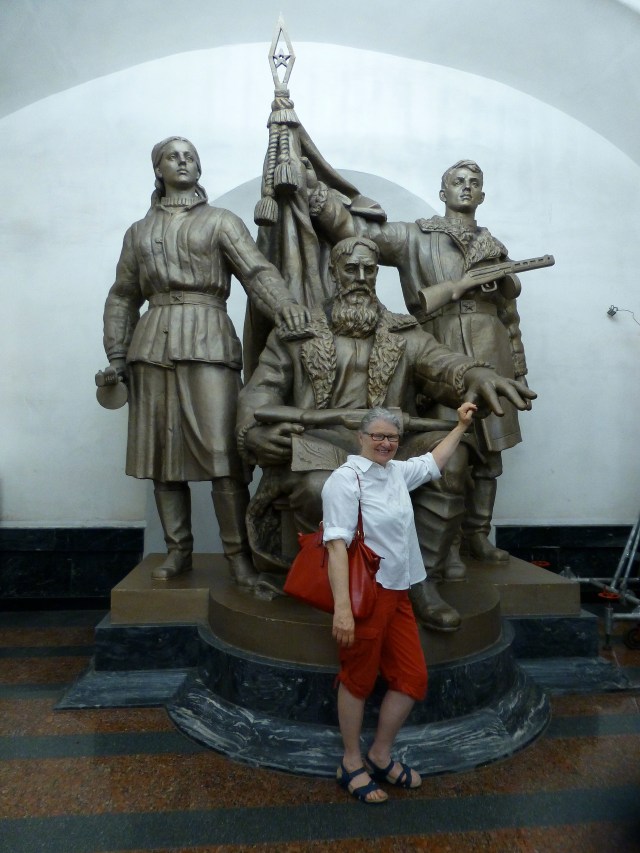
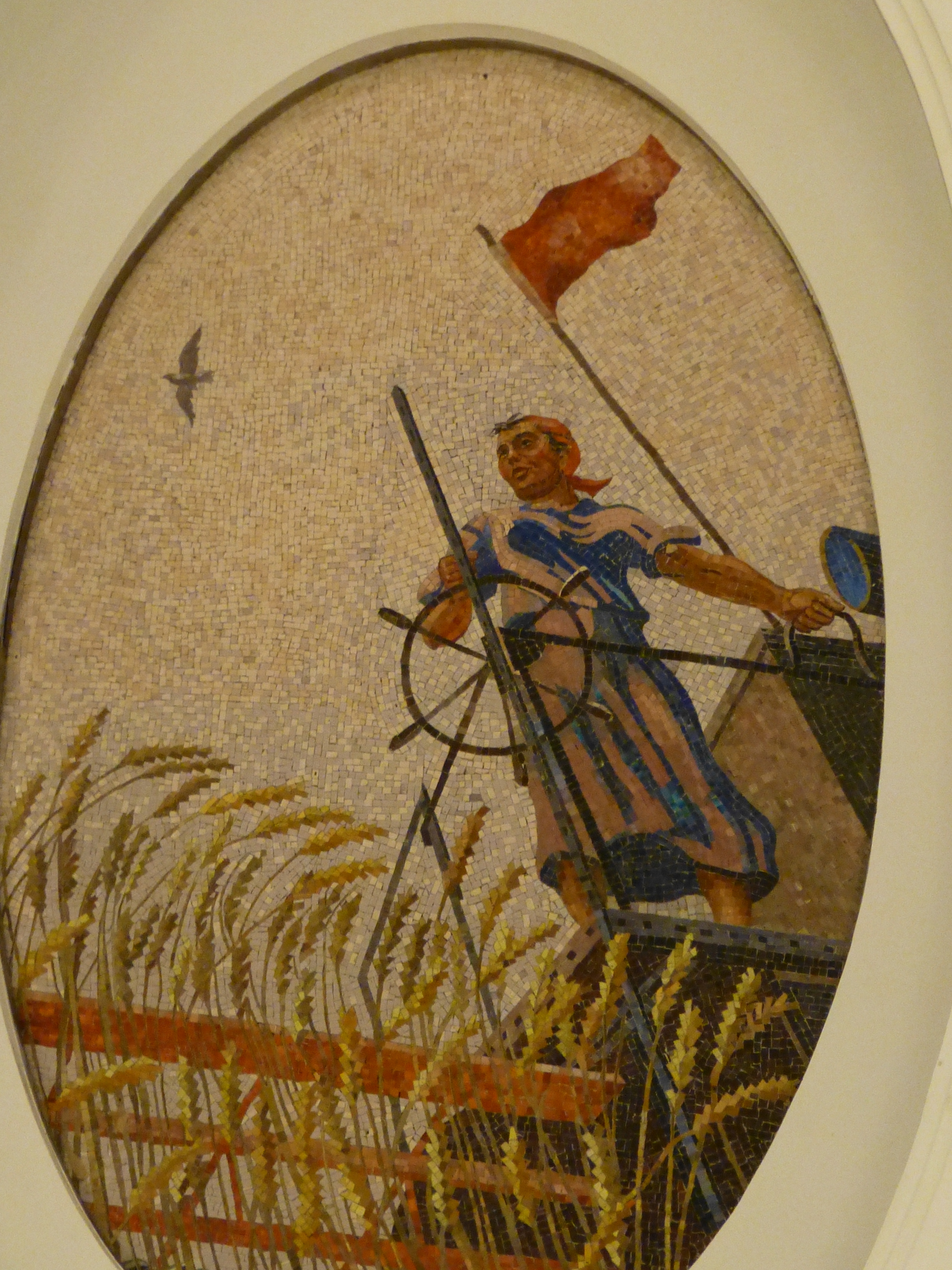
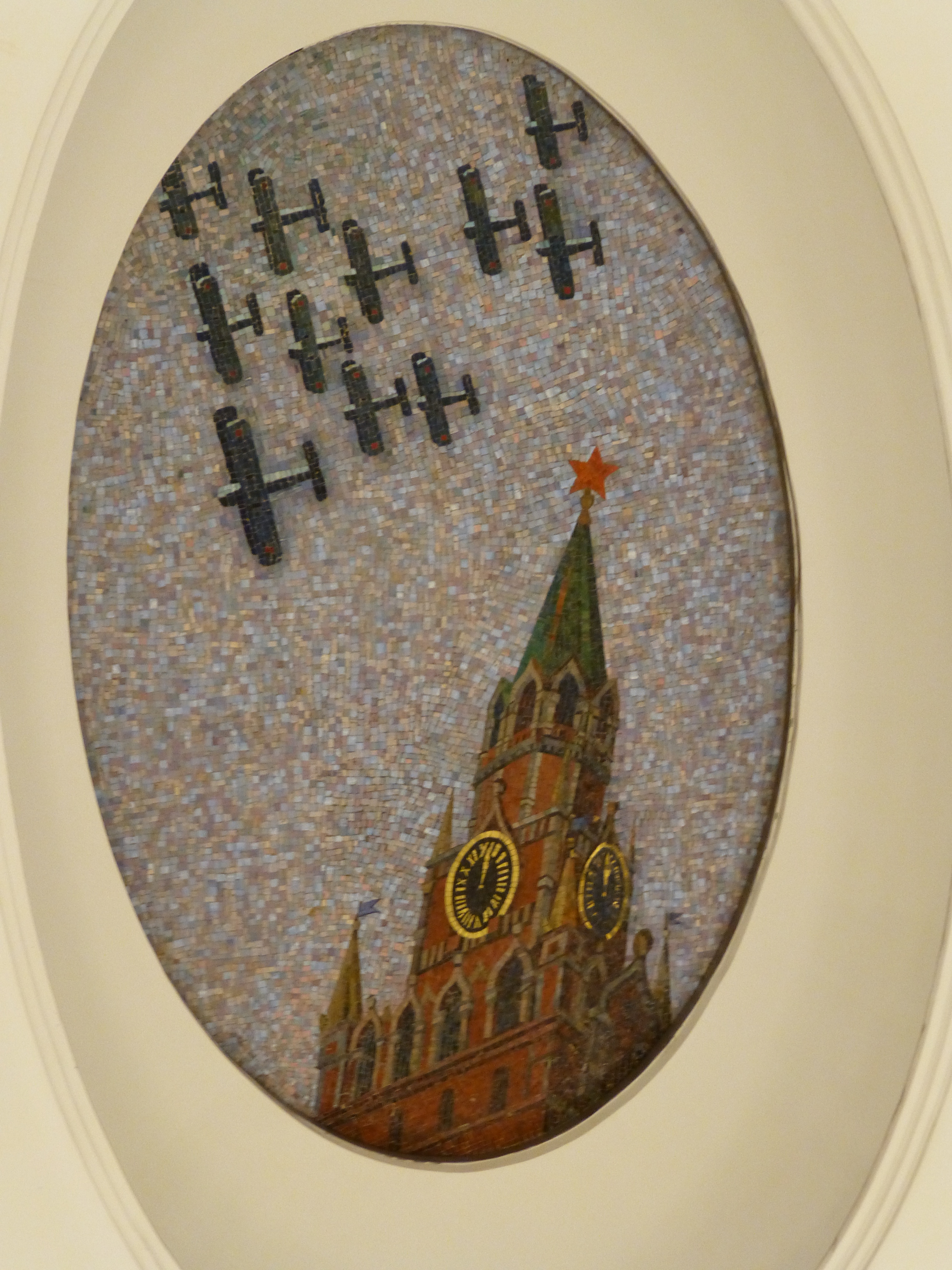
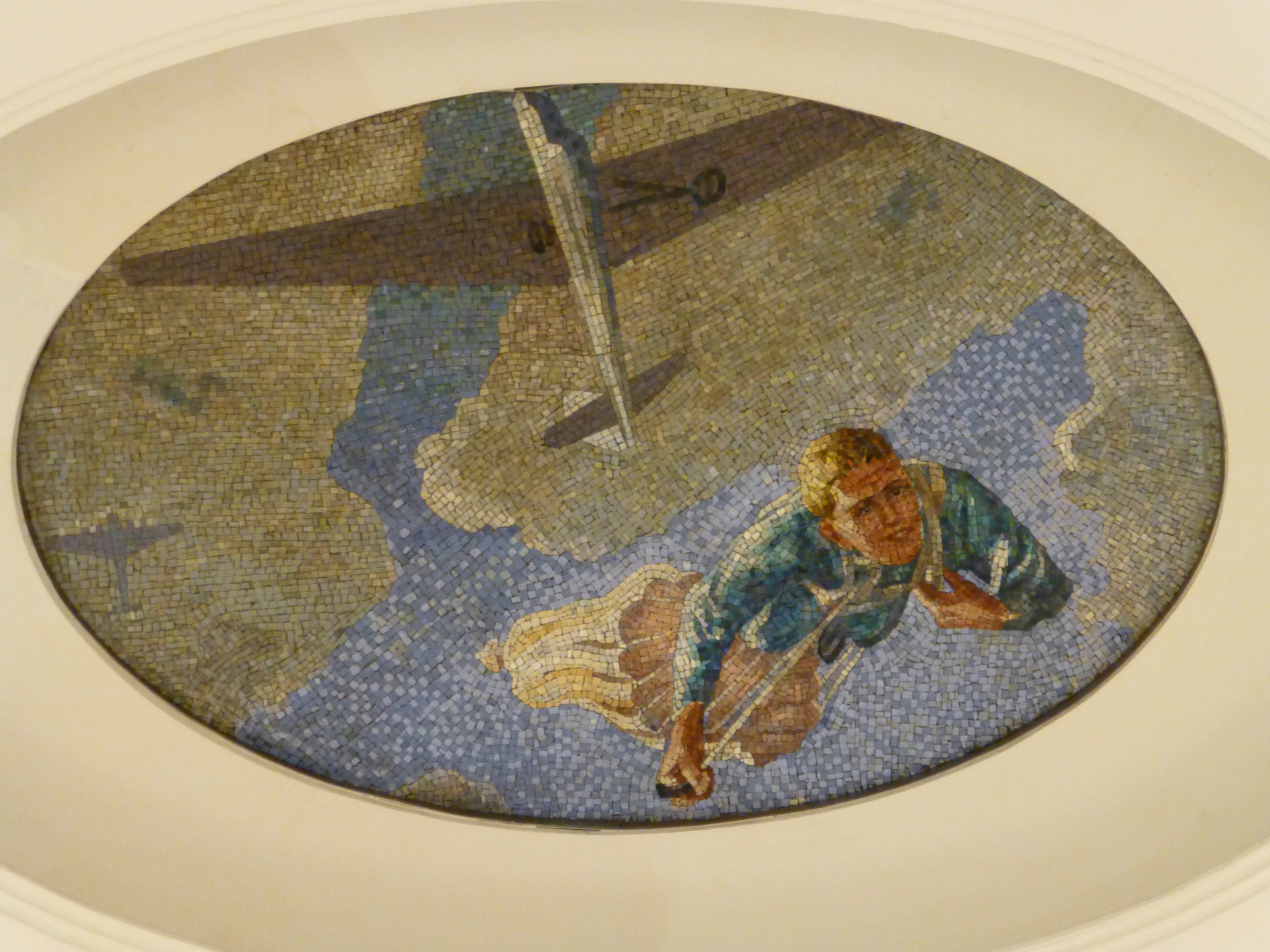
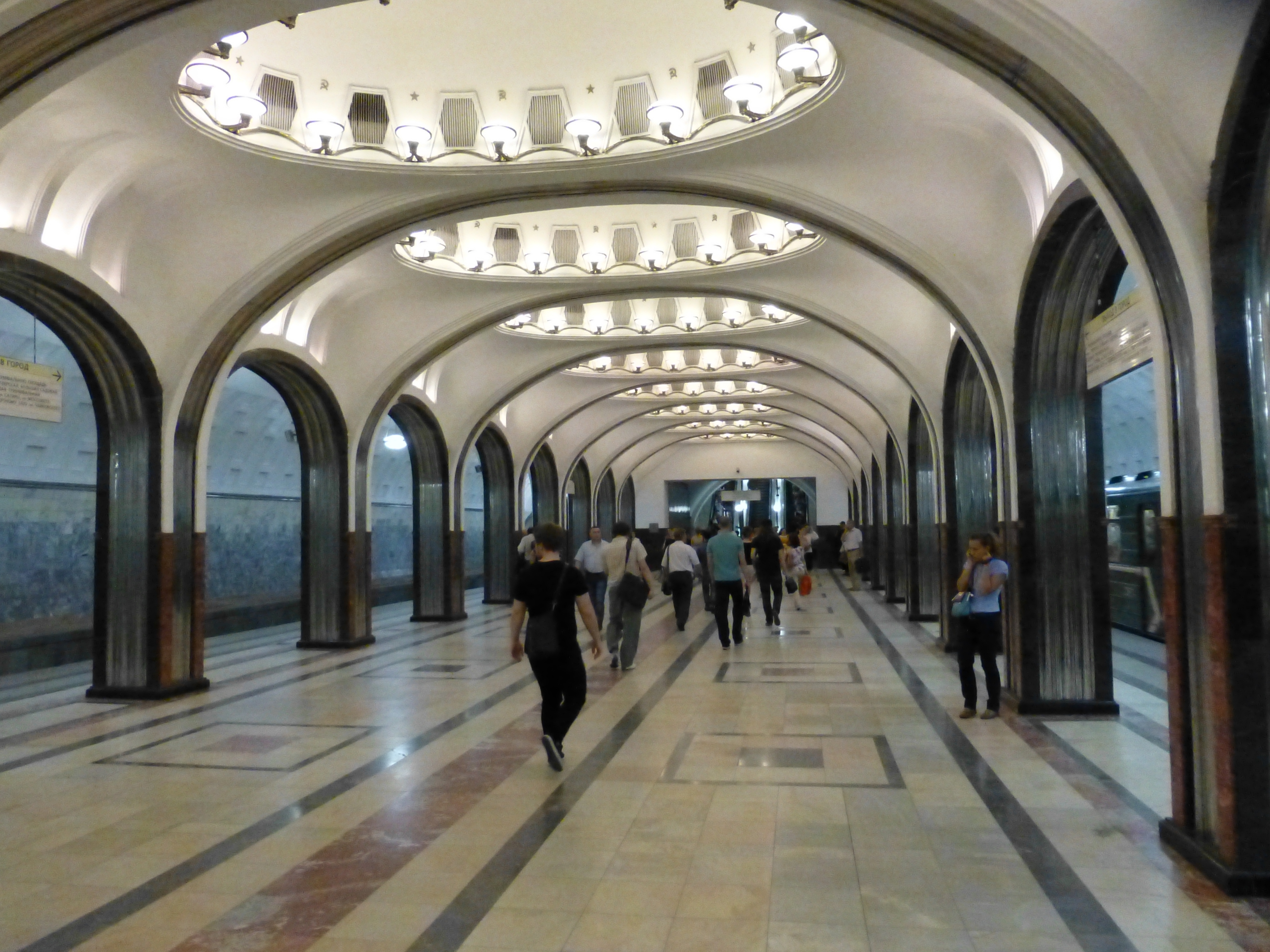
Our final stop was Mayakovskaya Station. All along the vaulted ceiling are 34 mosaics depicting the sky in a 24 hour period. Here are a few of them –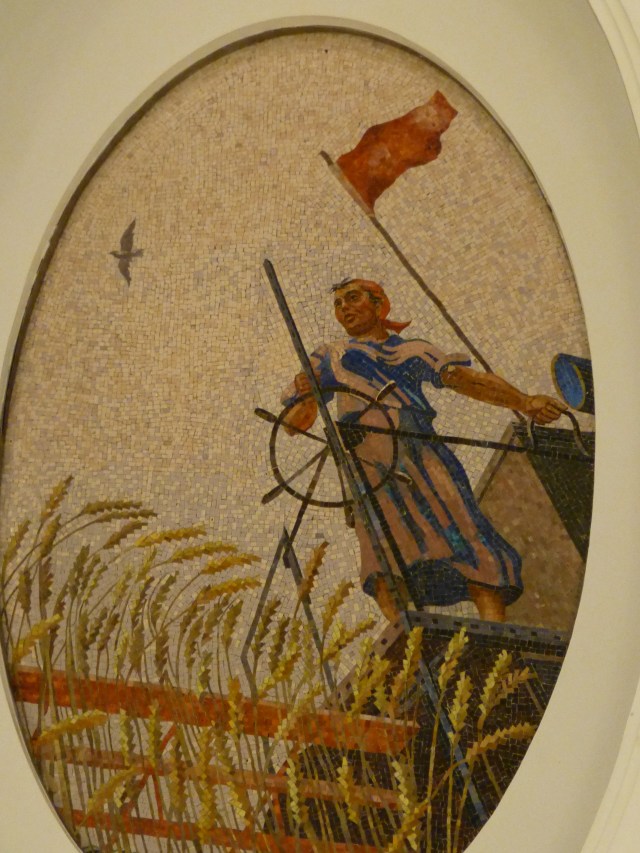
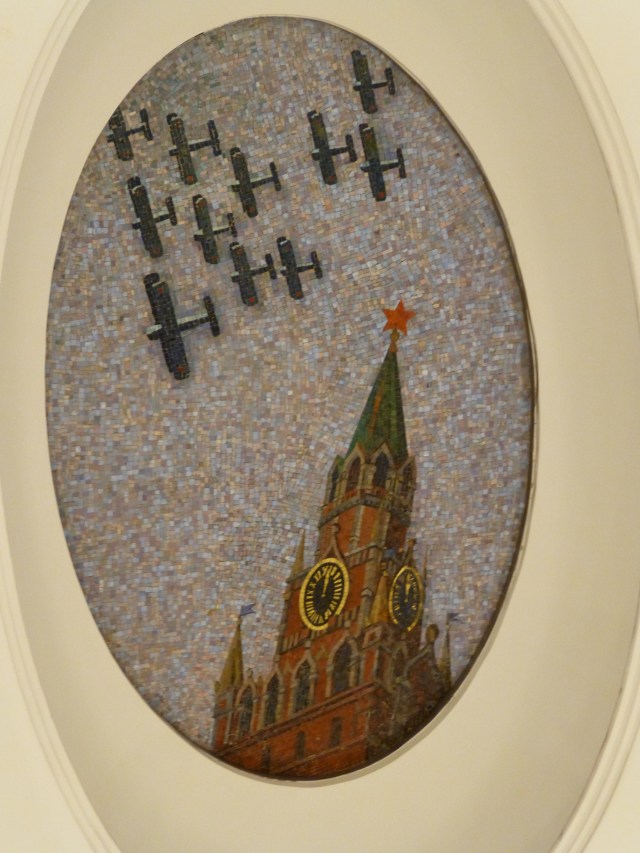
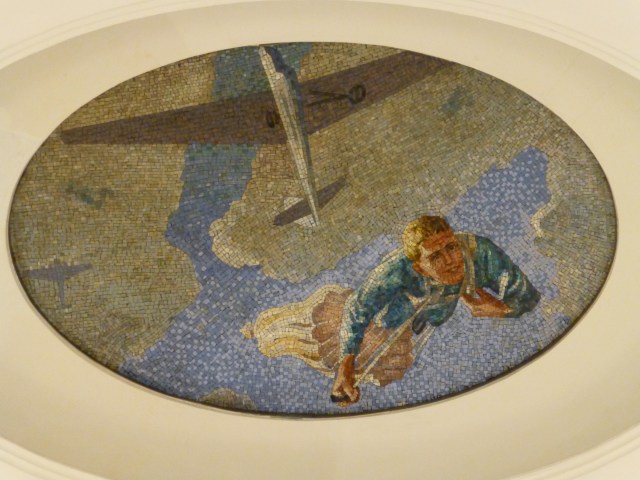
This station has a very modern look to it because of the many arches and very open structure. It is also the noisiest of the stations, as there is no wall space to stop the roar of the trains from bouncing across the entire station.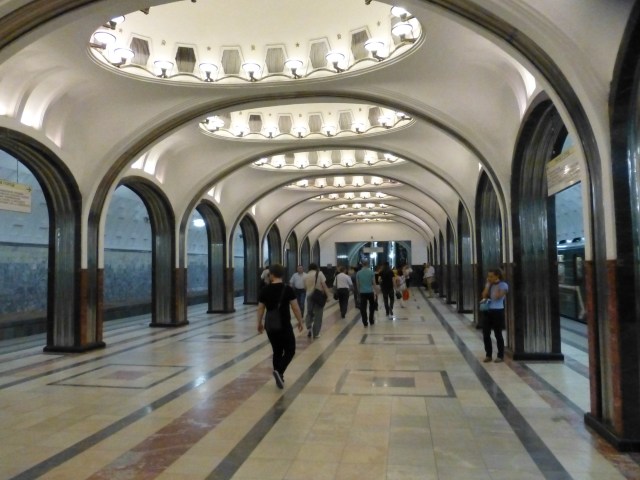
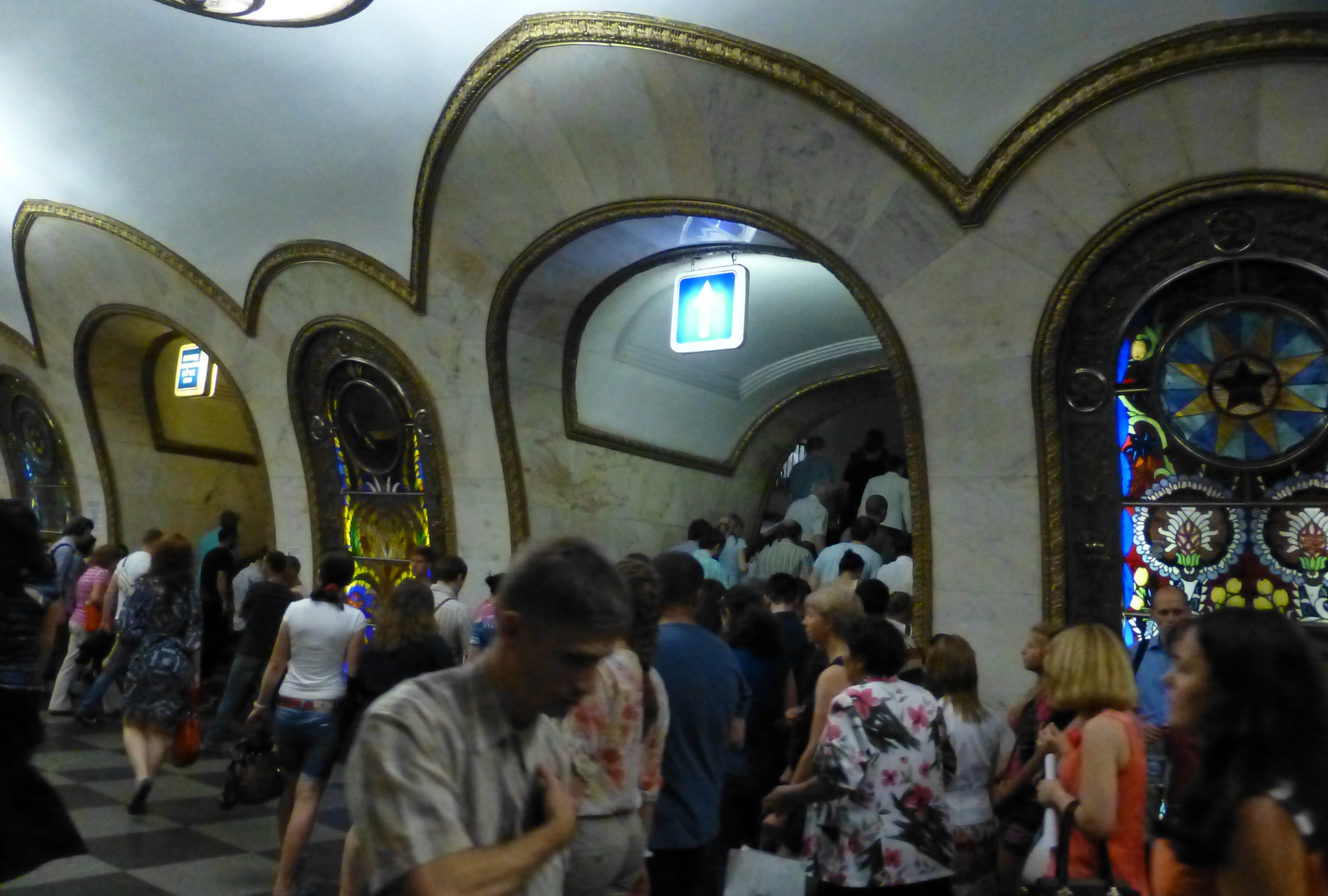
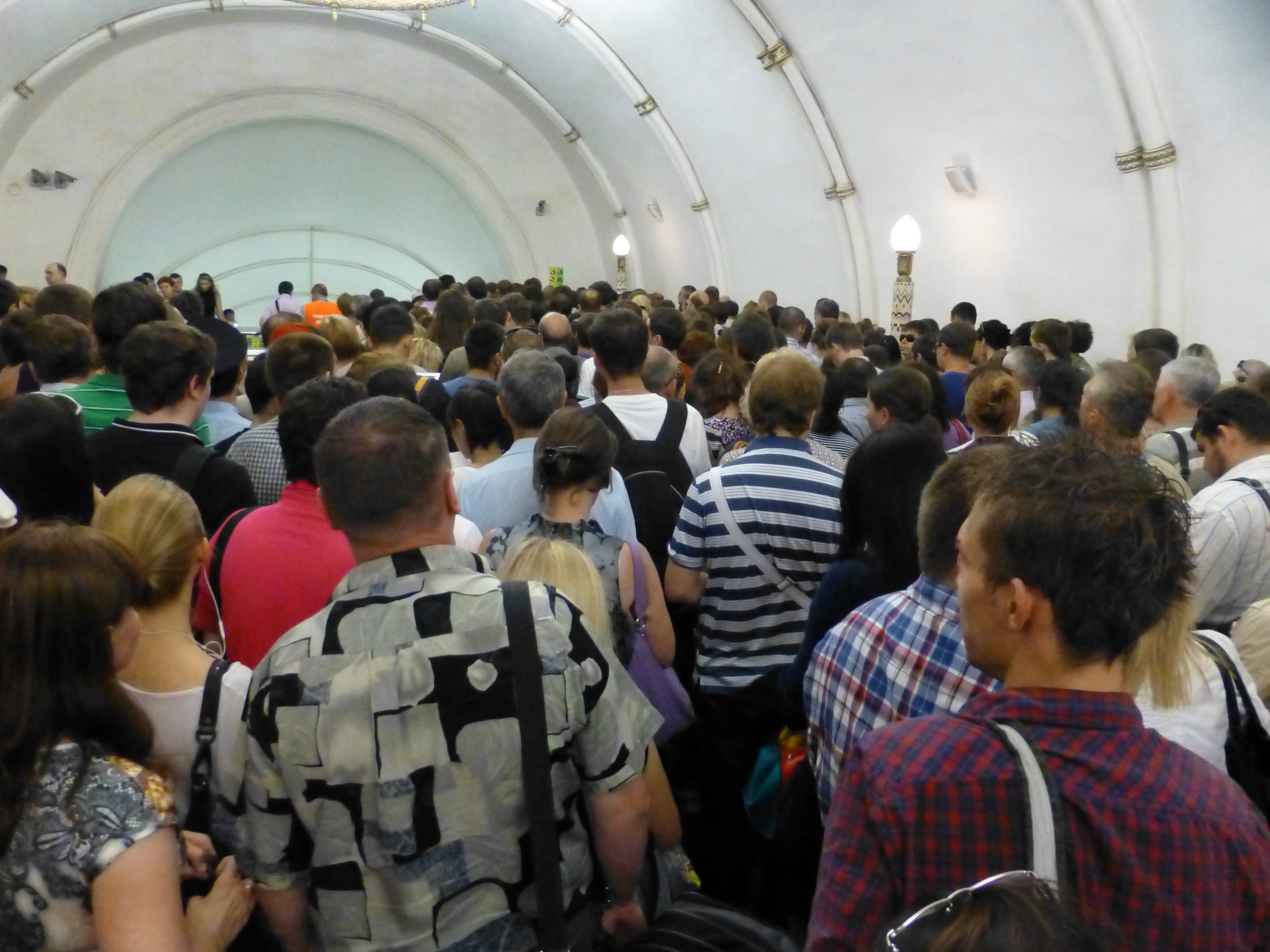
The crowds were quite incredible…….. as I left the group and continued to my hotel, I passed the Belarussian statue again… just look at the crowd waiting to go on the down escalator.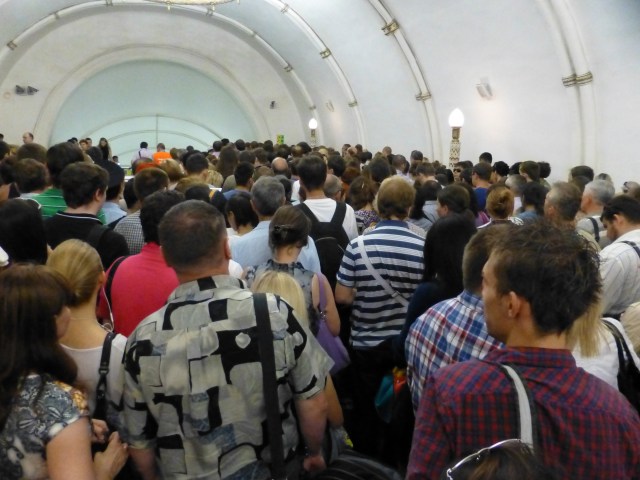
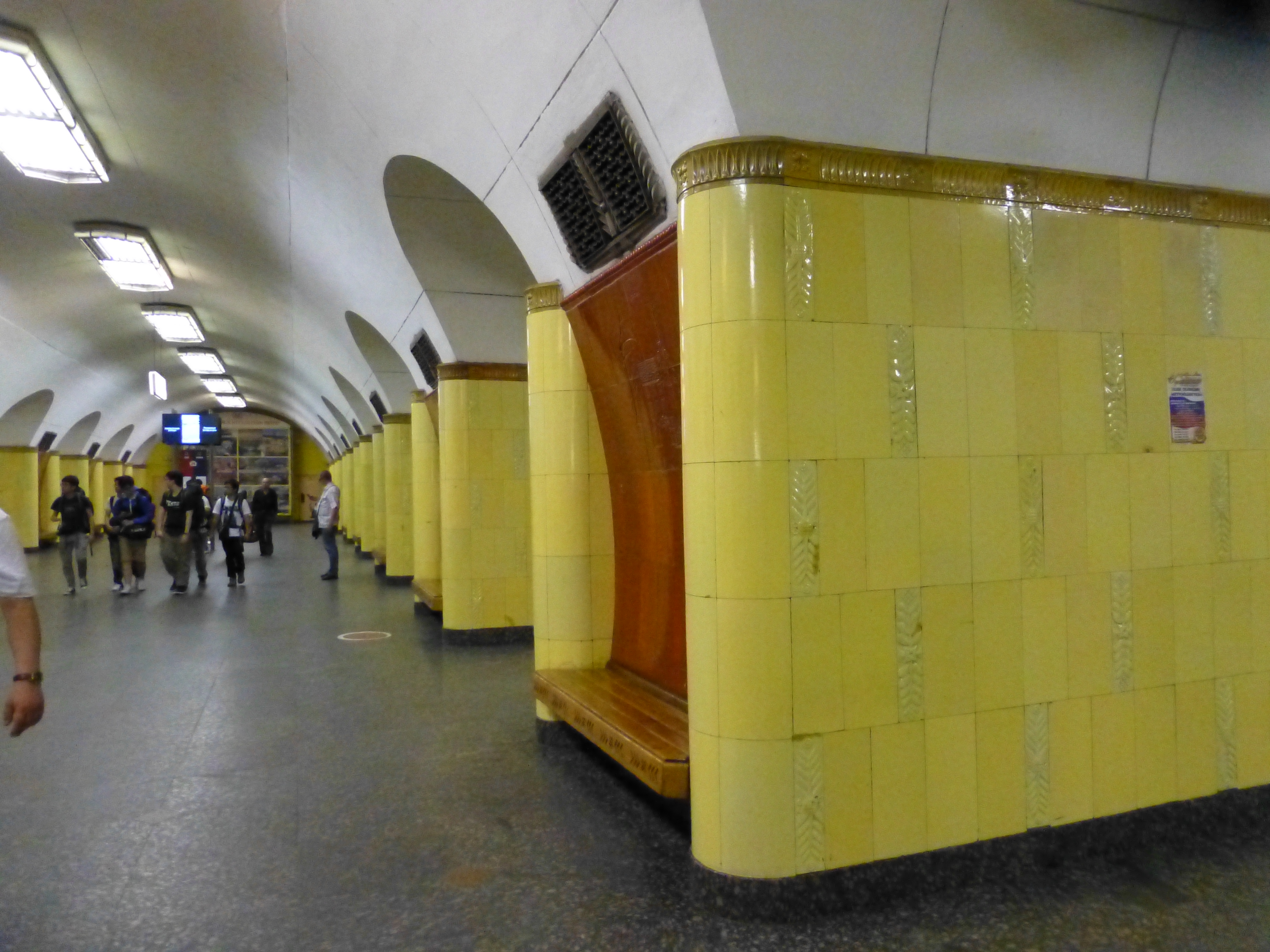
But three stops later (here is on where I transferred),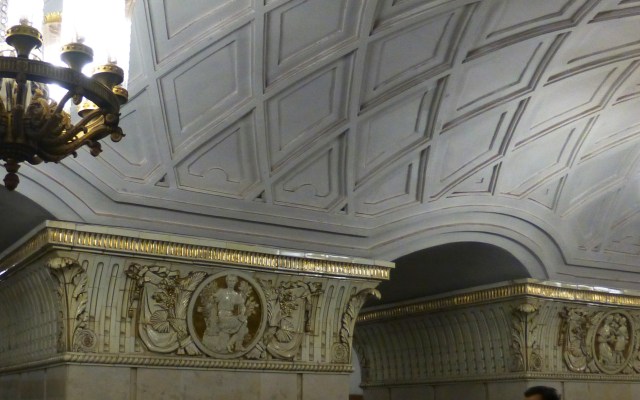
I was at my own station –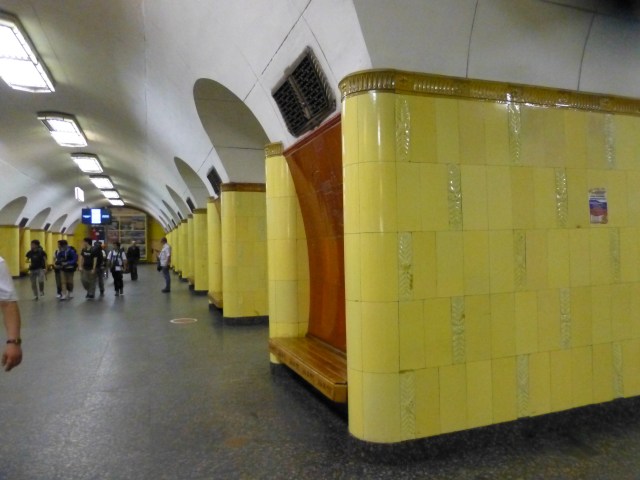
and out in the open air and just across the street from my hotel. All for 10 cents.

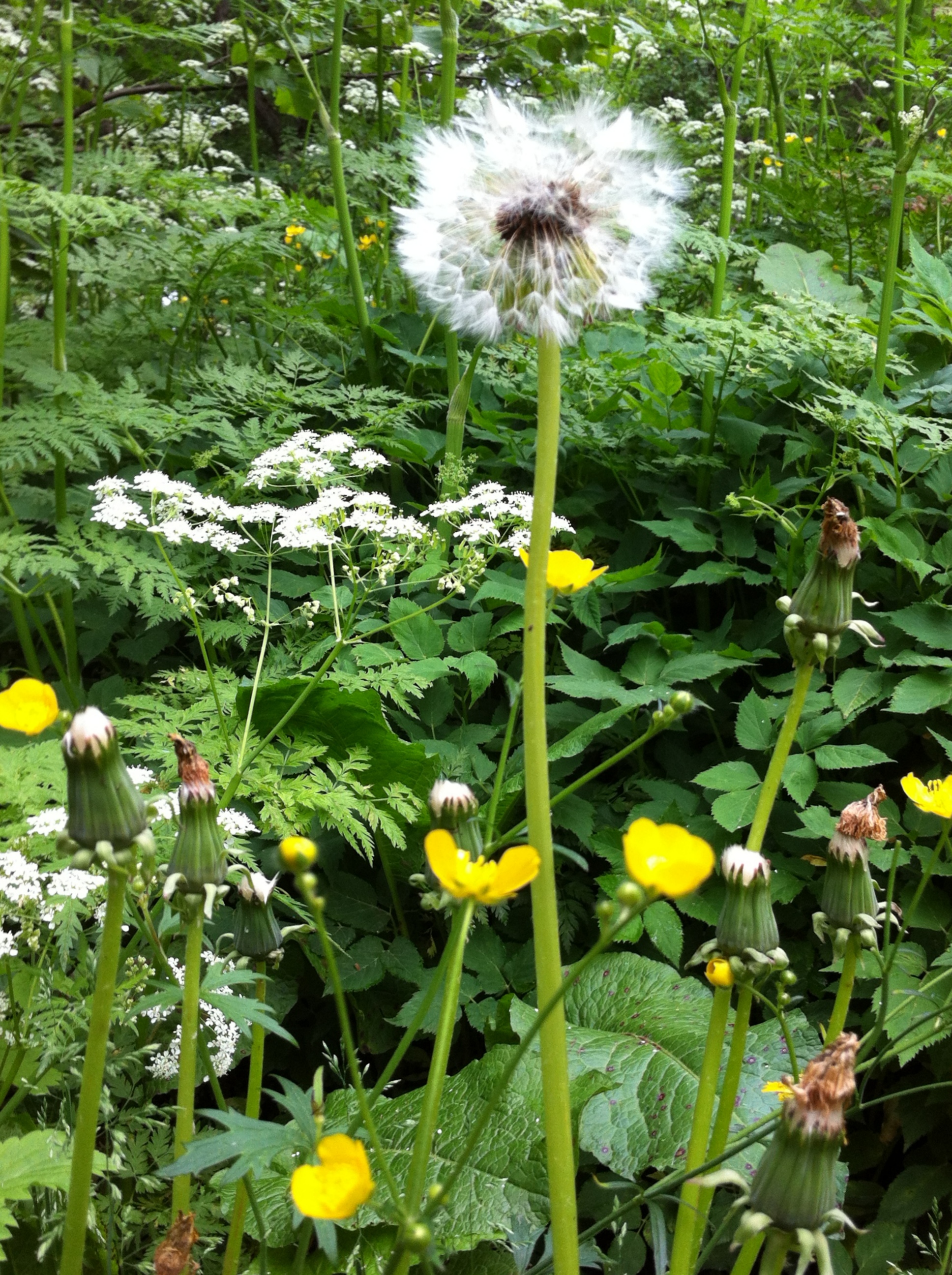
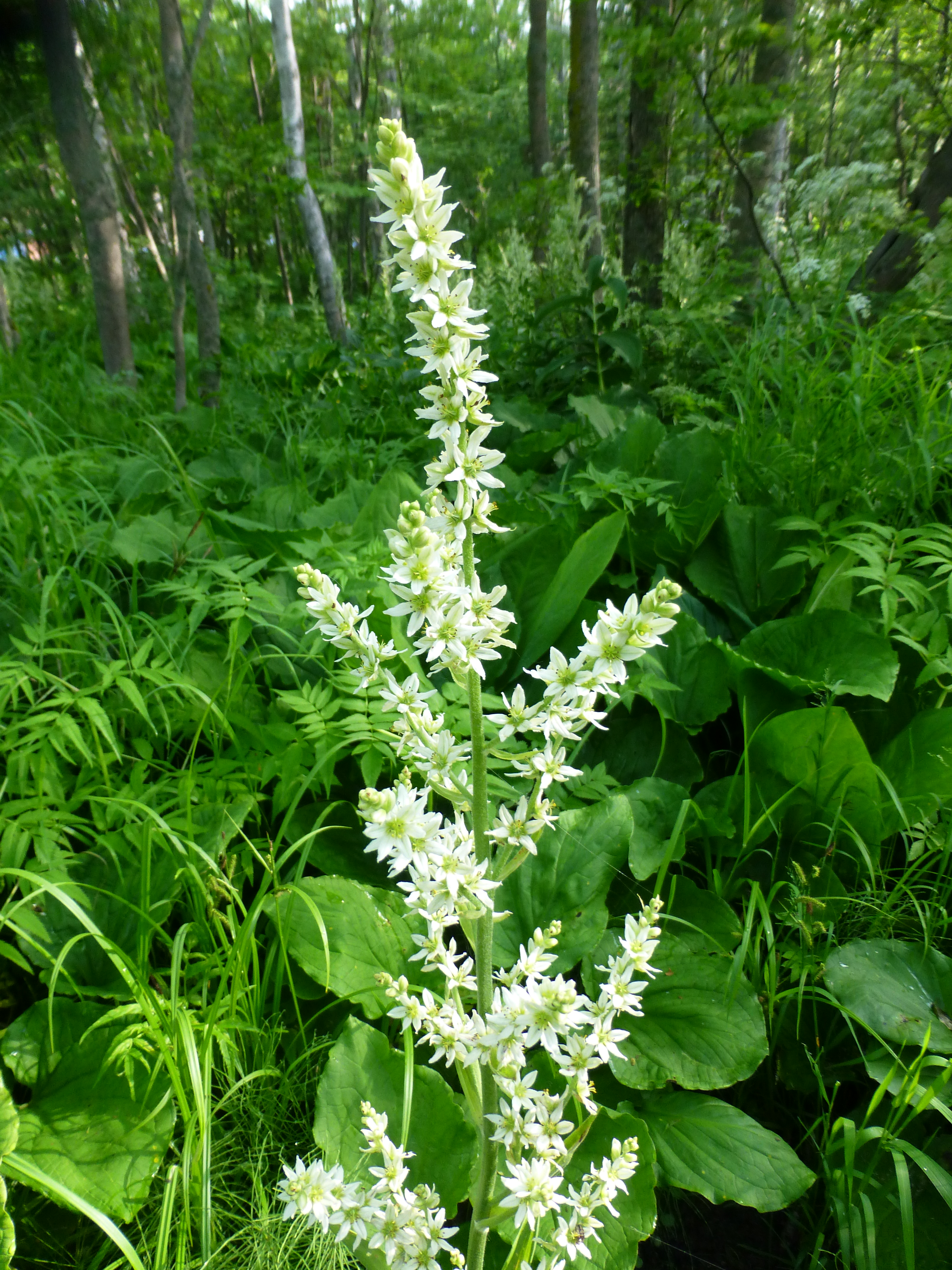
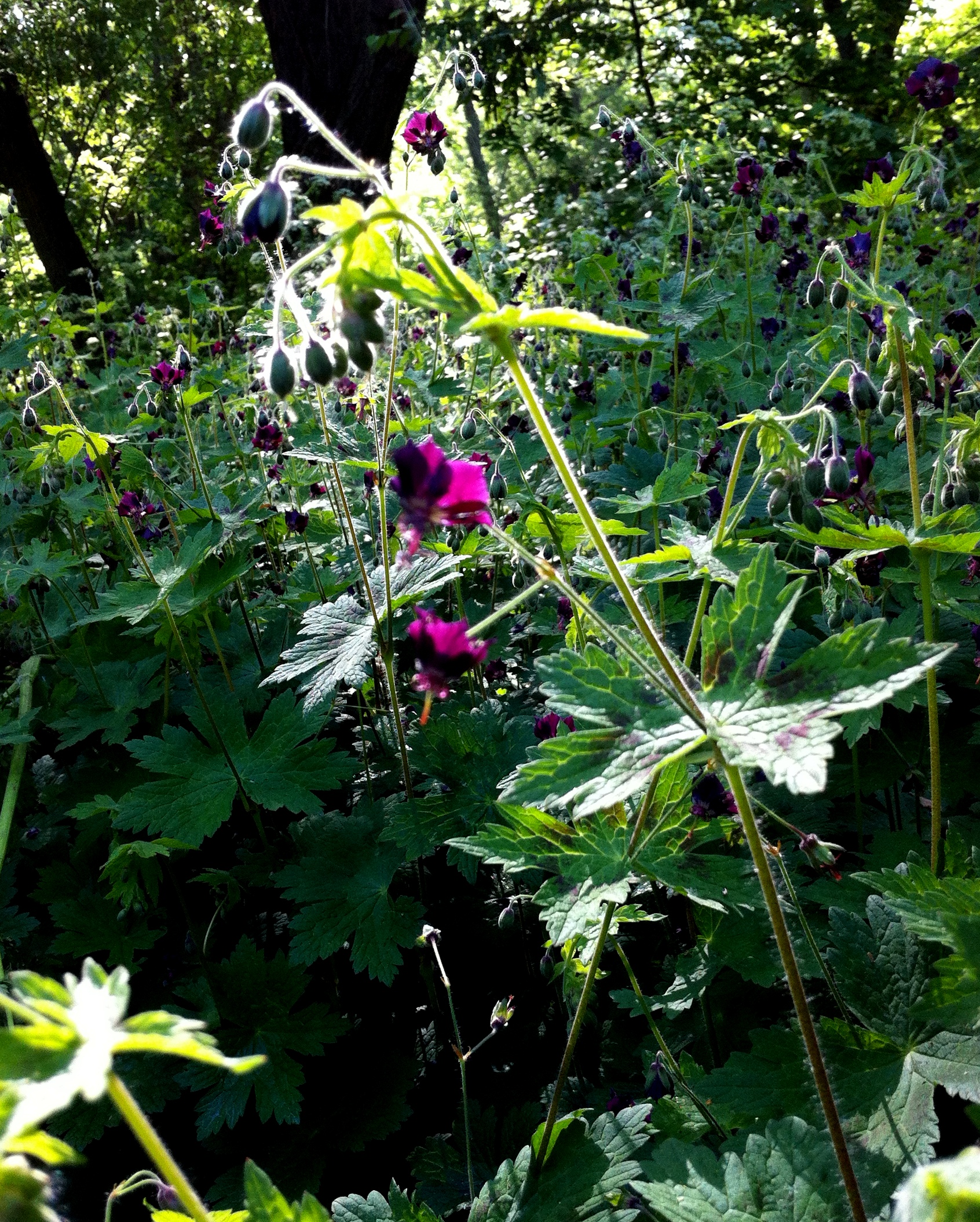
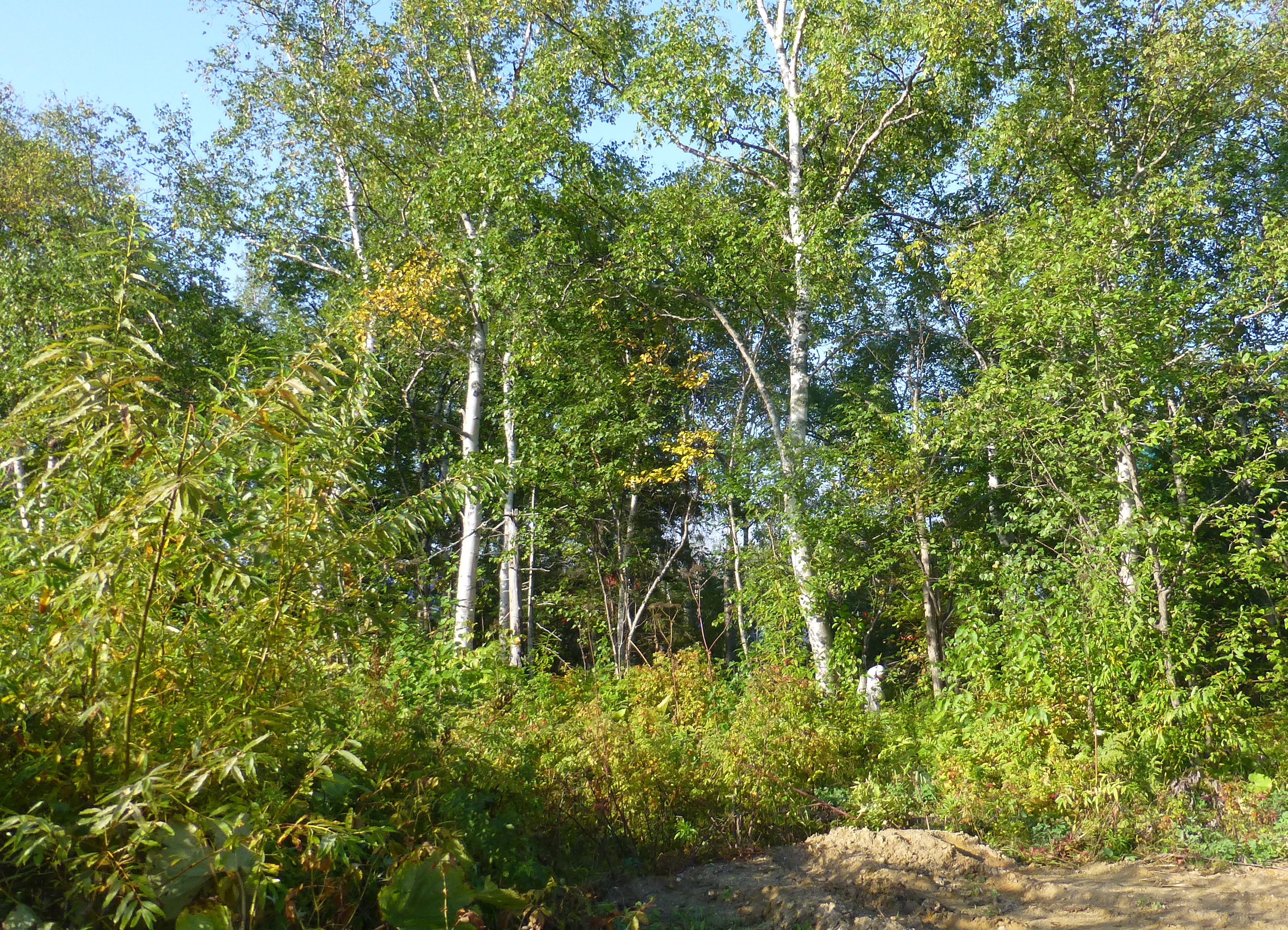 and amazing wild flowers.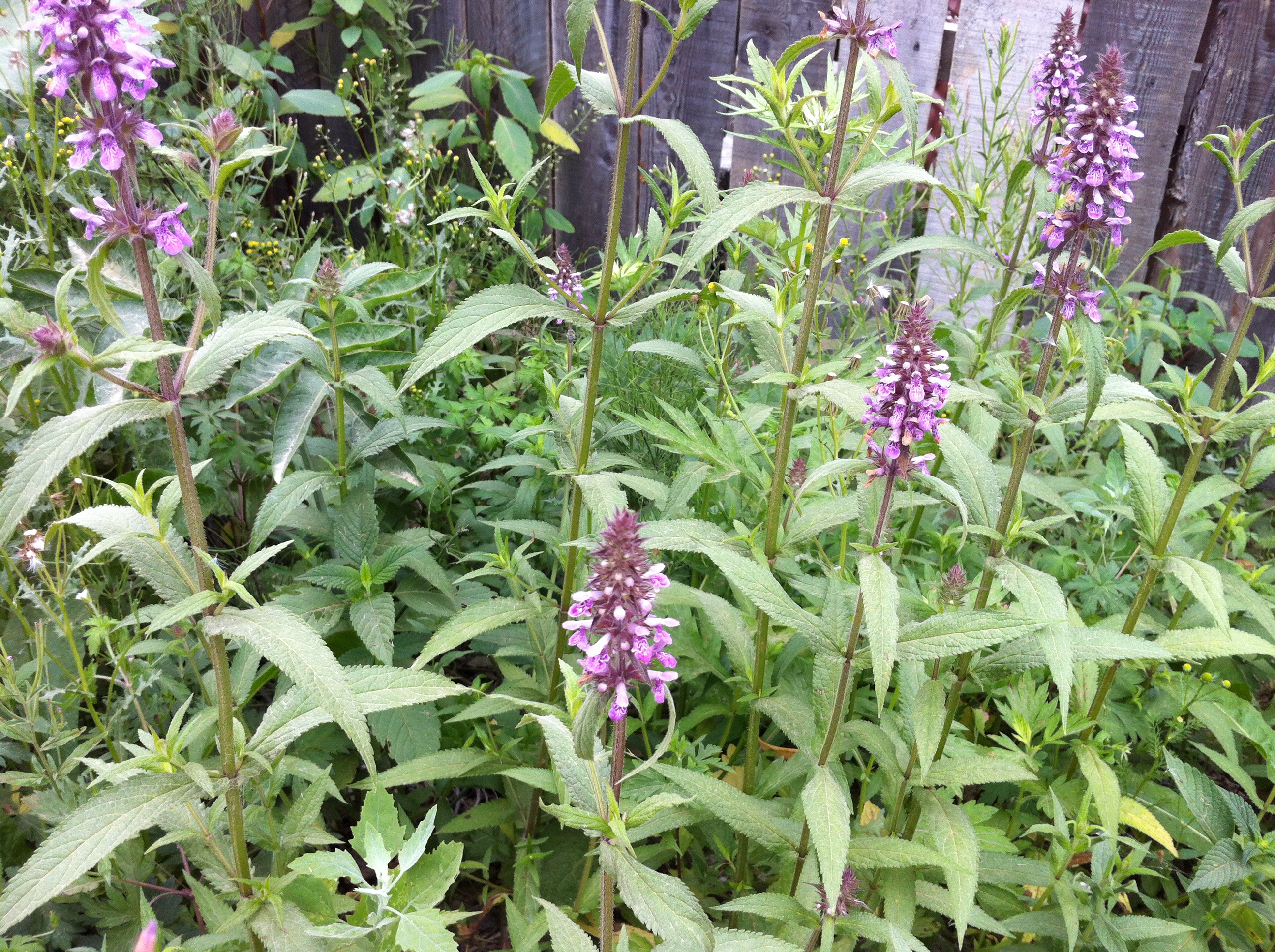
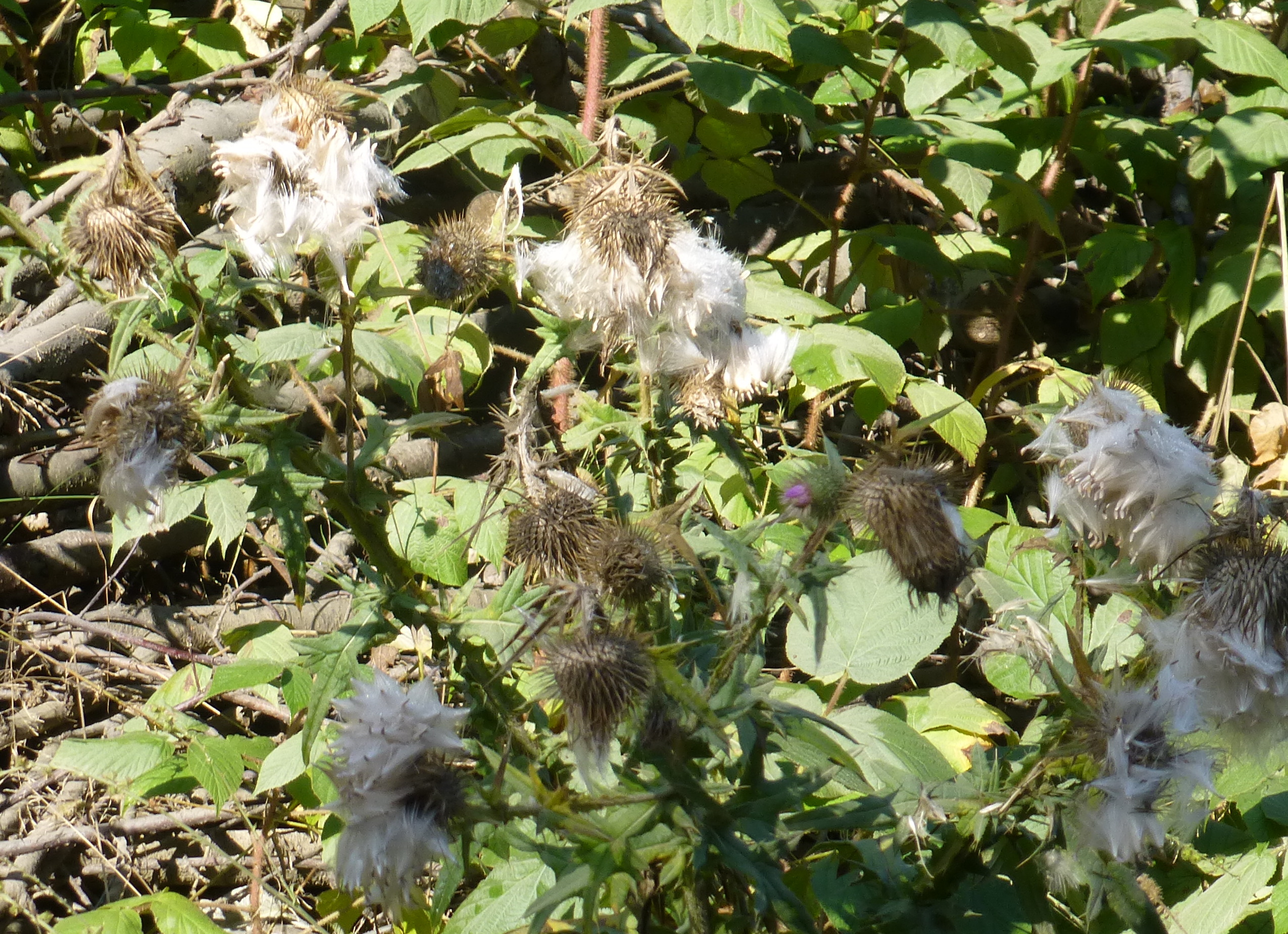
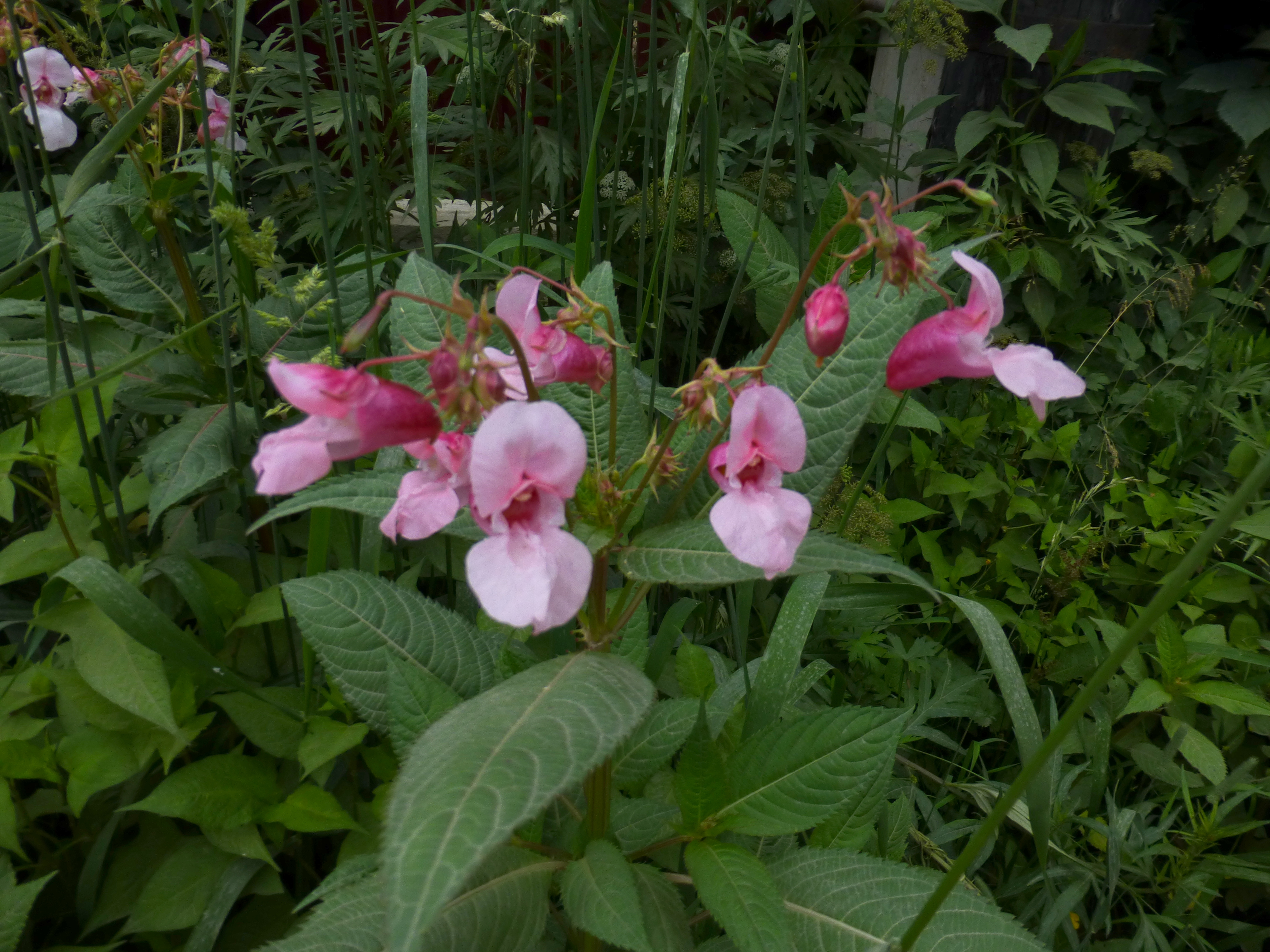 And these thistle-like flowers have gone to seed.
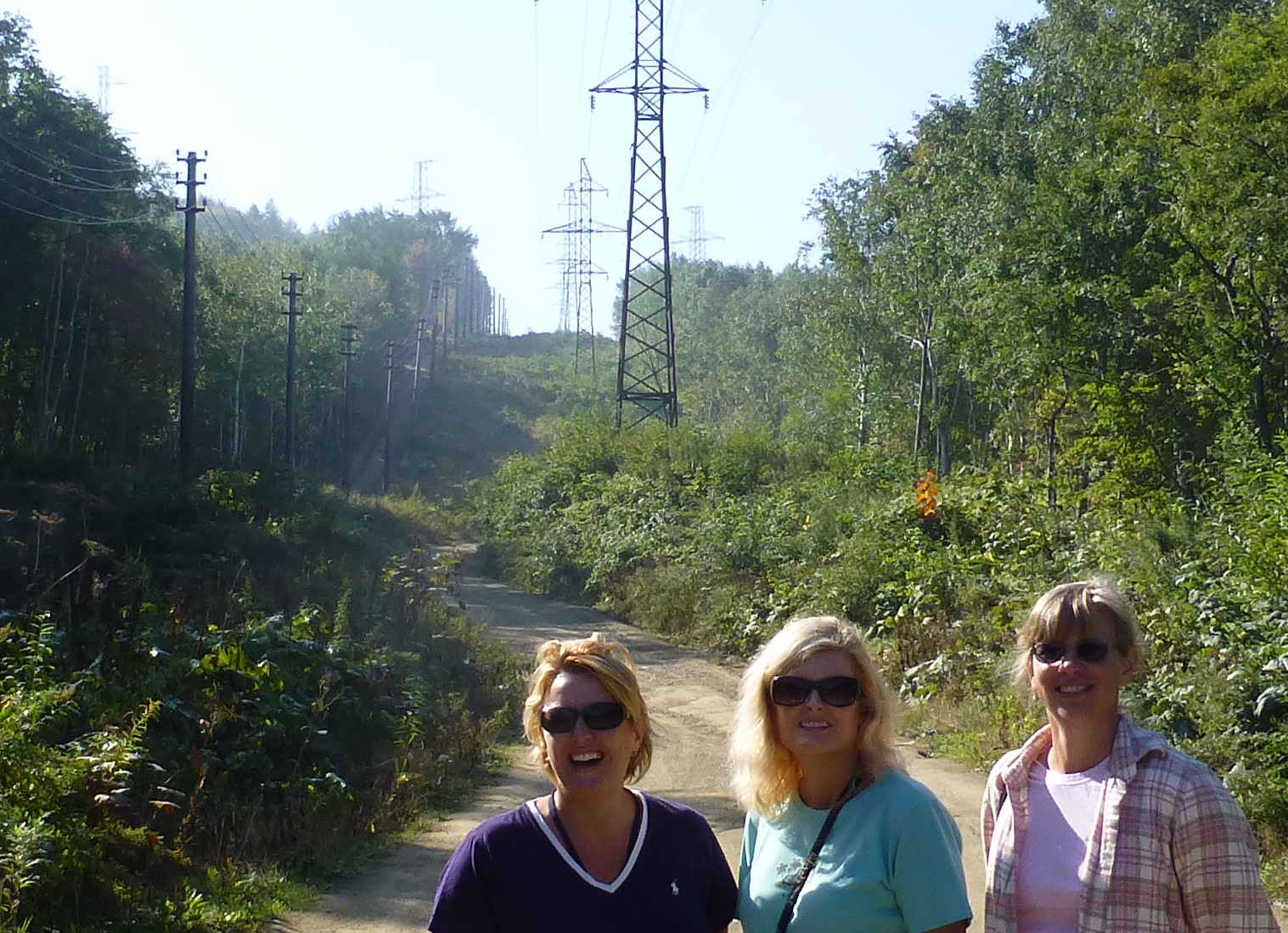
 As well as a chance to get some much needed exercise and comradeship,the goal in town is a lovely bakery that makes wonderful cakes and breads and other pastries. We are usually very good, and just buy coffee.
 I log the walk on my phone – it tells me that the total gain (not counting all the downs) is 1142 feet. That’s quite a lot of climbing, but at an easy pace. I find going down a steep slope a lot trickier.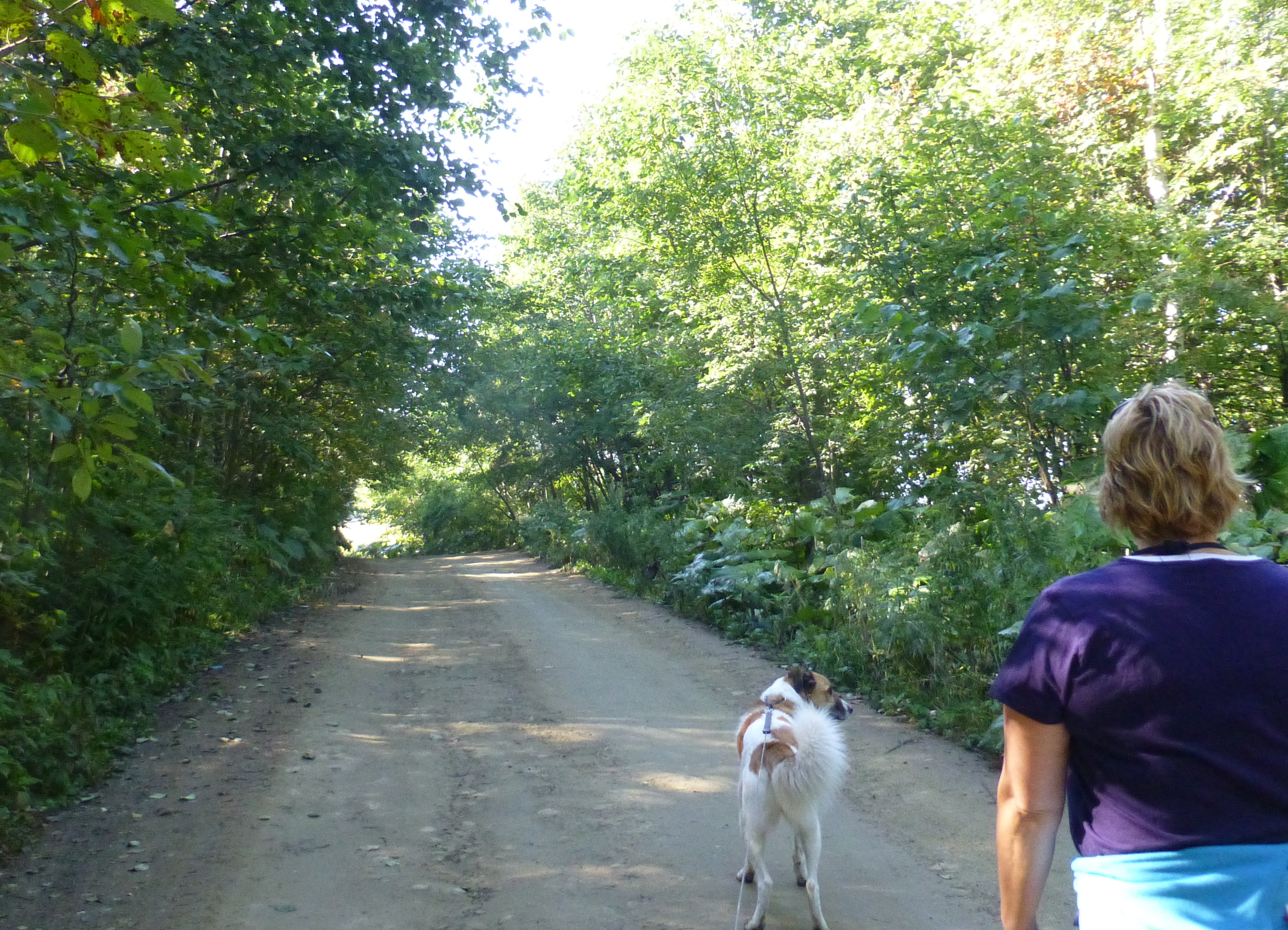
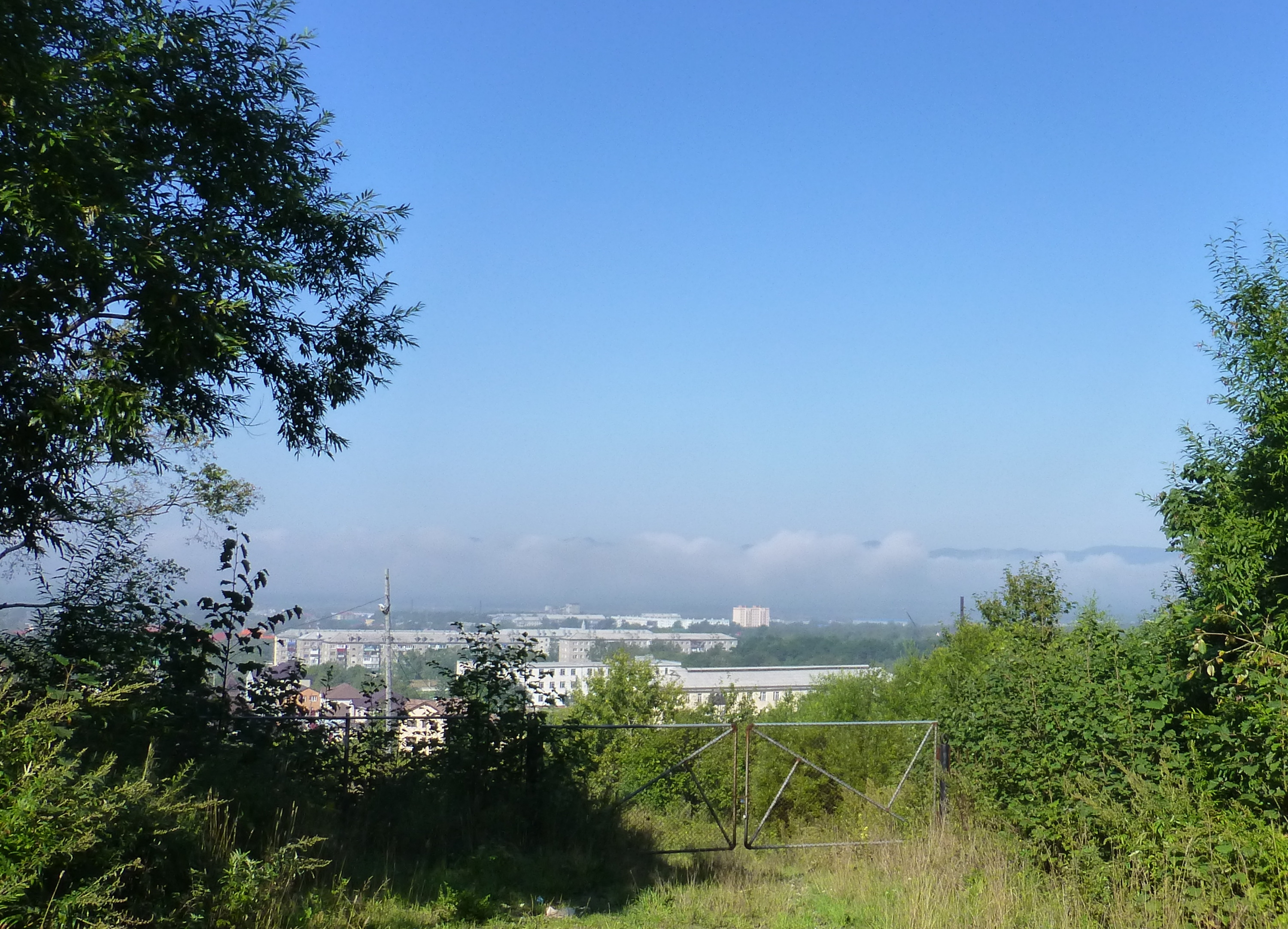
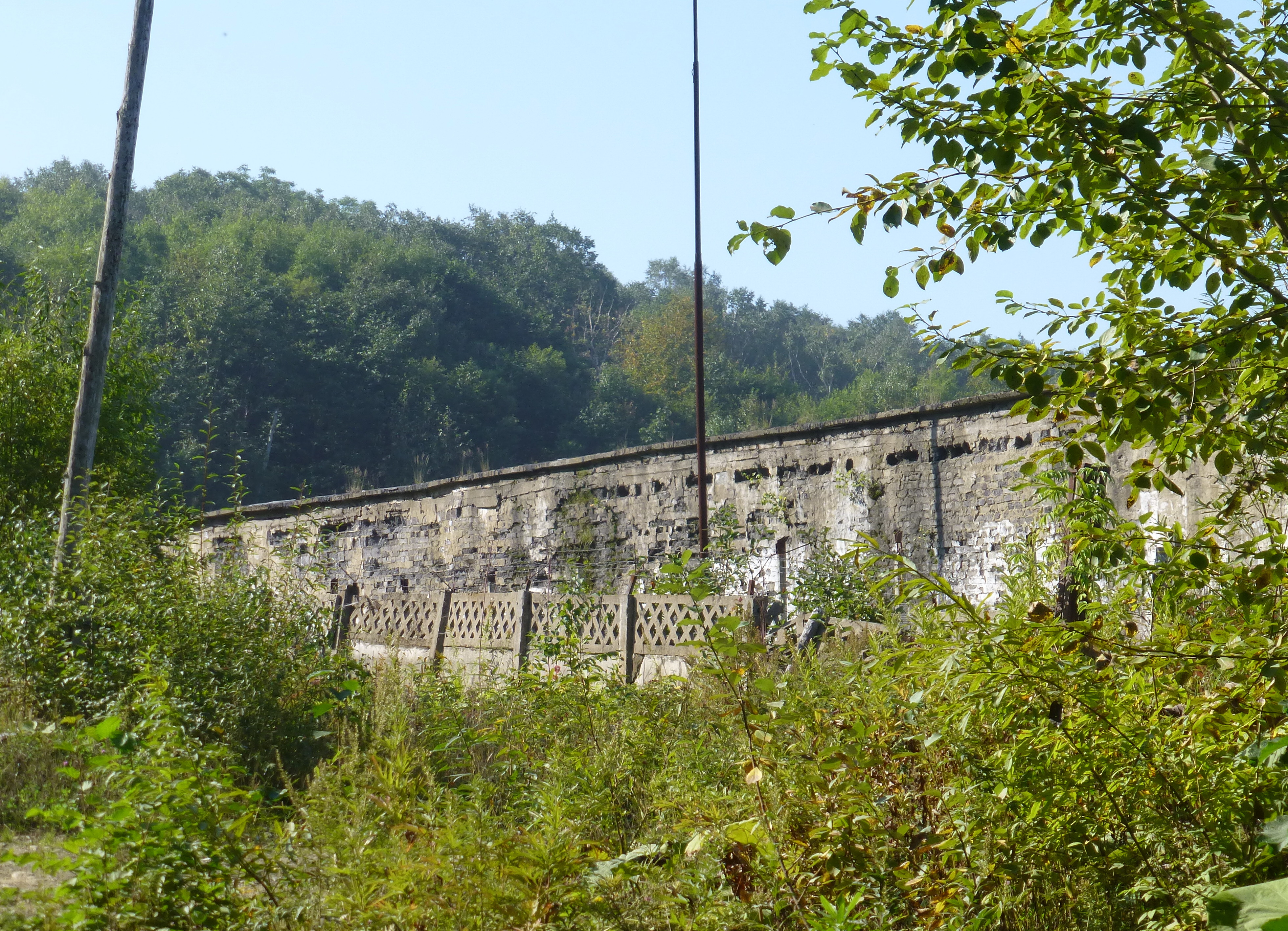 This is part of an old military facility. there are tons of them around the city, and most are abandoned now. They only keep up the parts they still use. Sakhalin was once part of the Gulag prison camp system, and was also considered a strategic base watching border.
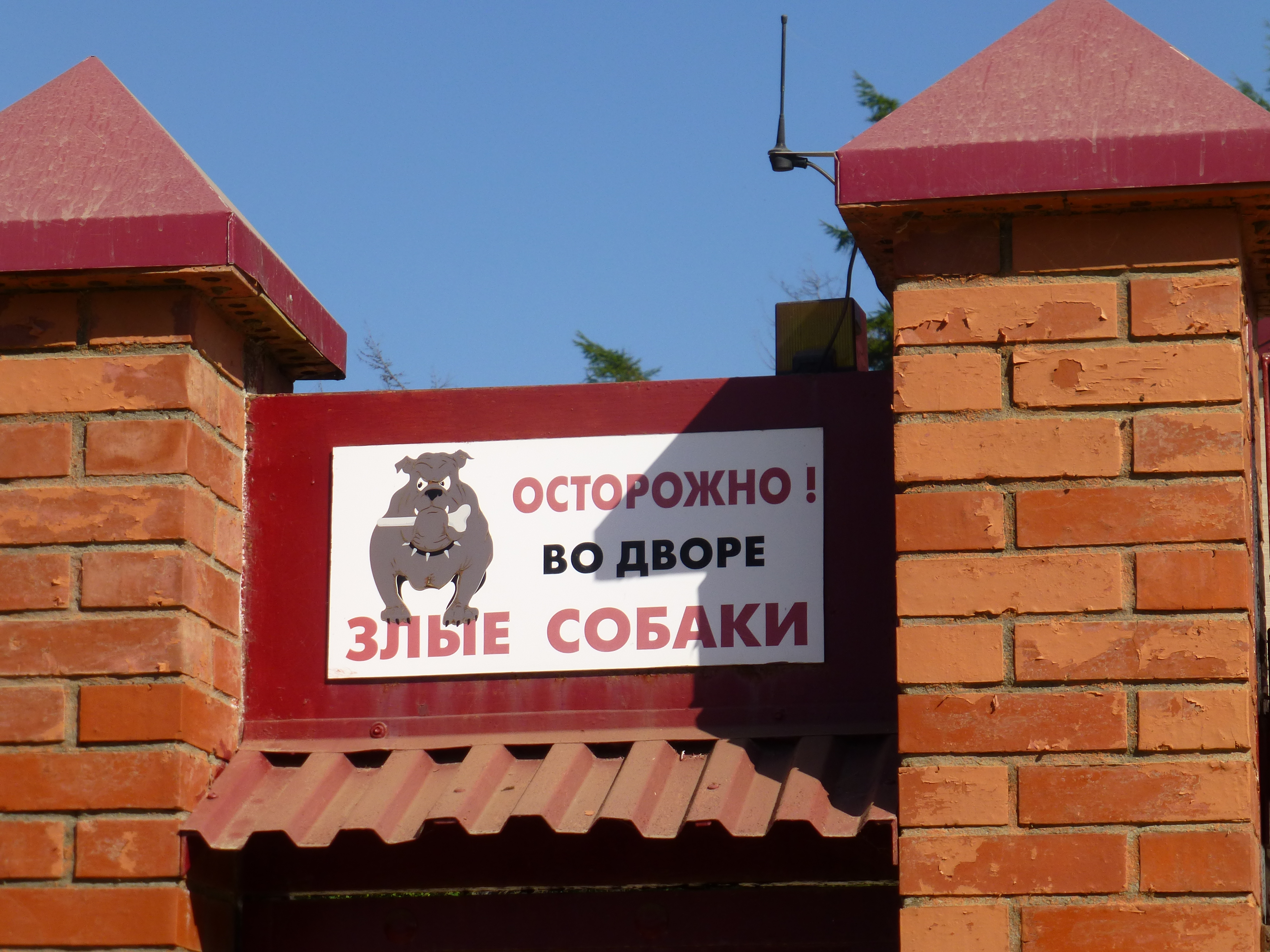 They are tied so they can just reach the gate – and they usually let you know they are there.
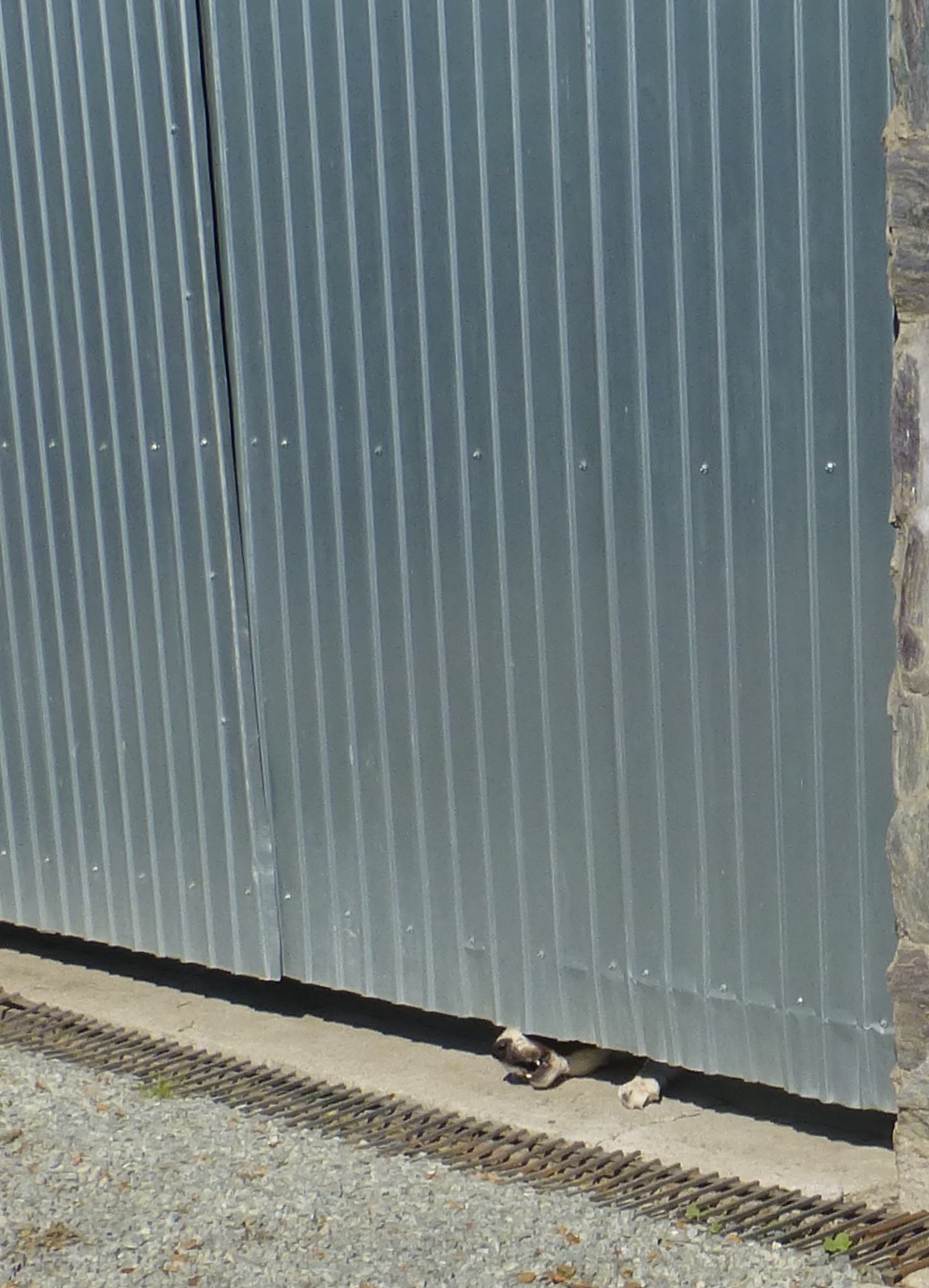 Lots of German Shepherds and others that I wouldn’t want to meet in the dark.



 wanderingquilter


