
The end of September, we finally bought a car.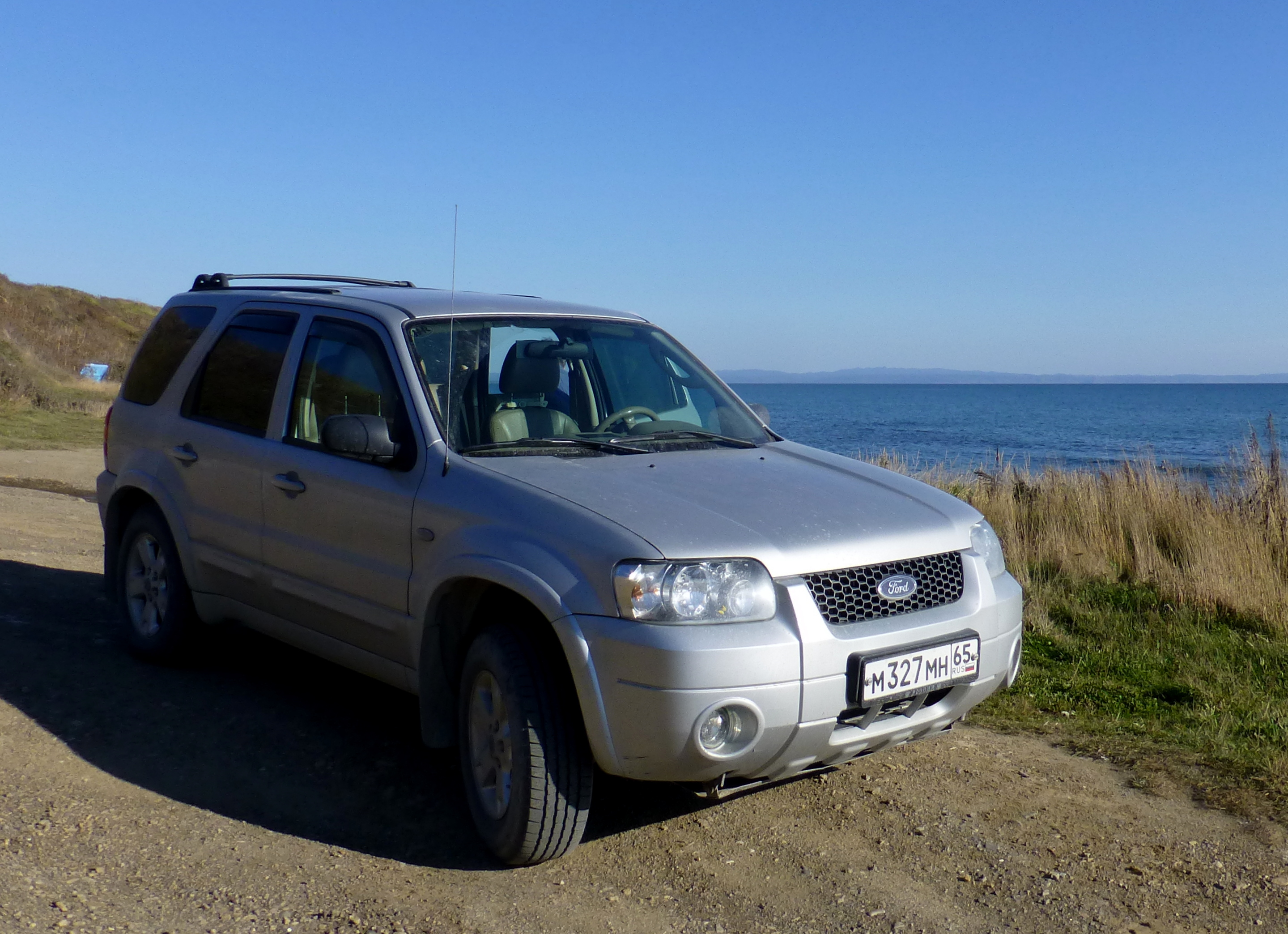 If you have read about our trials and tribulations in Norway, you will already know just how tied down we feel when we don’t have a vehicle to go out and explore the countryside around us. David had been in Russia for almost a year, and had been out on hikes with friends twice……….I have basically been here since the middle of June, but had only once seen the outskirts of the city. It was time!
It was the first Sunday in October – a beautiful morning , sunny and fairly warm. The leaves were beginning to change colour – yellow and red mixed with the green of pines and spruces….. a beautiful day for a road trip. Snoopy was so excited – he loves to go in the car, and had not been in one since we moved here. Armed with my new Russian atlas of Sakhalin, we set out.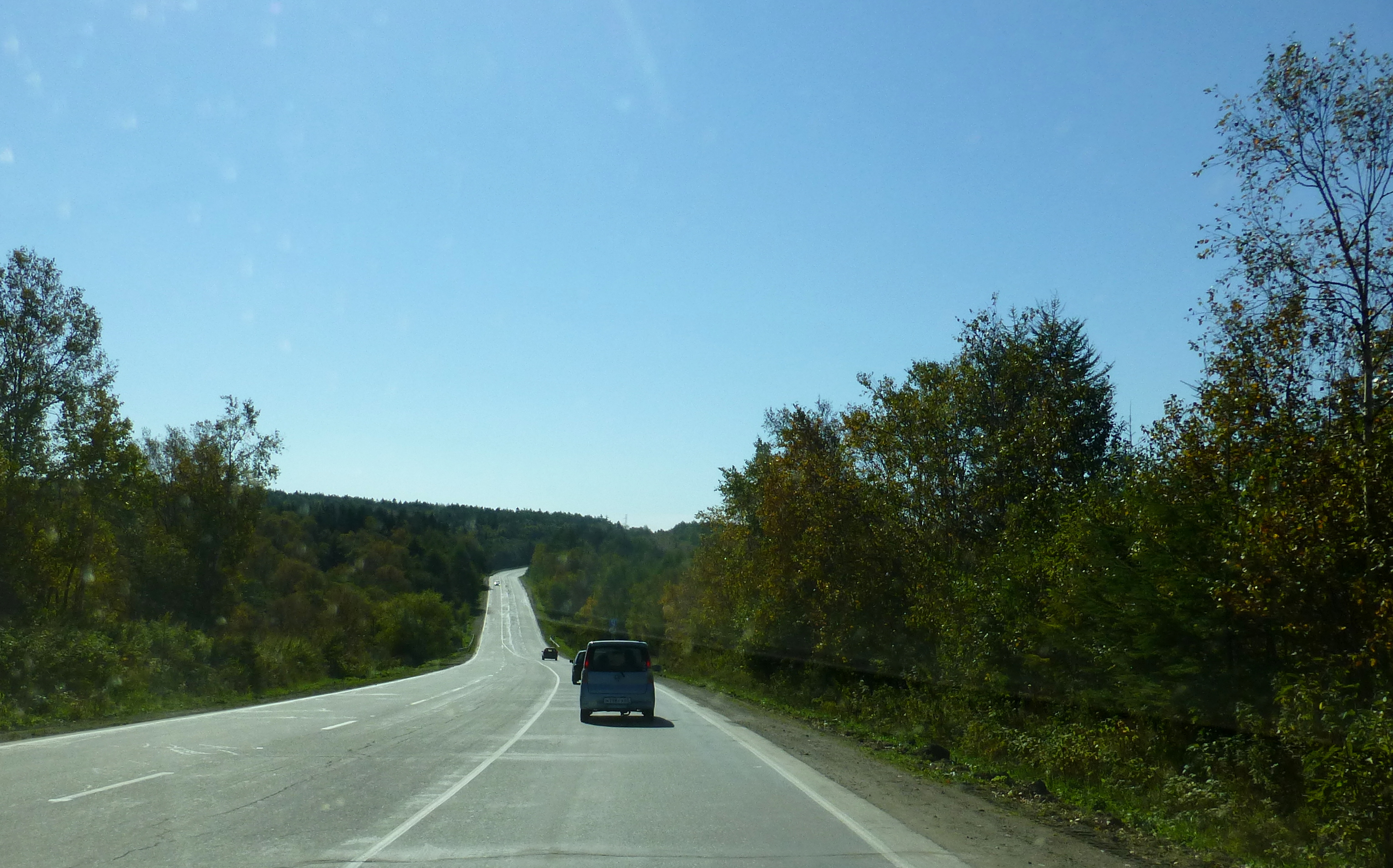
Our first view of the sea –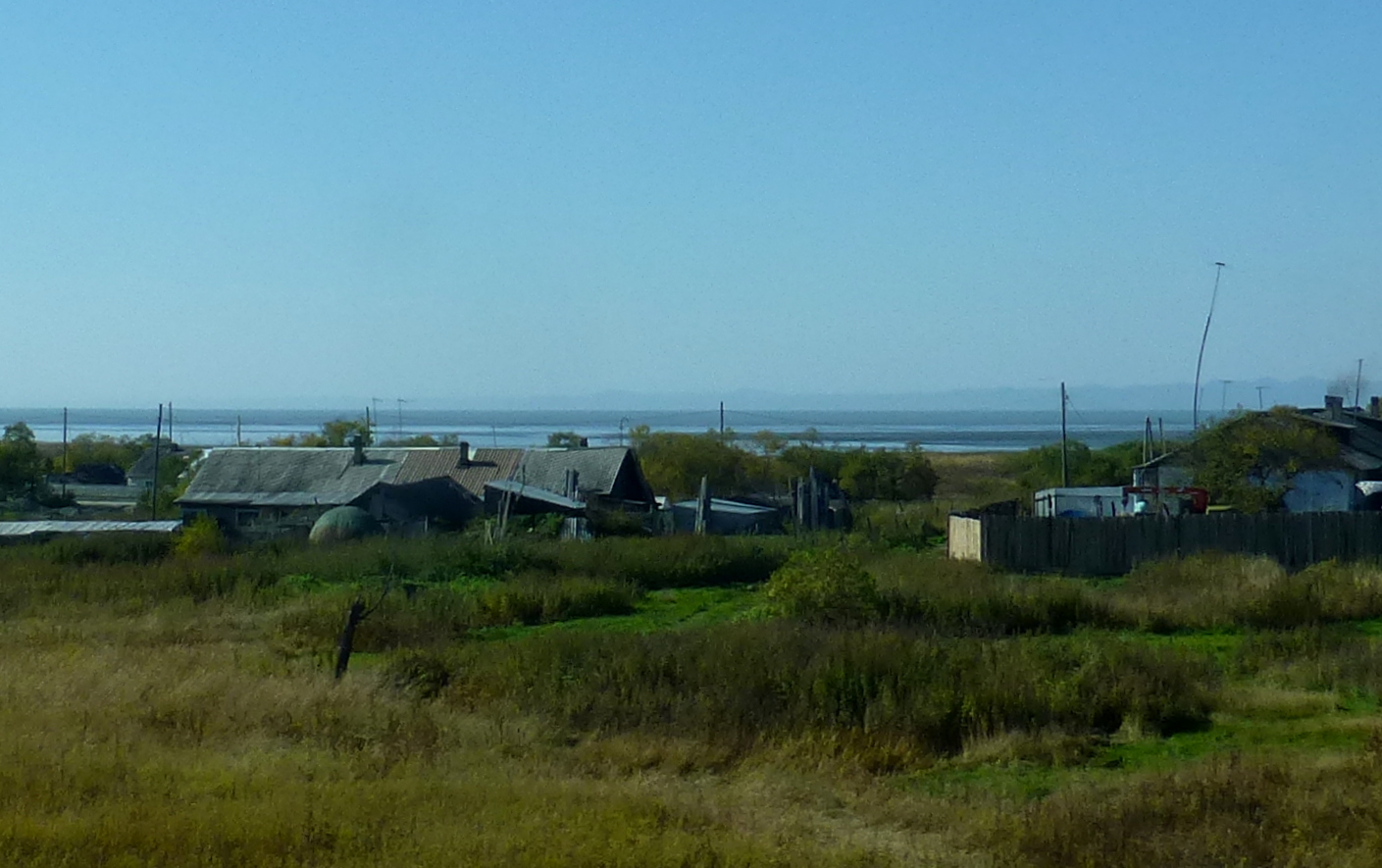
Korsakov lies on a bay on the south end of Sakhalin Island, and is about 40 km south of Yuzhno-Sakhalinsk. It has had a very colourful history, having been flipped back and forth several times between Japanese and Russian administration. It was once a main fishing center…….and during the late 1800’s, it was the administration centre for the large Russian penal colony on the island, and the final destination for hundreds of prisoners sentenced to hard labour. When the island was handed over to the Japanese after Russia’s defeat in the 1904-05 Russo-Japanese war, the Japanese maintained it as a forced labour camp for Korean prisoners.
At the end of World War II, the island again changed hands, coming under Soviet rule. Most of the Japanese were repatriated by 1947, but a sizeable number of Koreans remained, and their decendents to this day.
Throughout its history, the town has been burned down by the side leaving, and rebuilt by the new rulers. Now, as a mostly government-owned town, there is little new development or growth – the population has declined from a high of 45,000 in the 1980’s to about 35,00.
A typical sea-side city, Korsakov strings out along the coast. We had no idea what we would find there – and it took some time to find the centre of town. 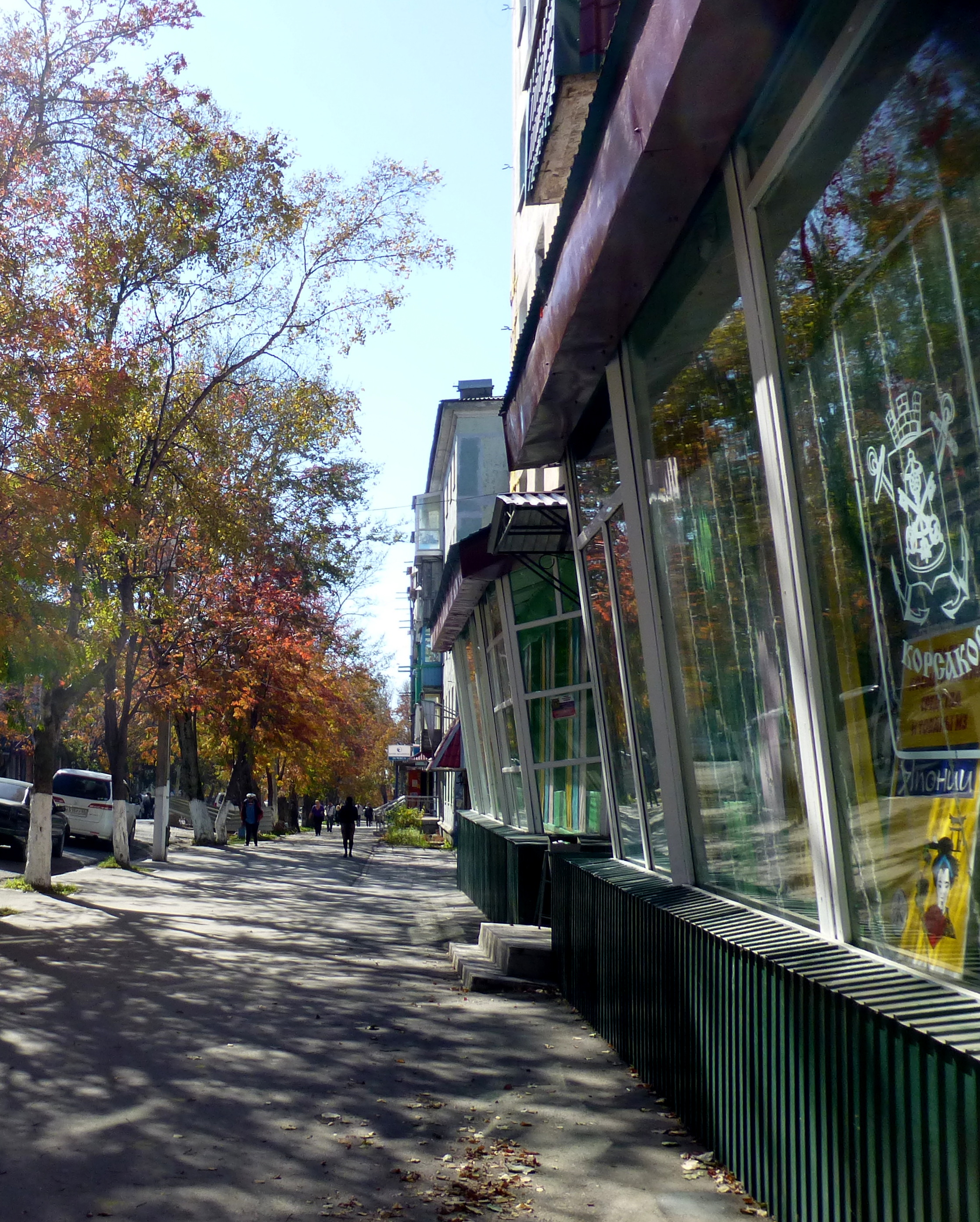 We parked in the shade, and set out to find somewhere to eat. We walked the length of the street to the square –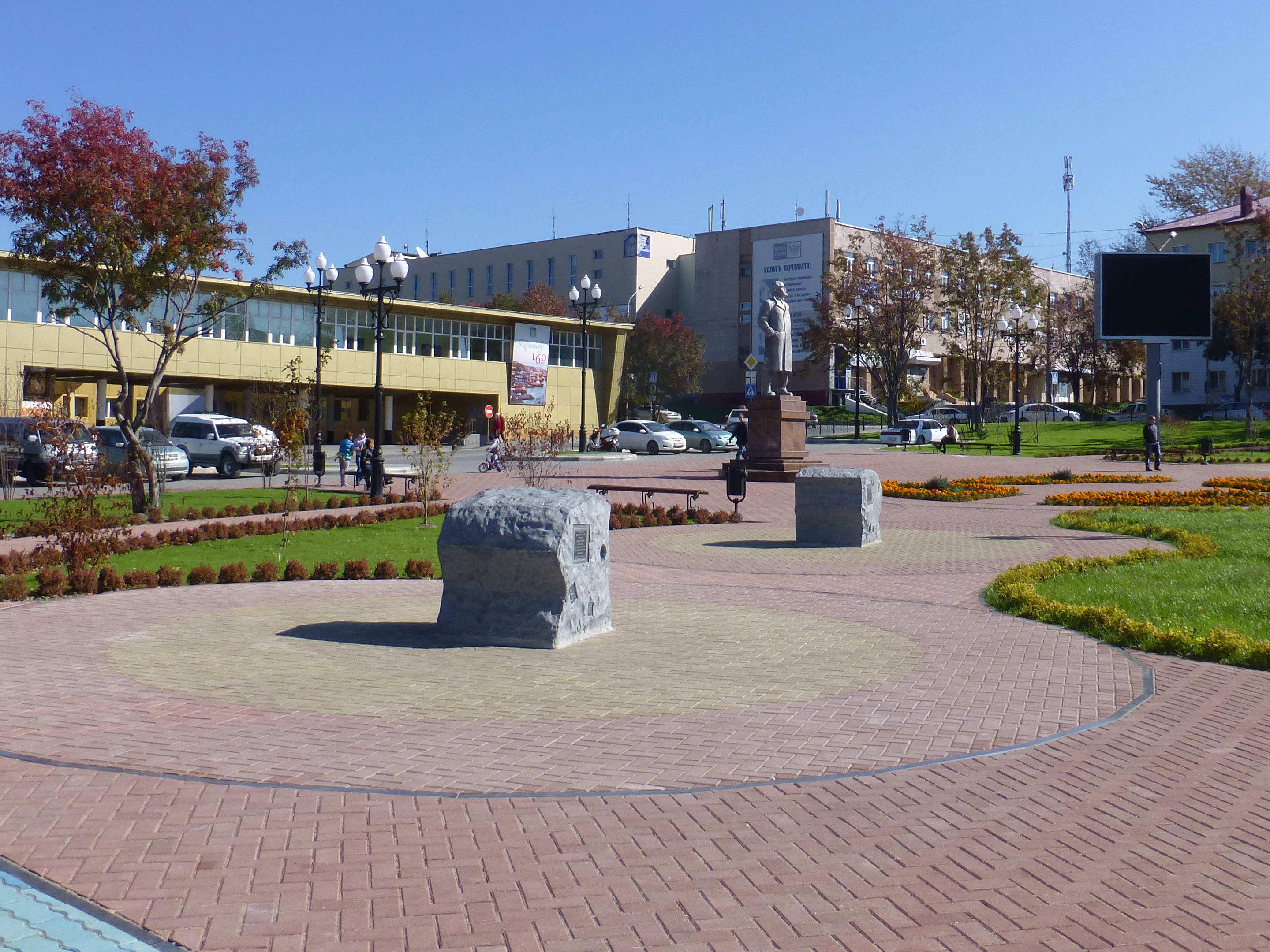
There were lots of people out on this sunny day. What is it about girls and horses, anyway?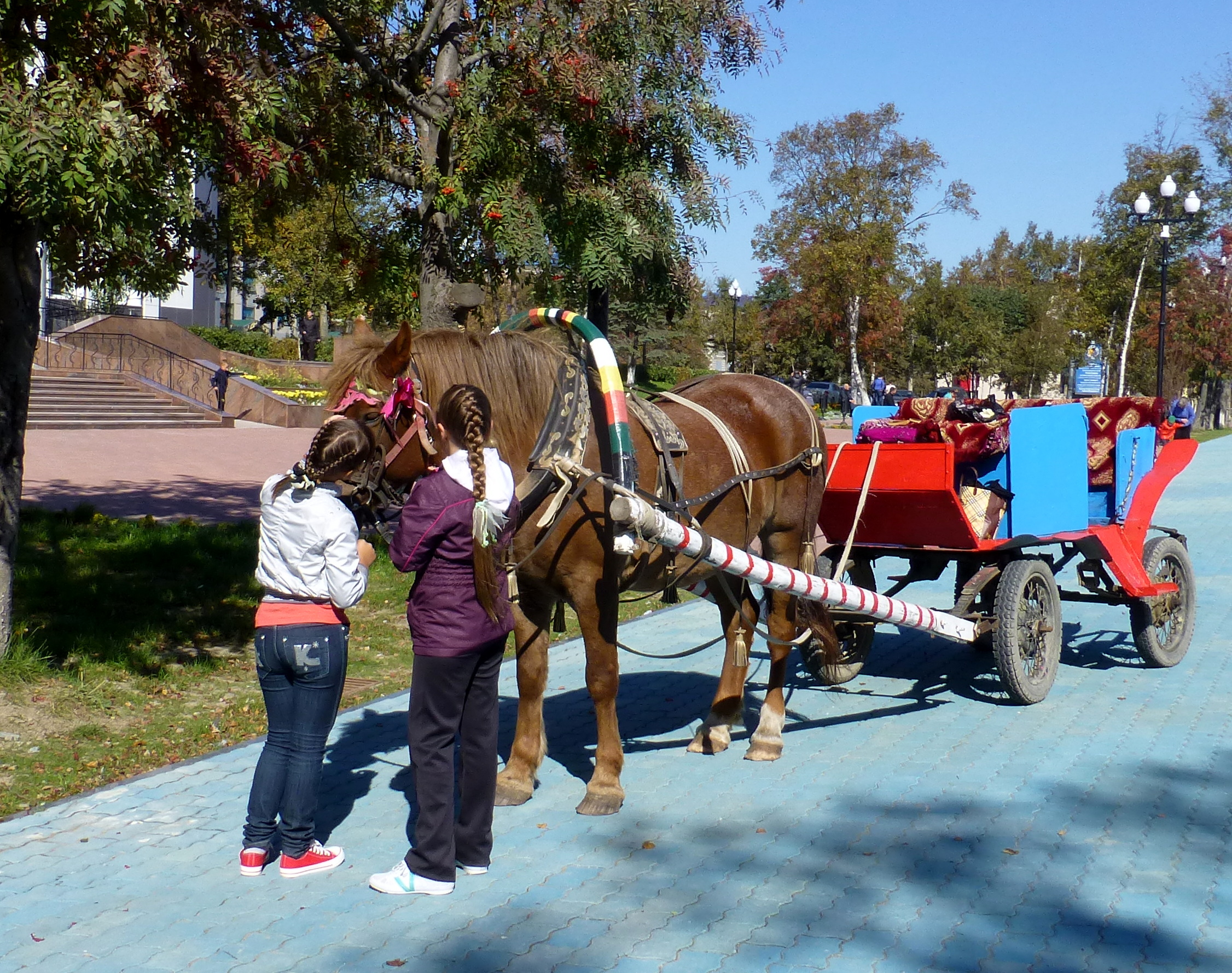
We were almost ready to try out my barely existant Russian when we lit upon the one decent hotel, which boasted a restaurant.
Very little English is spoken in a place like Kosakov…… and there wasn’t a lot of English in the restaurant either. Still, we managed to order and the food was good.
Next, we decided that we would head on down the coast to the LNG (liquid natural gas) plant at Prigorodnoye. It took us forever to find the highway out of the city – aparently it had been built after the maps in my trusty atlas were drafted. After several false starts, I consulted the Map application on my phone, and, using a back road way, we were finally on the highway and headed out of the city.
Along the way we came across the only large fields we had seen under cultivation.
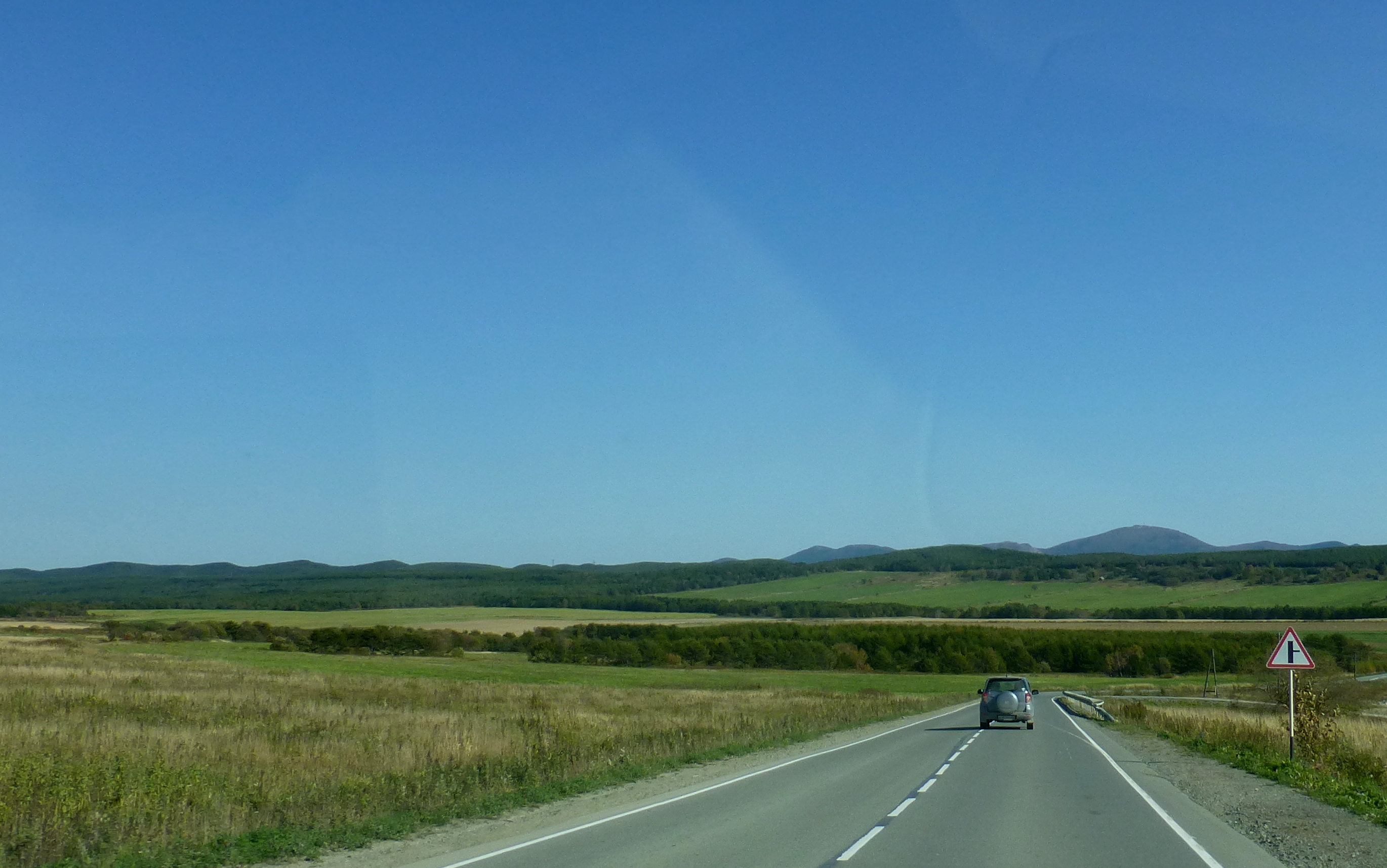
|Soon we were back along the coast. And the LNG plant wasn’t far away.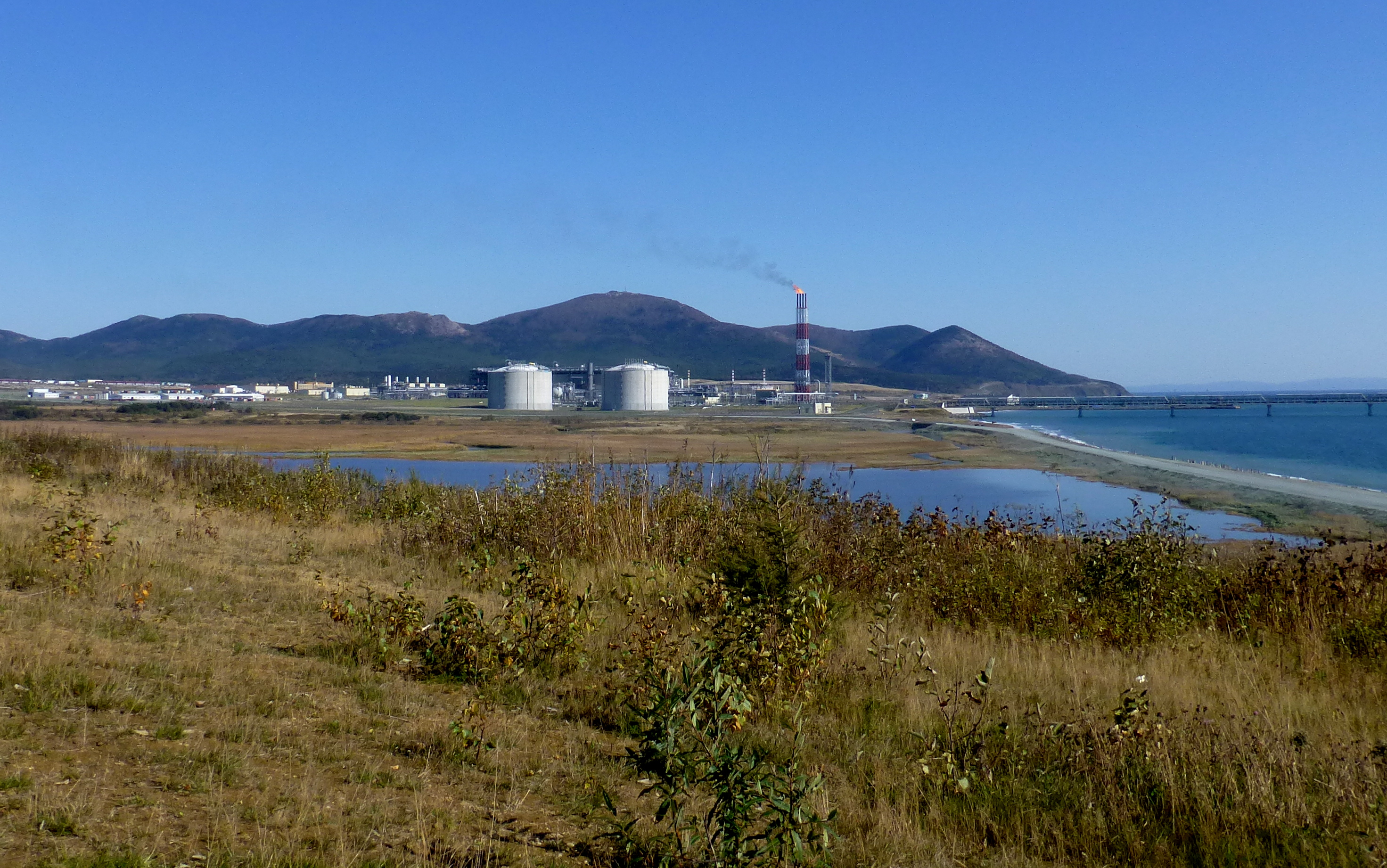
There is a long beach there – and many were taking advantage of the brilliant weather.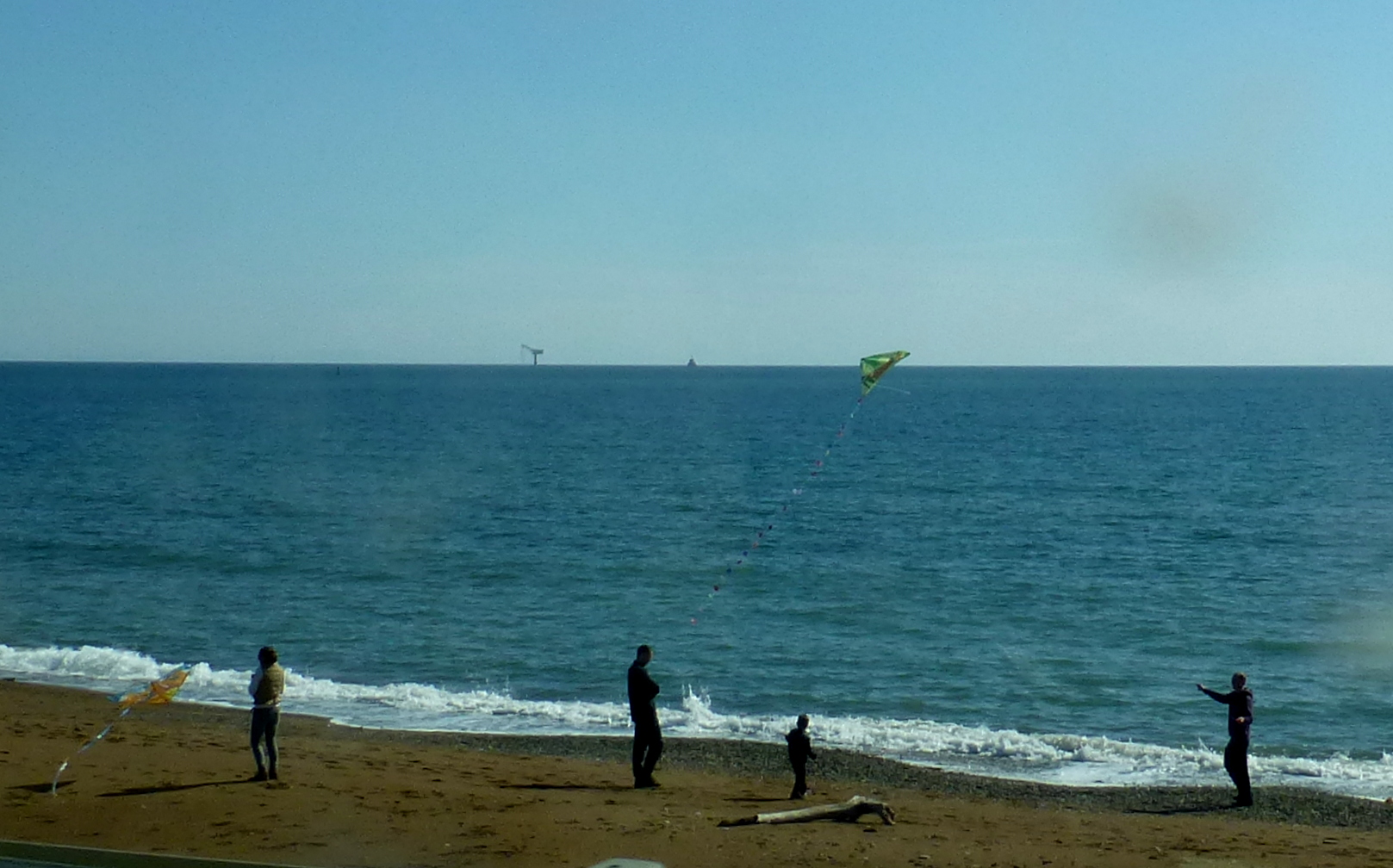
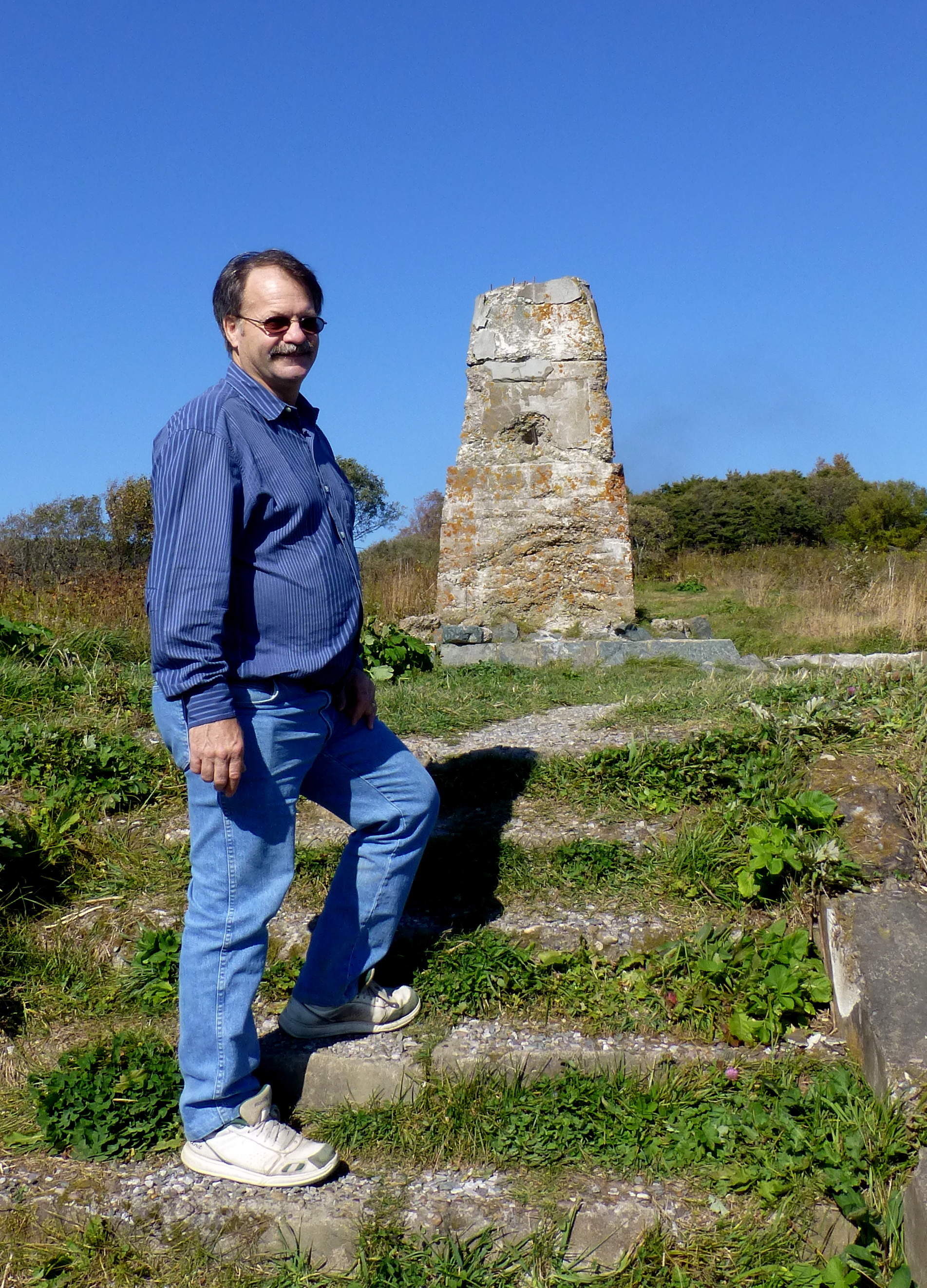
We walked up to a Japanese monument. This obelisk, a tribute to Japaese soldiers in the Russo-Japanese war, has been thrown down from its base.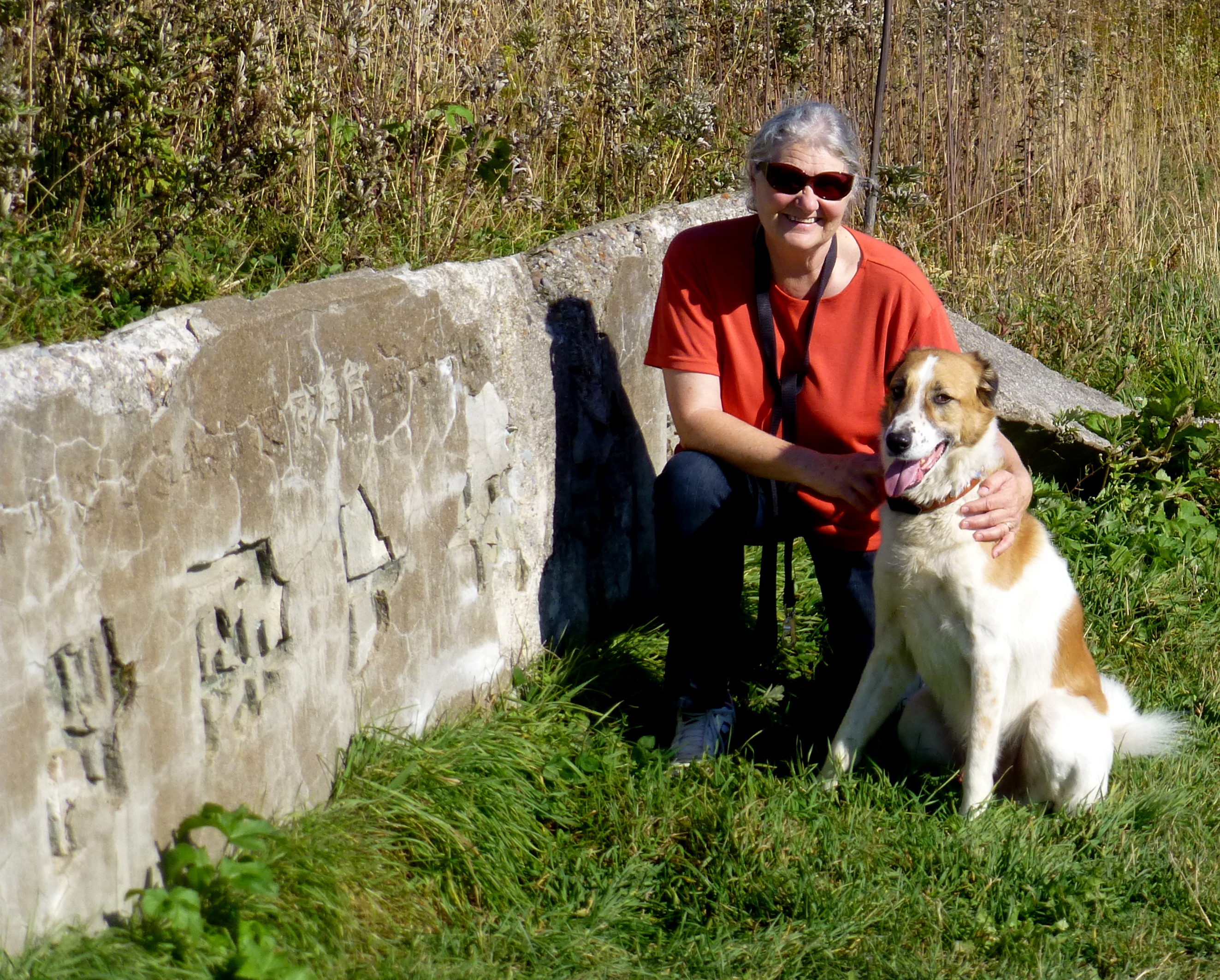
After walking down on the beach,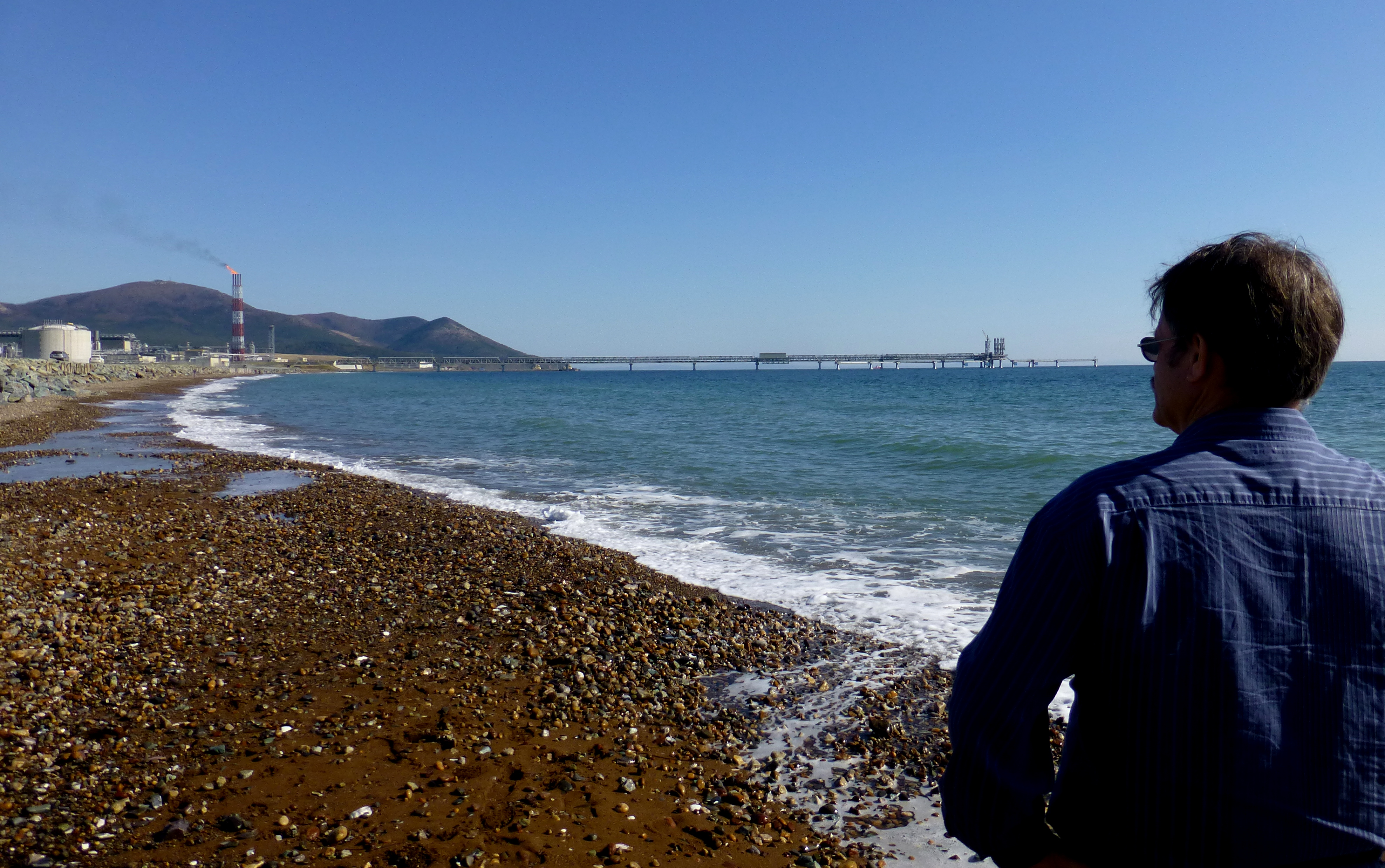 and finding some quite large shells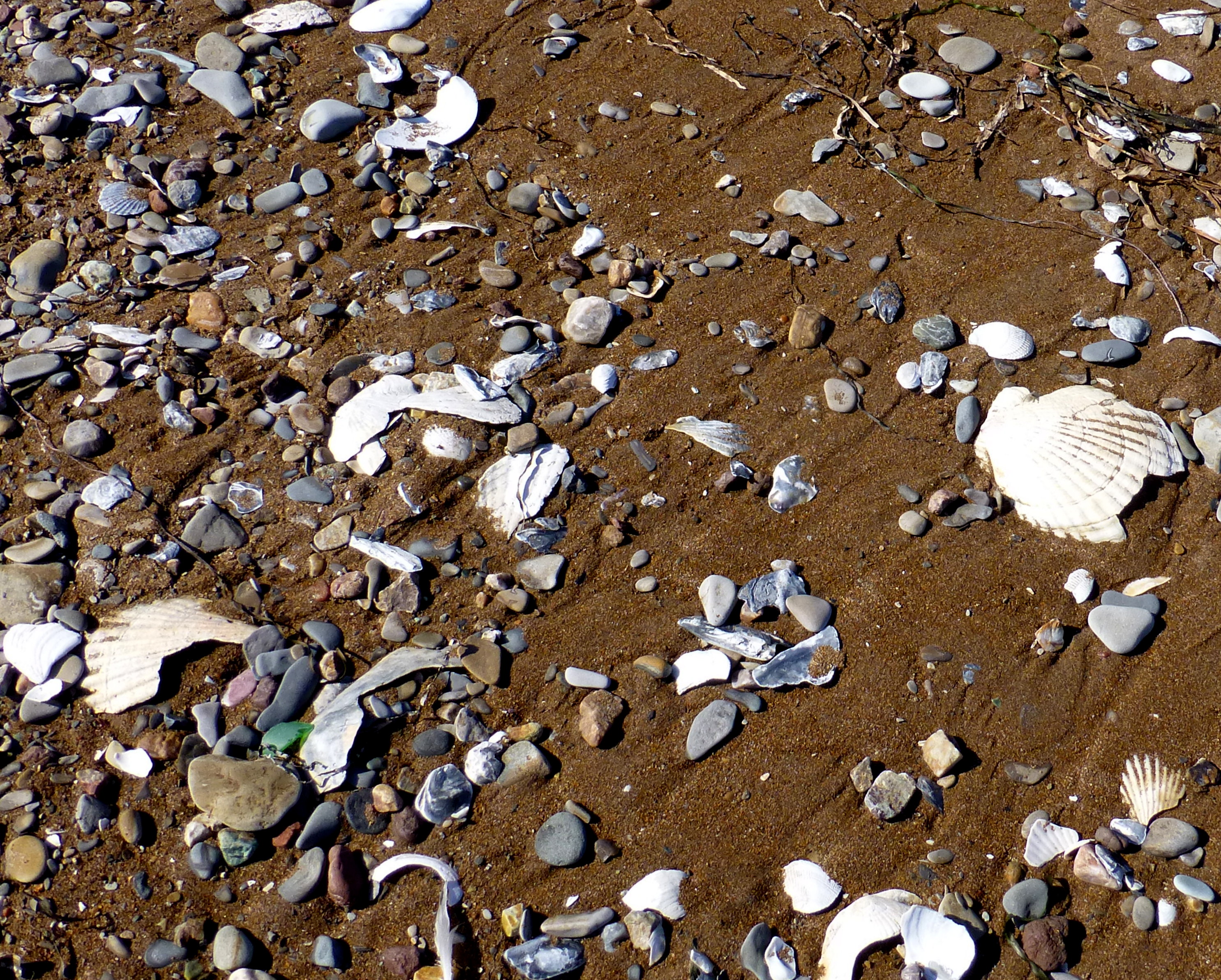
we headed off down the road. Again, it mostly hugs the shoreline, and there are many dirt trails that lead to the beaches. 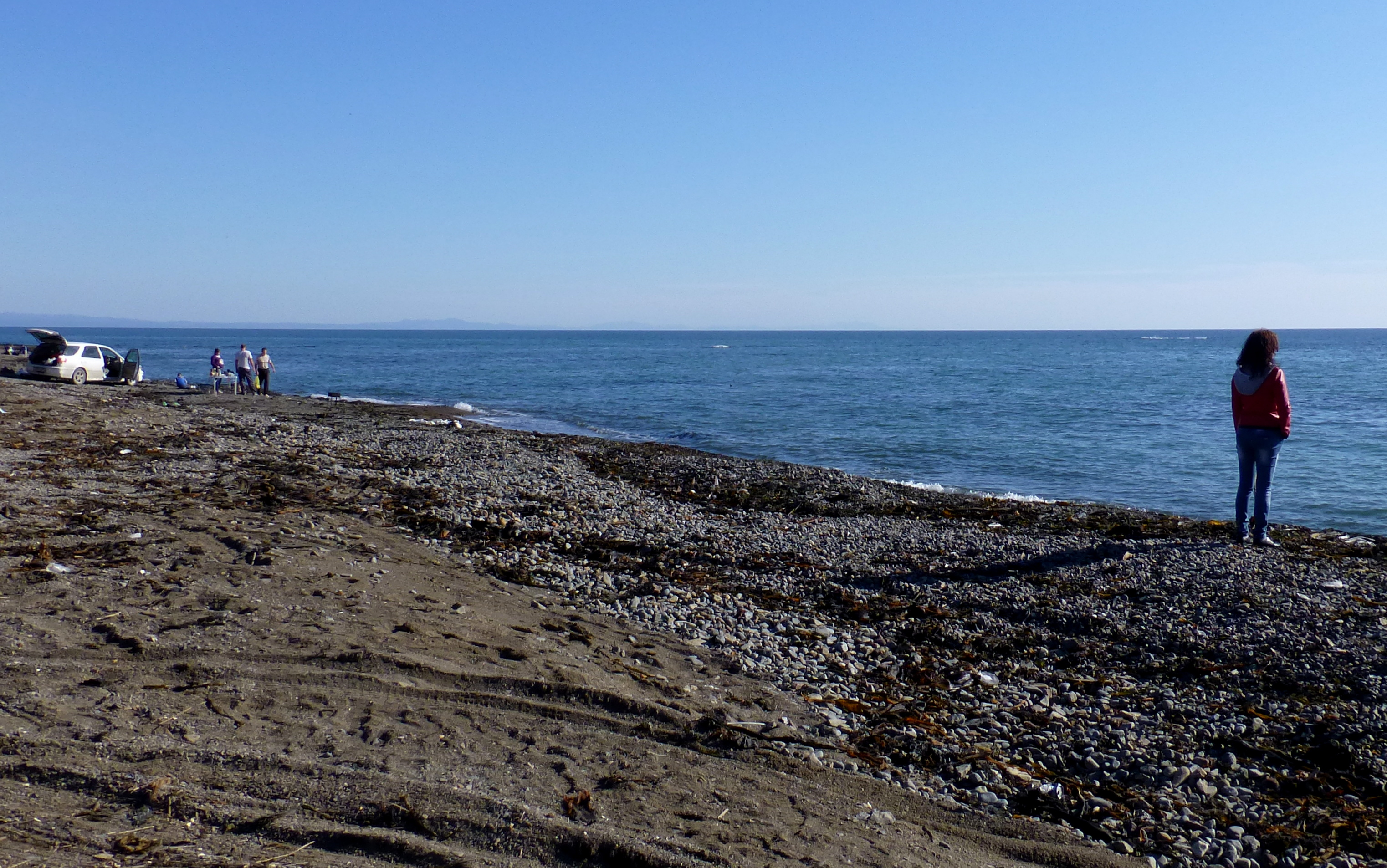
On all of the ones we visited, people were enjoying the sun and water, and having picnics….. or just sleeping in the sunshine.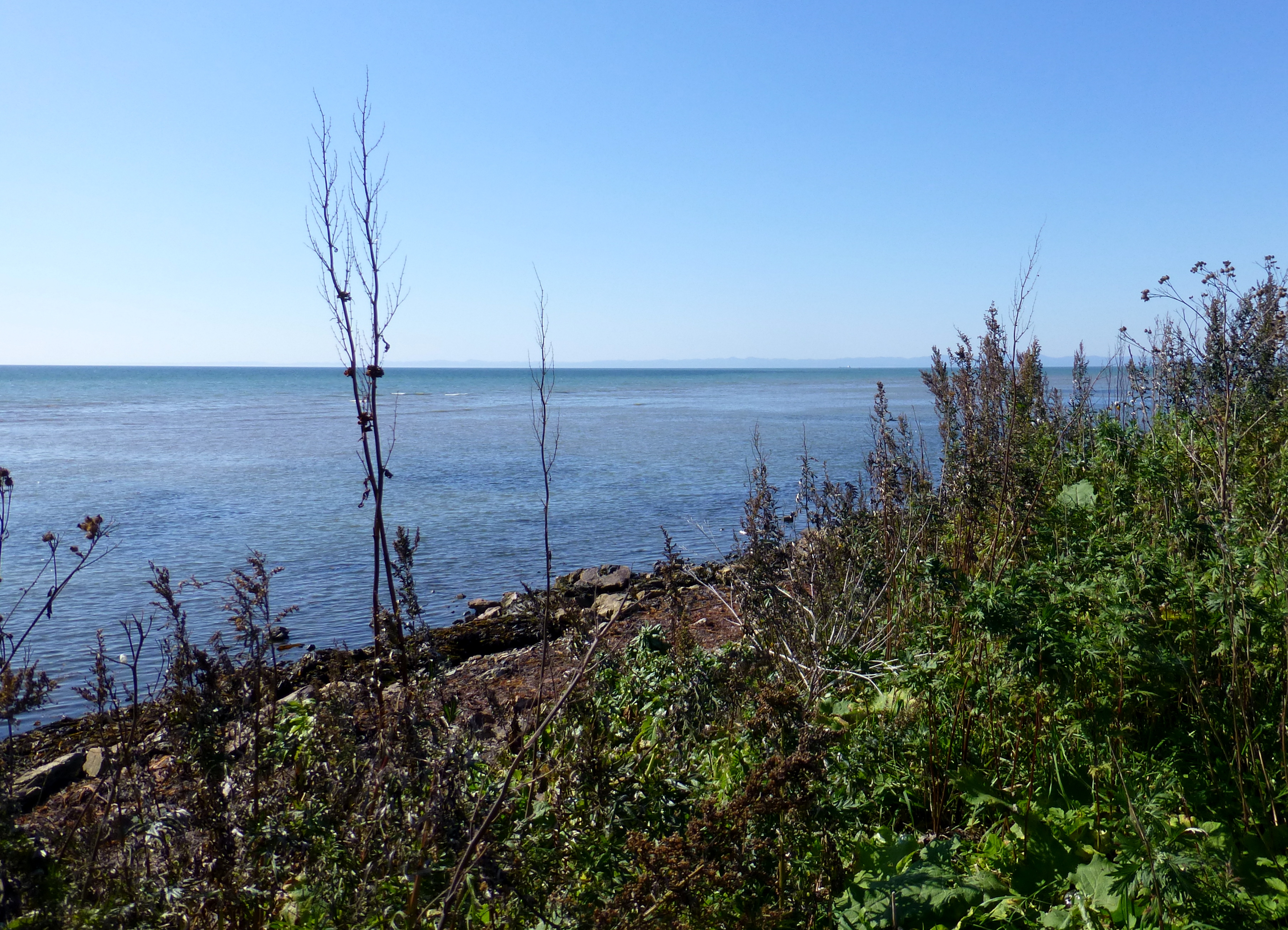
There is a fresh-water stream running into the sea here – Snoopy was glad of a drink. Just look at how clear the water is!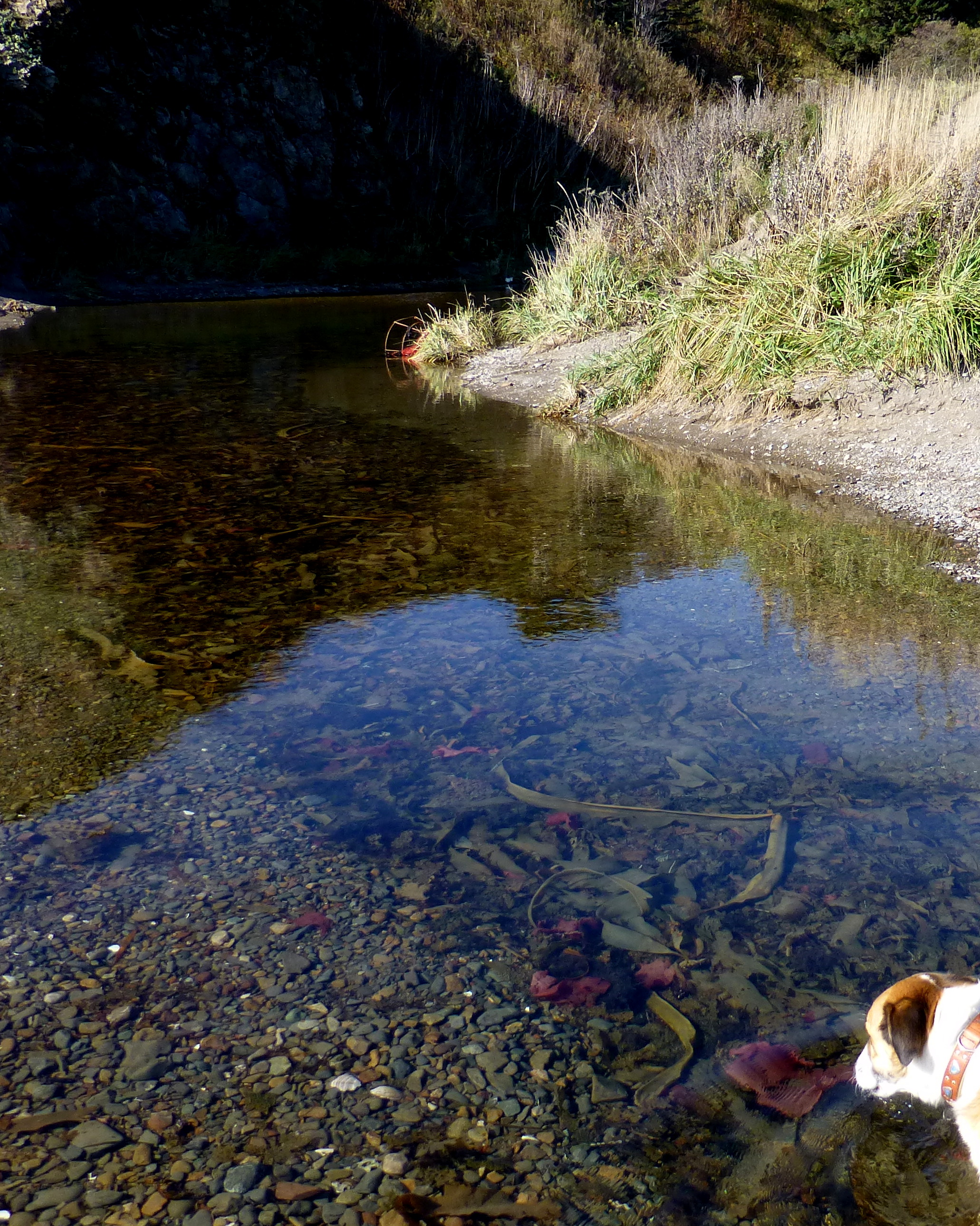
We followed the highway as far as the small town of Ozeyrski.
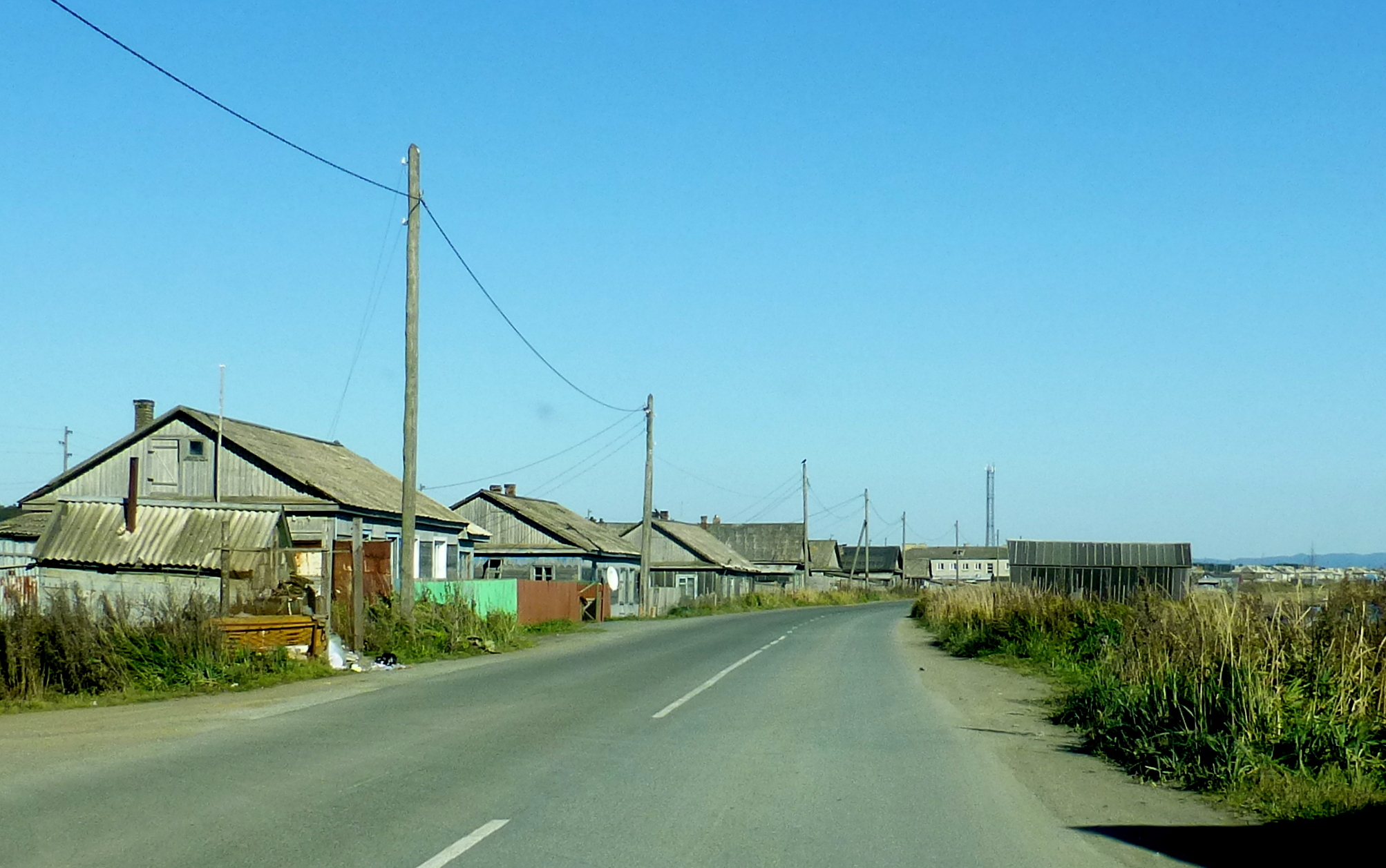
Most of the town is in the classic state of ruin that one finds all over here. I think that, with money so scarce, and supplies so expensive due to shipping, duties and taxes, that only the inside is maintained, and then, probably, not to the standard we Westerners would assume necessary.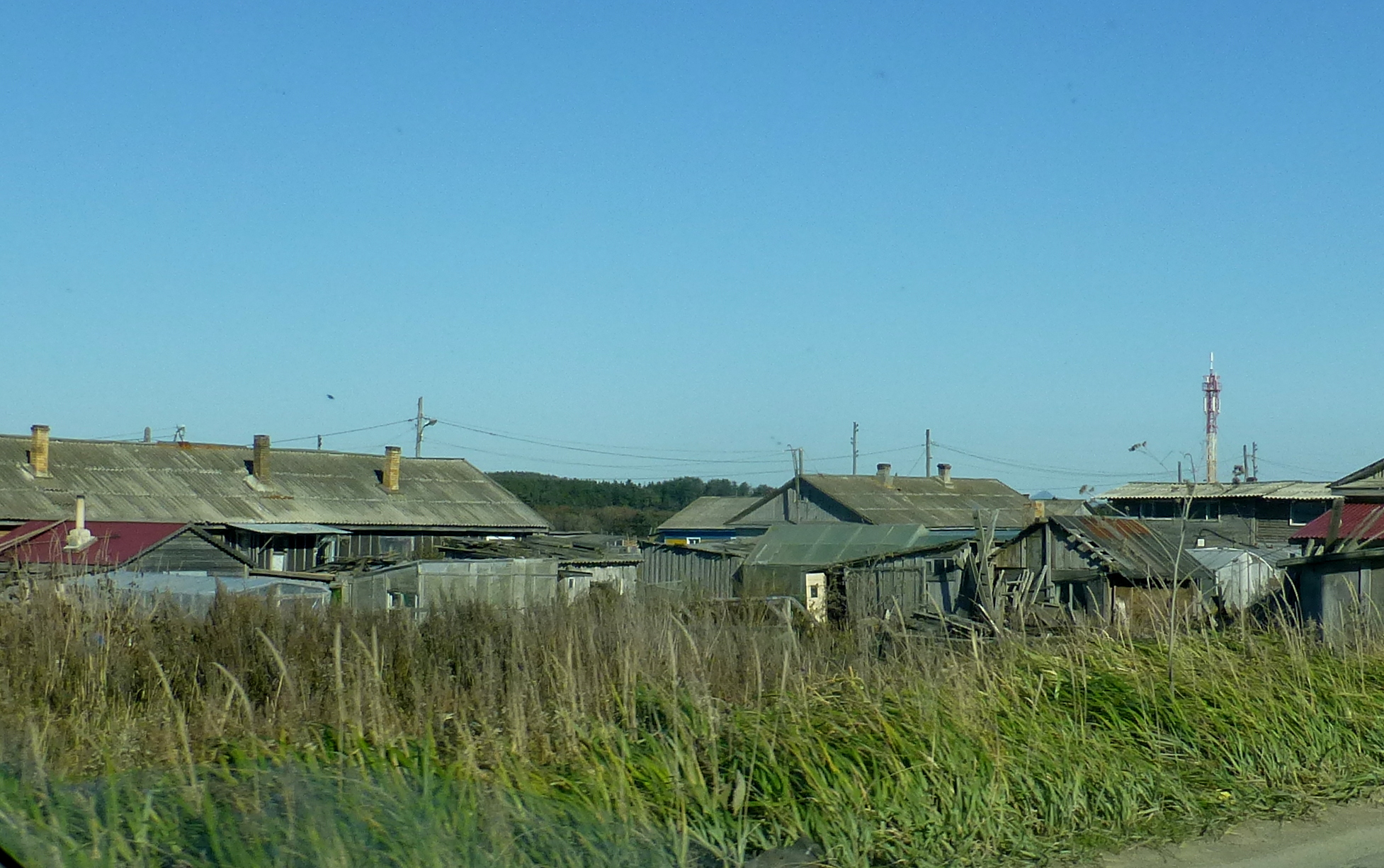
Not much there – one wonders what people in these places do for a living. I would imagine that most are fishermen.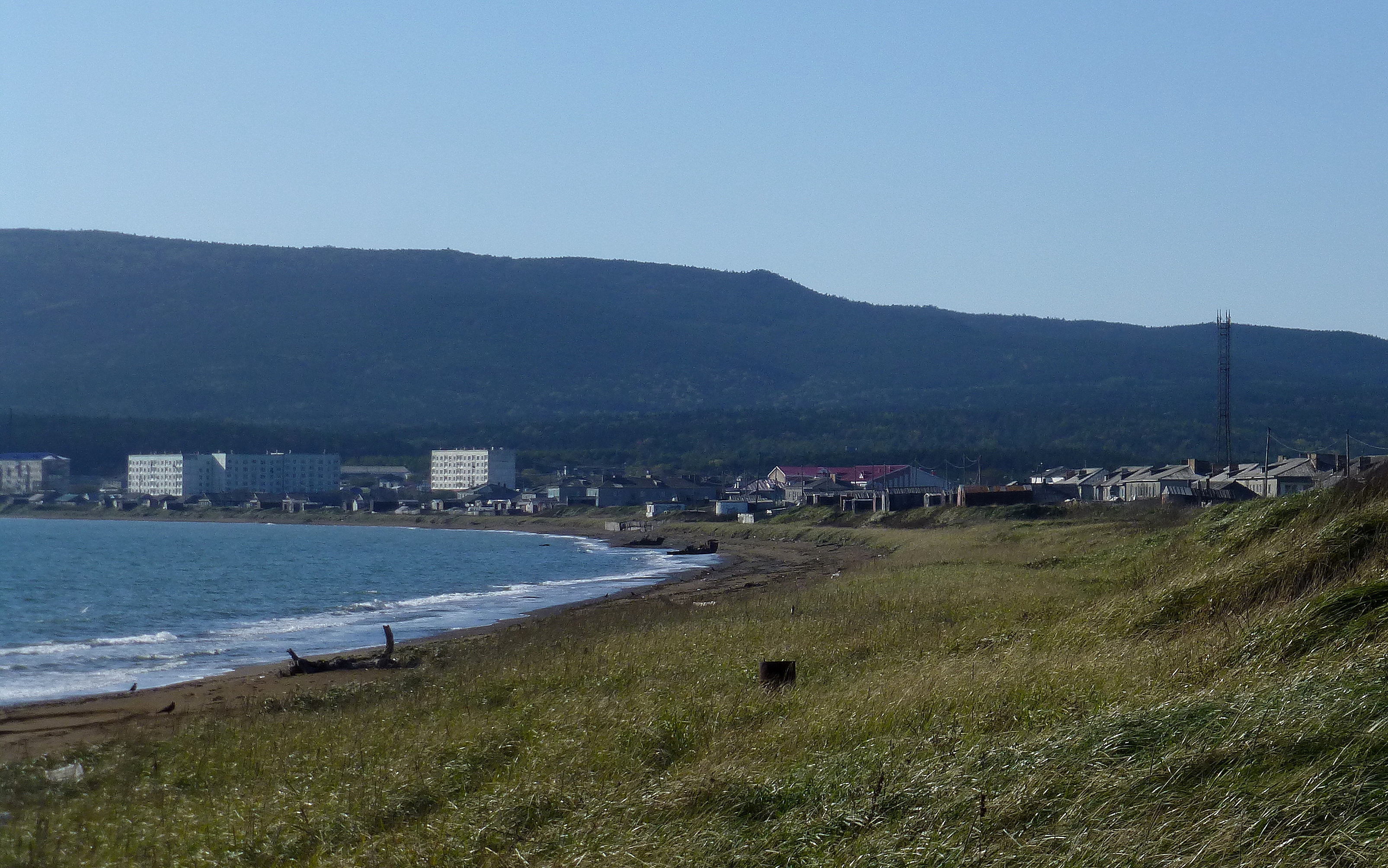
We returned to Yuzhno the way we had come,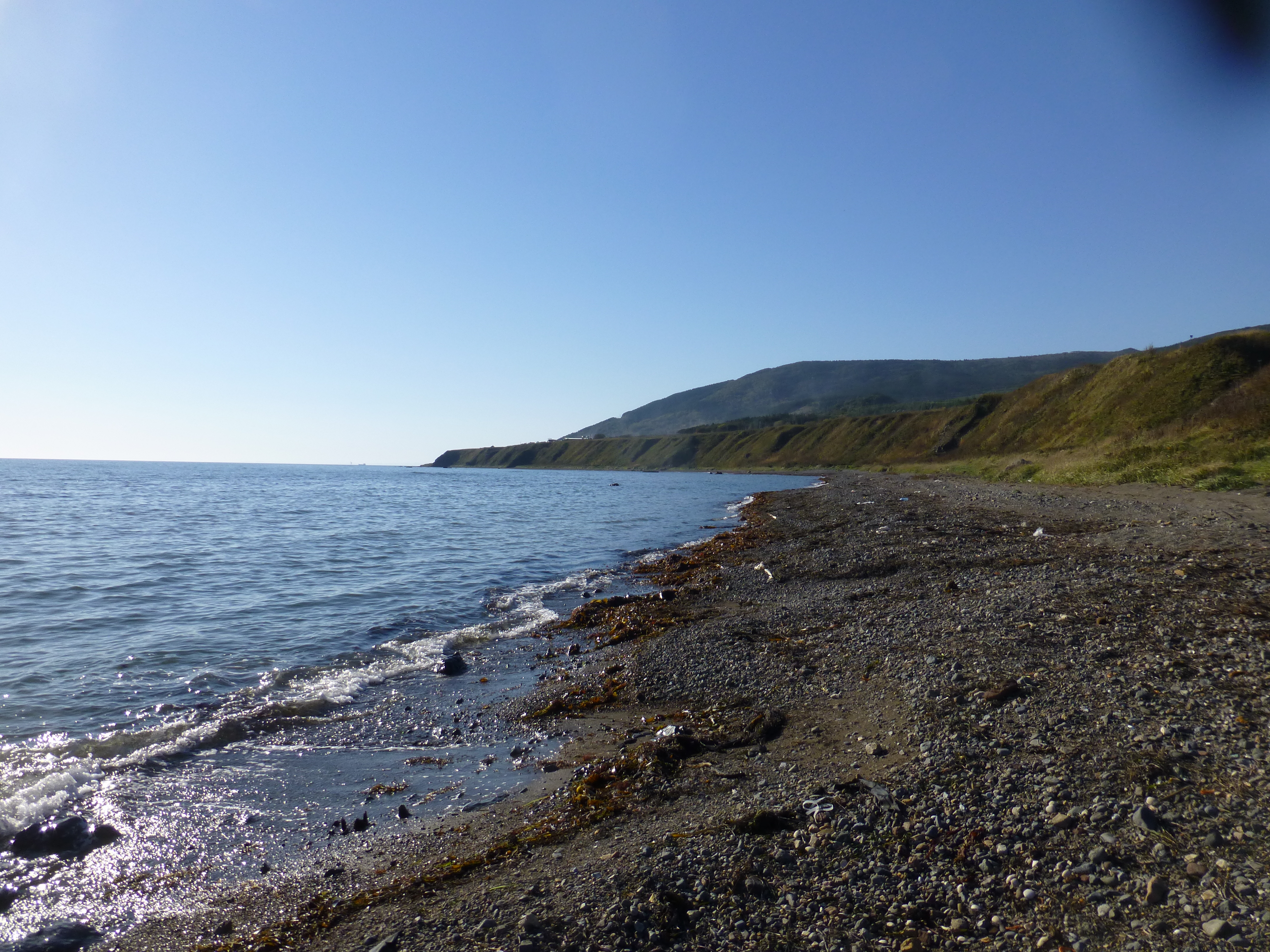
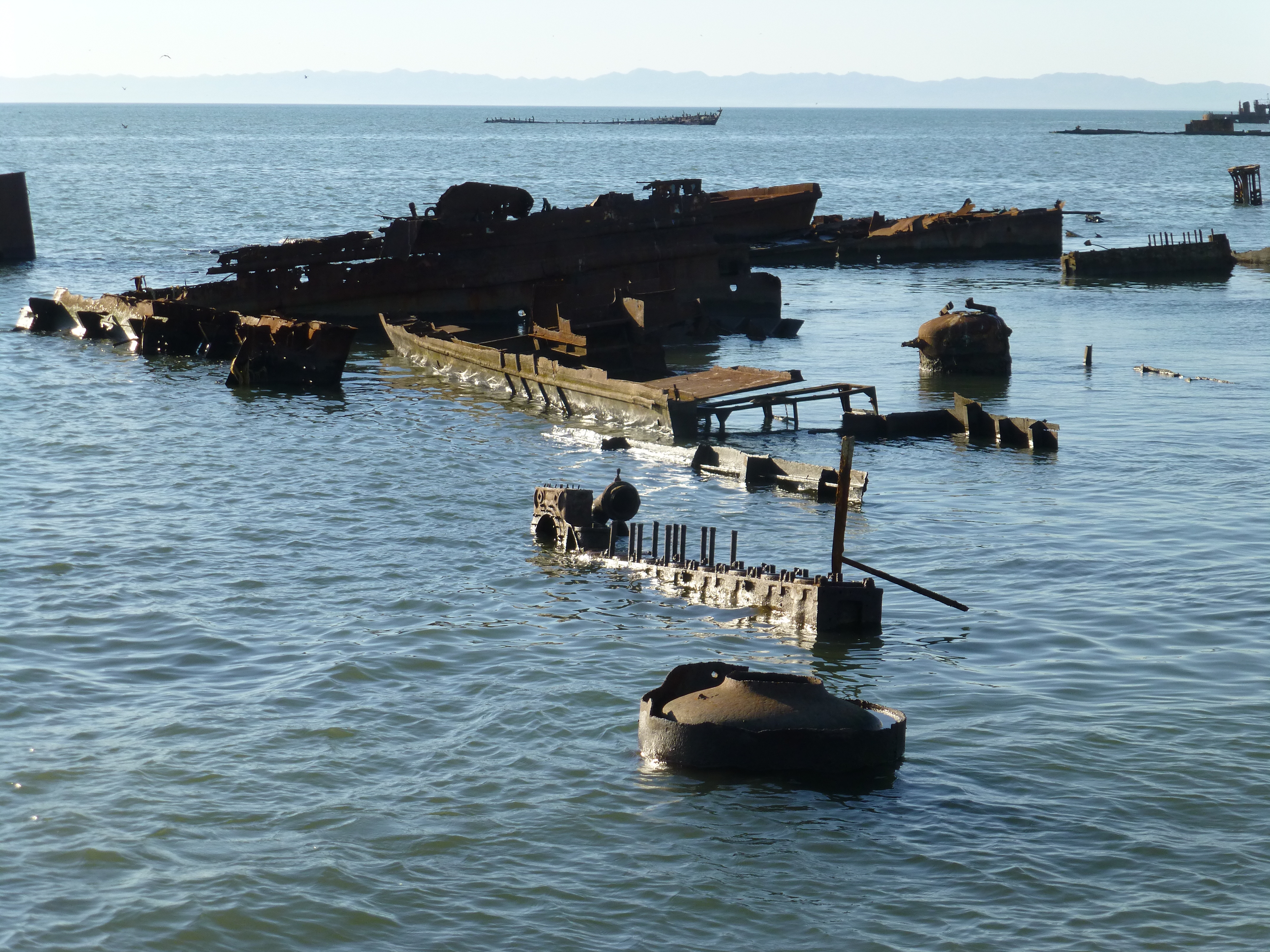
stopping in Korsakov to check out the old harbour. It is full of wrecked ships – just sunk and left there. One would wonder, with the price of scrap metal, why they haven’t been towed out of the water, cut up and sold. I guess we will never quite understand.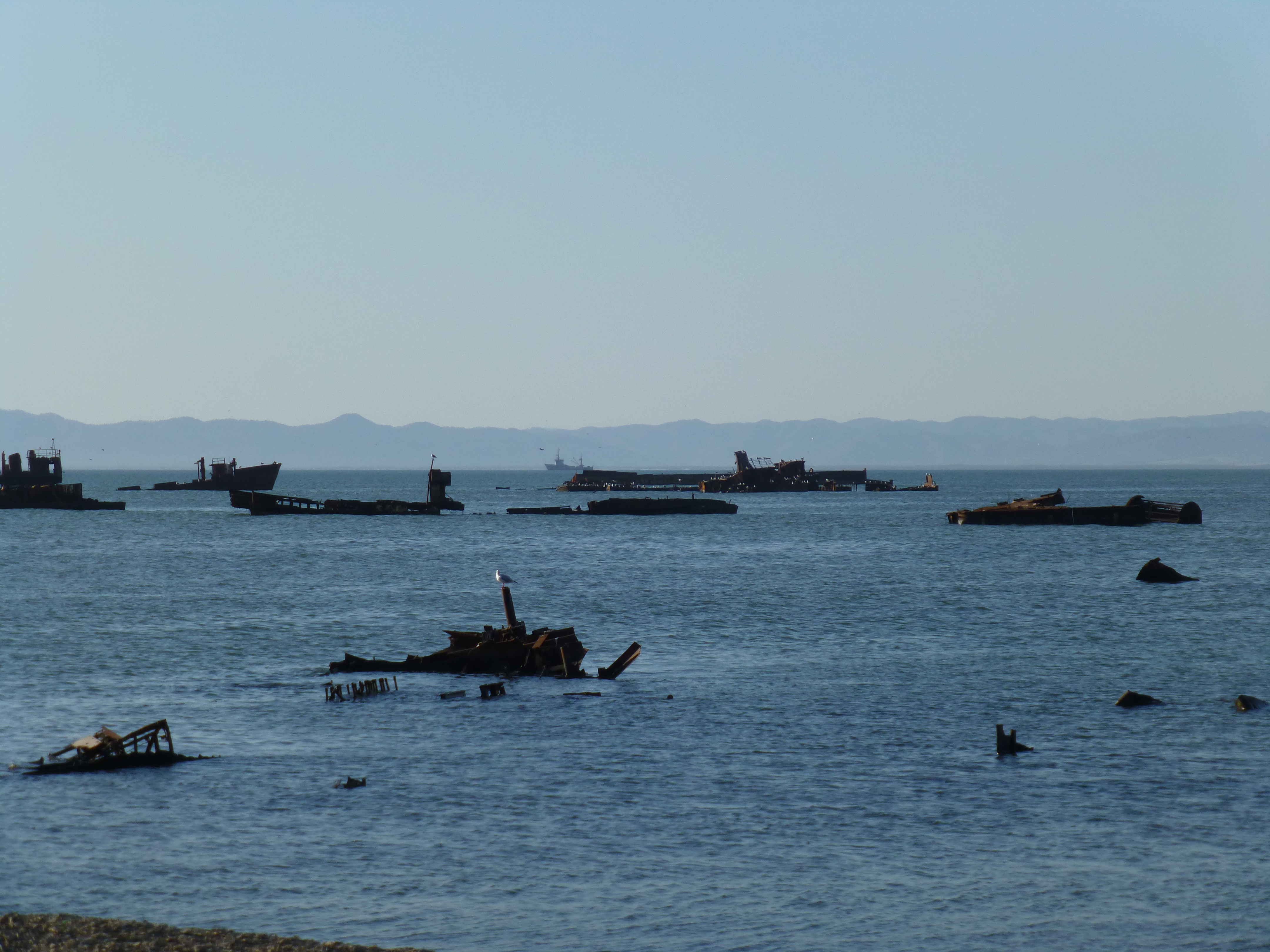
David had to have his photo taken straddling the old narrow-guage Japanese railway tracks.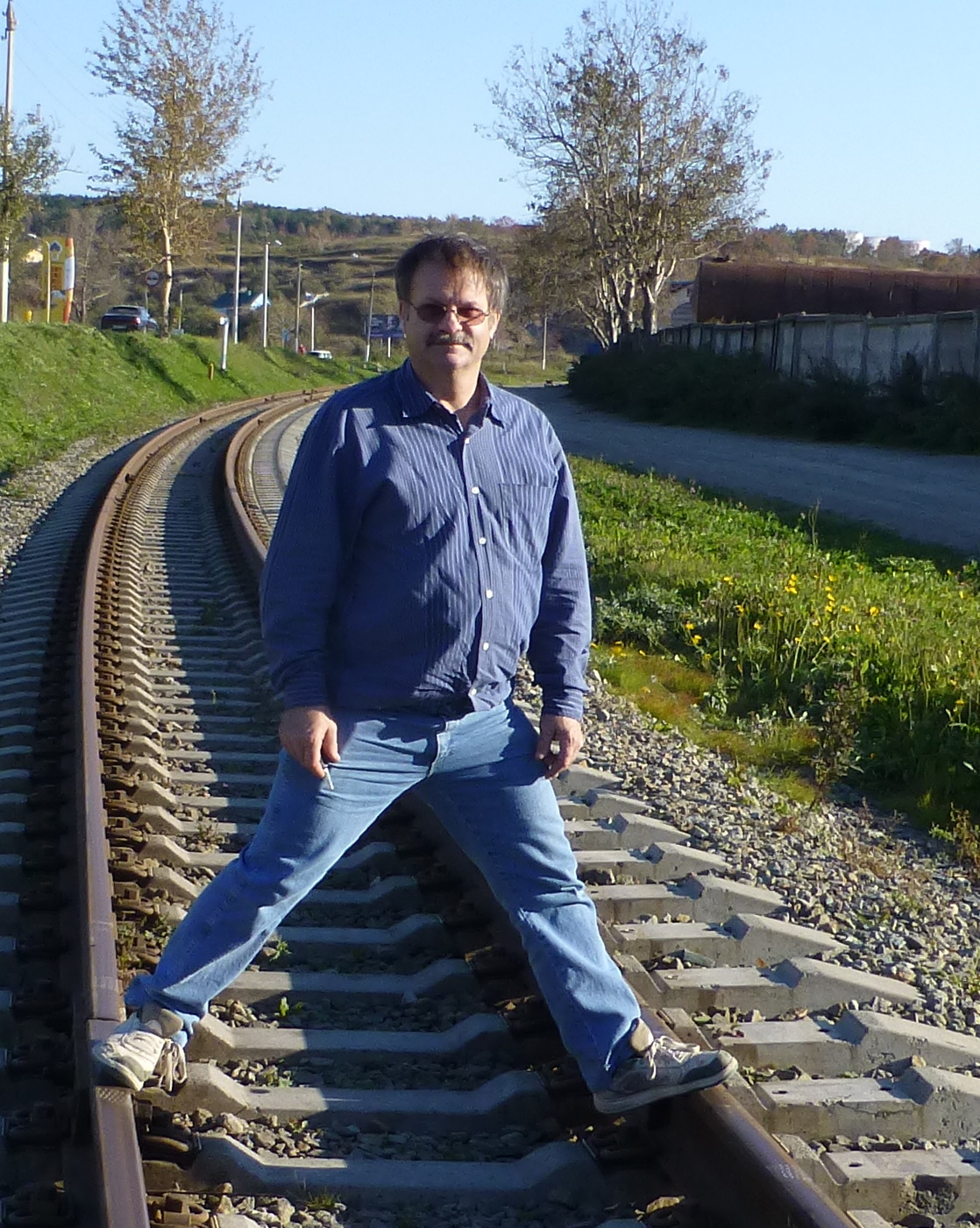

 wanderingquilter
Fabulous post and pictures 🙂
Reblogged this on The Whimsical Musings of a Menopausal Miss and commented:
A wonderful post, from the Wandering Quilter, about a little day jaunt around Yuzhno-Sakhalinsk. Thank you for the great photos and the interesting history.
Thank, Dee. I need to spend more time here and catch up on all my adventures. And thanks for spreading the word about Sakhalin.
Kathi, Once again an extremely interesting account of your day out and more fantastic photos. Thank you for being such an interesting travel guide.
I’m learning so much about your part of the world through your excellent photo taking and writing skills. Thank You. From another Canadian Prairies Girl.
Thanks, Jacquie. I’m glad that you are enjoying touring Sakhalin with me. It really is an amazing place, and so different from back home. And yet, in some ways, so much the same. What an interesting world we live in.